Gujarat Rains May Cost Insurers Nearly ₹5,000 Crore in Claims, Industry Estimates Show
Gujarat Rains this year could leave insurers facing claims worth nearly ₹5,000 crore, more than double the losses seen in 2024, with property lines bearing the brunt.
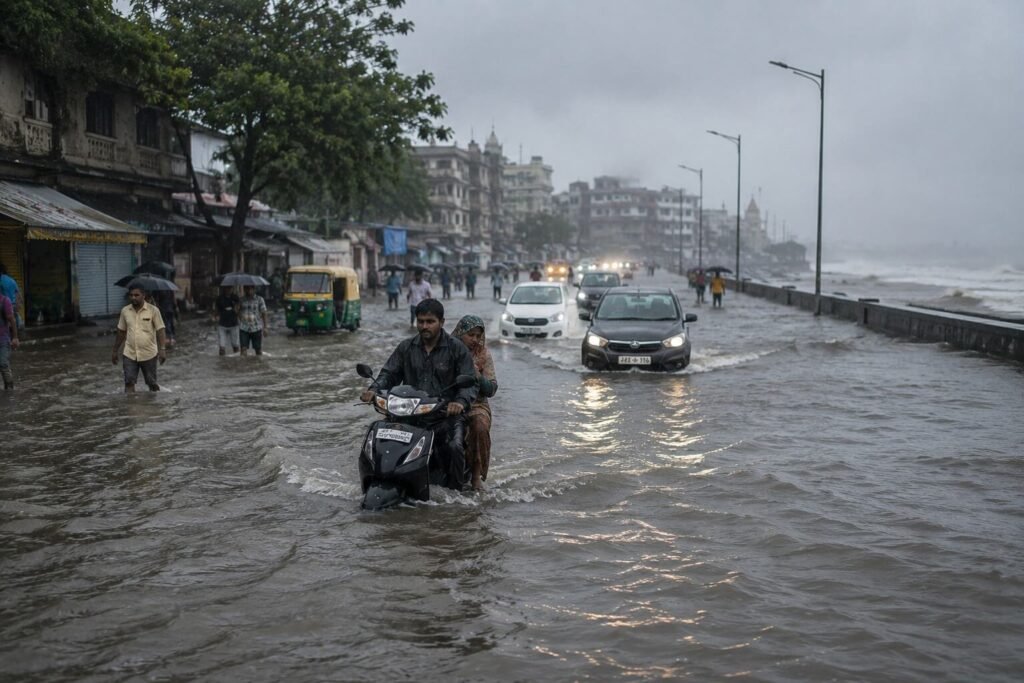
Gujarat Rian's this year could cost insurers nearly ₹5,000 crore in claims — more than double the ₹1,500-2,000 crore seen in 2024.
New Delhi-Gujarat rains: Heavy and prolonged rainfall across Gujarat has triggered widespread flooding in recent weeks, even as other parts of the country continue to grapple with monsoon-related deluges. Industry estimates now suggest general insurers could face claims of nearly ₹5,000 crore from the Gujarat rains, with property insurance expected to account for the bulk of the payouts.
Reports indicate that thousands of homes and large stretches of road infrastructure were submerged in the floods, prompting authorities to evacuate more than 40,000 residents from vulnerable areas. Schools and colleges in several affected districts were shut temporarily as a precautionary measure, and rescue operations involving the Army and disaster response forces were deployed to reach residents stranded by rising waters. The scale of the evacuation effort points to the extent of the flooding across the state’s low-lying and rain-affected districts.
Also Read: Travel Insurance Comparison: How to Pick the Right Policy for Your Next Trip
Gujarat rains Claims tally significantly higher than 2024
According to industry estimates, the scale of this year’s losses marks a sharp increase over the previous major flood event in the state. Insurance claims from the 2024 Gujarat floods stood at ₹1,500-2,000 crore, meaning this year’s estimated claims could be more than double that figure. The comparison offers a useful benchmark for the industry, given that the 2024 floods were themselves a significant loss event for insurers operating in the state.
A senior official at a private insurance firm said claims have already started coming in from Gujarat, with the industry likely to see claims worth nearly ₹4,000-5,000 crore, mainly on property lines. The official’s estimate suggests that the final number could settle anywhere within this range, depending on how assessments of damaged homes, commercial establishments, and infrastructure progress in the coming weeks.
The official added that the exposure is heavily reinsured, and hence direct insurers will not see much pressure on their books. This point is significant for how the losses are likely to be absorbed across the insurance value chain: rather than being borne entirely by primary insurers, a substantial share of large property risks in India is typically ceded to reinsurers, which spreads the financial impact of catastrophic events like this one.
Gujarat rains: Property claims to lead, motor claims to follow
Most of the claims are expected to originate from property insurance, covering damage to homes, commercial buildings, and business assets caused by flooding and water ingress. Motor insurance claims are expected to come in gradually as vehicle owners in affected areas assess damage and file claims, a process that typically takes longer than initial property damage assessments since it depends on surveyors physically inspecting affected vehicles.
Industry sources indicate that property insurance is expected to remain the dominant category of claims from this event, with motor claims following at a distance in terms of overall volume. This pattern is broadly consistent with how claims have unfolded during past flood events in Indian cities and states, where standing water and prolonged inundation cause extensive damage to ground-floor properties and parked vehicles alike.
Also Read: DFS Launches India’s First Sovereign P&I Insurance Under BMI Pool
Gujarat rains: No rate revision expected despite claims surge
Despite the scale of the estimated losses, the official said rates in property insurance lines are not expected to see any revision as a result of these claims. This is a notable point given the size of the estimated payout, and it reflects the extent of reinsurance cover built into large property risks in India. Because a significant portion of the risk is transferred to reinsurers rather than retained by direct insurers, isolated catastrophic events of this scale are not automatically expected to trigger repricing across the property insurance segment.
The absence of an anticipated rate revision also suggests that insurers view this event, while significant, as being within the range of losses that existing reinsurance arrangements are designed to absorb. This is different from scenarios where insurers might seek to revise premiums following a pattern of repeated, escalating losses over successive years.
Assessments still underway
As things stand, claims are continuing to be filed and assessed, and the final figure for this event may differ from current estimates as the process moves forward. Surveyors and claims teams are expected to continue their assessment work in affected districts in the coming weeks, and updated figures are likely to emerge as more claims are formally lodged and processed by insurers.