PB Fintech, Max Financial hit lower circuit as IRDAI proposes commission cuts; HDFC Life tanks
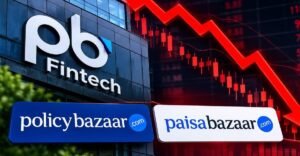
PB Fintech shares, the parent of Policybazaar, hit the 15% lower circuit at ₹1,603 on Thursday morning after the insurance regulator released a draft paper proposing deep commission cuts across life, health and motor insurance.
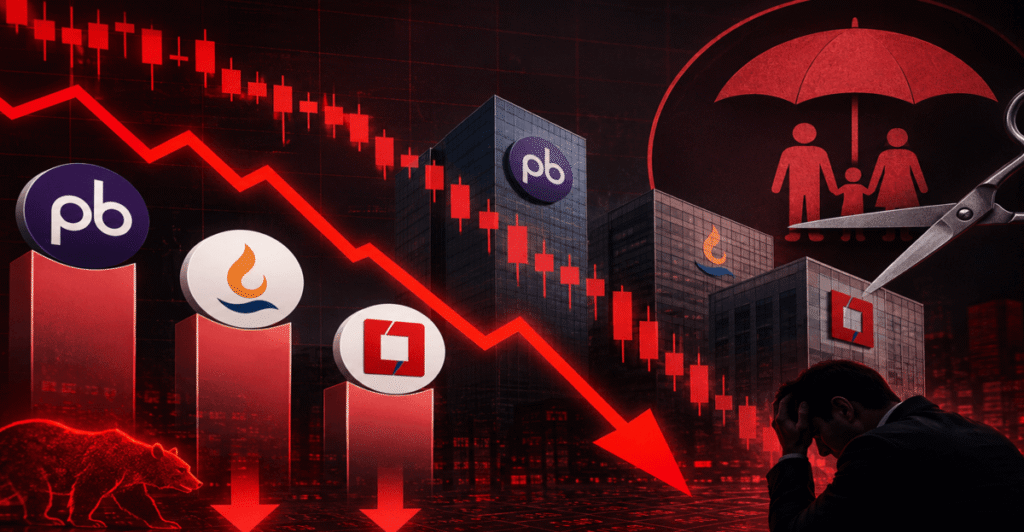
PB Fintech shares fell sharply after IRDAI proposed cuts to insurance distribution commissions. The proposed changes weighed on investor sentiment across major insurance-linked stocks.
New Delhi, PB Fintech: Shares of PB Fintech, the parent of Policybazaar, hit the 15% lower circuit at ₹1,603 on Thursday morning after the insurance regulator released a draft paper proposing deep commission cuts across life, health and motor insurance. The stock had closed 4.9% higher at ₹1,893 on Wednesday. Among insurers, HDFC Life crashed 7.5% (touching an intraday low of ₹518), Max Financial hit its lower circuit, and ICICI Prudential Life tanked 5.7% to ₹456, while the broader Nifty Financial Services index came under heavy sector-wide selling pressure.
A draft distribution paper from the Insurance Regulatory and Development Authority of India (IRDAI) proposing deep commission cuts across life, health and motor insurance has drawn a sharply divided response from brokerages. Most see PB Fintech, the parent of Policybazaar, as the most exposed listed company, with insurers, banks and non-banking lenders affected to varying degrees.
Bernstein said in a note on Thursday that the proposals are “much worse than imagined” and contrary to its earlier expectation. The brokerage described the commission cuts as “ugly” and said some proposals may not be practical, but that this would matter little at market open. It expects near-term price action to reflect pain for PB Fintech and sharp moves in several insurance stocks.
Also Read: PB Fintech: Why are shares falling?
PB Fintech: What the Draft Paper Proposes
The consultation paper seeks a broad redesign of how insurance is distributed and priced, with the stated aim of improving affordability and penetration. According to Emkay Global’s summary, the key proposals include:
Life insurers: Expenses of management (EoM) would fall to 15% of gross direct premium income within two years and 12.5% within five years.
General and stand-alone health insurers: The EoM limit would drop to 20% from 30%.
Health renewals and porting: Commissions would be capped at 5% for distribution entities and 10% for agents.
Loan-linked cover: Forced bundling of insurance with loans would be banned, and commission on single-premium credit life would be capped at 2%.
Term plans: First-year commission on pure-term life policies would be capped at 25-30%.
Macquarie noted that the paper offers higher caps for tied agents than for the bancassurance and broker channels, effectively rewarding selling effort over distribution leverage. Jefferies said the paper proposes commission cuts of one-half to one-third in health, term and motor insurance.
PB Fintech: The Data Behind the Proposal
Emkay pointed to figures in the paper that, in its view, make a complete rollback unlikely. Average first-year commission on term plans currently stands at about 51%, against the proposed 25-30% cap. The effective payout on single-premium group credit life is around 45%, against a proposed 2% cap. Corporate agents in health insurance reached payouts of 82-91%, and motor third-party commissions rose from 4.3% in FY23 to 22% in FY25.
Emkay analyst Avinash Singh expects the final rules to be somewhat softer than the draft, though he believes the direction of reform is set.
Also Read: IRDAI proposes zero commission on third-party motor cover for new vehicles
PB Fintech: Why PB Fintech Is Most Exposed
Bernstein said PB Fintech’s unit economics “unravel” at the proposed take rates, with deep cuts in health and motor and implied deferrals in term. It said call-centre costs do not hold up at the lower commissions.
The draft also bars the collection of contact details for generating quotes, which Bernstein described as a key customer-acquisition funnel for the company. With loopholes around advisory fees and marketing expenses also being closed, the brokerage said PB Fintech will need to find alternative solutions.
Jefferies estimated that a 10% cut in new-business commission rates translates into a 10-12% fall in earnings for PB Fintech and Turtlemint. Emkay said PB Fintech is hit at once on health renewals and porting, first-year term, and motor own-damage and third-party business, and expects a lower circuit on the stock. The company’s insurance income was Rs 61 billion in FY26, up 42%.
PB Fintech: Impact on Insurers, Banks and Lenders
The brokerages broadly agree that insurers with low costs and a heavier mix of agency and unit-linked (ULIP) business are better insulated.
SBI Life and LIC: Bernstein, Macquarie and HSBC all see SBI Life among the least affected, and Bernstein and Macquarie place LIC in the same camp. Emkay put SBI Life’s FY26 EoM at 10.6% and LIC’s at 11.9%, both below the proposed 15% threshold.
HDFC Life, Max Financial and ICICI Prudential Life: HSBC flagged HDFC Life and Max Financial as facing higher potential impact. Emkay estimated a 5-7% negative impact for ICICI Prudential Life, HDFC Life and Max, whose FY26 EoM ratios were 18.1%, 21.2% and 25.1% respectively, and said all three would need to renegotiate retail and credit life terms with distributors.
Banks: Macquarie said Axis Bank and HDFC Bank are affected more than SBI, ICICI Bank and Kotak Mahindra Bank. Emkay named HDFC Bank and IndusInd Bank as most impacted.
NBFCs: Emkay said L&T Finance, Mahindra Finance and Bajaj Finance are most affected and Shriram is safest. Bajaj Finance’s life insurance commission income rose 71% to Rs 11.3 billion in FY26.
Industry Reaction and Outlook
Bernstein expects severe pushback from the industry. It also expects some of the savings to be passed on to customers, driving a modest volume uptick, though it does not think demand for a push-product like insurance would structurally offset the loss of commission-driven sales. It also sees some drag on health and term growth for insurers.
HSBC described the proposed EoM limits as stringent and said that, if implemented, they could have wide implications across insurers, brokers and lenders. Jefferies took a more contrarian view, suggesting any correction in SBI Life, Star Health and ICICI Lombard General Insurance could be a buying opportunity given limited risks from the paper, share-gain opportunities and scope for margin expansion.
The paper remains a consultation draft, and the final rules will depend on feedback from insurers, intermediaries and lenders.