Surrender and Withdrawal Payouts Overtake Maturity Benefits in Life Insurance Sector, Govt Tells Lok Sabha
Life insurance: Surrender and withdrawal payouts by life insurers rose from 32% to 39% of total benefits paid between FY22 and FY26, overtaking maturity benefits, the government told the Lok Sabha.
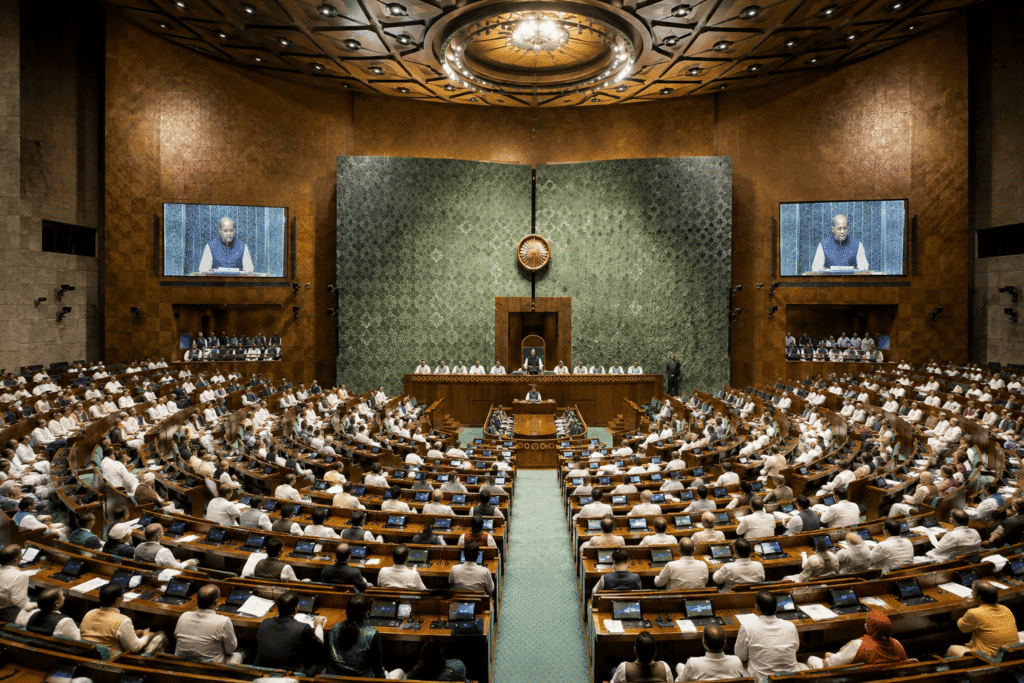
Life Insurance: Surrender and withdrawal payouts have overtaken maturity benefits in India's life insurance sector — rising from 32% to 39% of total benefits paid over five years.
New Delhi- Life Insurance: Surrender and withdrawal payments by life insurers have overtaken maturity benefits over the past five years, according to data placed before the Lok Sabha on Monday by the Ministry of Finance, in response to an unstarred question on the rising incidence of premature policy surrenders.
Responding to a Question, raised by Prof. Sougata Ray and Shri Kishori Lal, Minister of State for Finance Shri Pankaj Chaudhary informed the House that the share of surrender and withdrawal payouts in total benefits paid by life insurers rose from 32 per cent in FY2021-22 to 39 per cent in FY2025-26. Over the same period, the share of maturity benefits fell from 48 per cent to 37 per cent.
Also Read: Gujarat Rains May Cost Insurers Nearly ₹5,000 Crore in Claims, Industry Estimates Show
Life Insurance: Surrender Payouts Nearly Double in Five Years
In absolute terms, surrender and withdrawal payouts by the life insurance sector rose from Rs 1,58,285 crore in FY2021-22 to Rs 2,80,130 crore in FY2025-26 (provisional), according to IRDAI data tabled in Parliament. Maturity benefits over the same period moved from Rs 2,39,656 crore to Rs 2,69,706 crore, with a dip to Rs 2,12,985 crore in FY2022-23 in between. Total benefits paid by the sector — comprising death claims, maturity, surrenders/withdrawals, annuities/pension and other payments — rose from Rs 5,02,097 crore in FY2021-22 to Rs 7,23,158 crore in FY2025-26 (provisional).
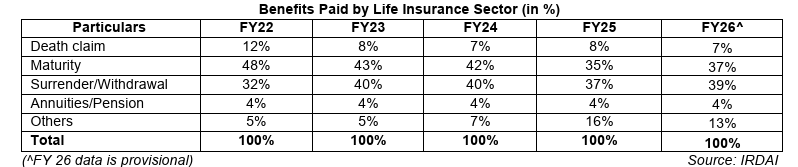
withdrawals than policy maturities, government data tabled in Lok Sabha shows.
The Ministry also tabled an insurer-wise breakup of benefits paid over the five-year period, covering all 27 life insurers registered with IRDAI, including Life Insurance Corporation of India (LIC), HDFC Life, SBI Life, ICICI Prudential Life, Max Life, Bajaj Life and others.
Life Insurance: Mis-Selling, Affordability Among Key Reasons Cited
On the reasons behind the trend, the Minister stated that IRDAI has identified multiple contributing factors, including lack of suitability of the product purchased, unaffordability of premiums, non-fulfilment of policyholder expectations, mis-selling, inadequate policyholder awareness and understanding of insurance products, and changes in policyholders’ financial circumstances.
The reply noted that IRDAI continuously monitors trends in policy surrenders, withdrawals and persistency to assess implications for insurers’ financial soundness, policyholder protection and overall sector stability, and undertakes supervisory and regulatory measures where necessary. However, the Minister clarified that IRDAI has not carried out any specific assessment of the impact of rising surrender rates on household savings, long-term financial security, or insurance penetration in the country.
Also Read: RBI’s New FD Rules From October 1: What Mean for Insurance Buyers Comparing Guaranteed Returns
Life Insurance: Regulatory Framework Governing Surrender Values
On safeguards, the reply detailed the regulatory framework currently in place under the IRDAI (Insurance Products) Regulations, 2024 and the Master Circular on Life Insurance Products, 2024. Under these provisions, non-linked life insurance savings products acquire surrender value after payment of at least one full year’s premium, with the surrender value scale designed to ensure reasonableness and value for money for policyholders.
Insurers are required to provide approved product literature, disclose authorised distribution channels and product features on their websites, and furnish a signed Benefit Illustration before the sale of a life insurance policy is concluded. The Customised Benefit Illustration must separately disclose policy year-wise Guaranteed Surrender Value (GSV), Special Surrender Value (SSV) and total Surrender Value payable. A Customer Information Sheet (CIS) has also been made mandatory across all life insurance policies.
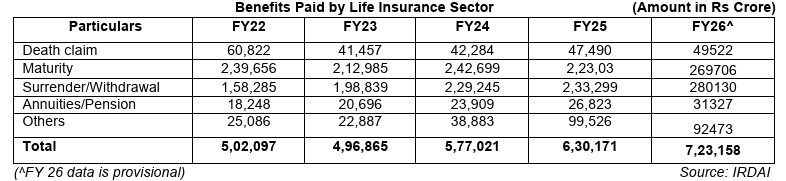
withdrawals than policy maturities, government data tabled in Lok Sabha shows.
Life Insurance: Free-Look Period, Policy Loans and Partial Withdrawals
Other measures cited in the reply include a standardised 30-day free-look period allowing policyholders to cancel a policy and obtain a refund after deduction of proportionate risk premium, medical examination expenses and stamp duty; a mandatory policy loan facility on non-linked individual life insurance savings products to help policyholders meet liquidity needs without surrendering their policy; and partial withdrawal facilities under pension products for expenses such as education, housing or medical treatment.
Life Insurance: Suitability Norms and Grievance Redressal
The Minister further stated that IRDAI has prescribed norms governing insurance advertisements to ensure communications are fair, accurate and not misleading. Under the IRDAI (Protection of Policyholders’ Interests, Operations and Allied Matters of Insurers) Regulations, 2024, every life insurer is required to have a Board-approved policy for assessing product suitability and recommending products based on prospect needs, along with obligations on distribution channels to prevent mis-selling, provide periodic training to sales personnel and intermediaries, and strengthen financial underwriting to assess a prospect’s ability to sustain premium payments. Policyholders also have access to grievance redressal through insurers and the Insurance Ombudsman, the reply added.