Anupam Mittal Questions IRDAI’s Commission Logic; Yashish Dahiya Says “It’s Not About Price”
Anupam Mittal questioned the logic behind IRDAI’s commission proposals, while Yashish Dahiya said the issue goes beyond price.
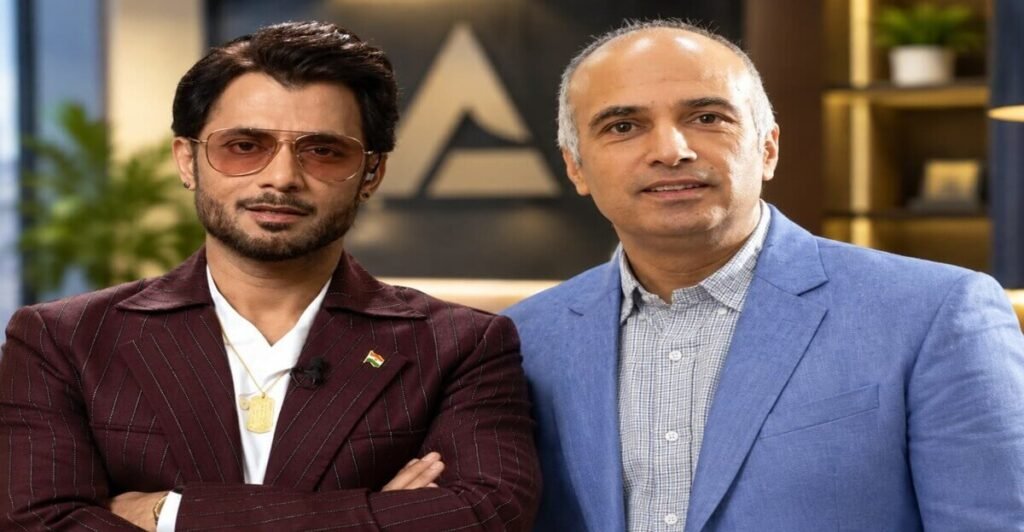
Anupam Mittal has questioned IRDAI’s approach to insurance commissions, raising concerns over the regulator’s proposed distribution reforms. AI Generated Image
Shaadi.com founder Anupam Mittal has questioned the reasoning behind the Insurance Regulatory and Development Authority of India’s (IRDAI) proposed reforms on distributor commissions, saying the link between commissions and India’s low insurance penetration is “not clearly proven.” PB Fintech Group CEO Yashish Dahiya and Coverfox Managing Director Sanjib Jha responded to the post on LinkedIn.
The exchange took place on LinkedIn, where Mittal posted his views on a paper from IRDAI setting out proposed reforms. Dahiya, co-founder, chairman and group CEO of PB Fintech, and Jha, founder and managing director of Coverfox, replied to the post.
Mittal: “Phase the cut. Prove the barrier first.”
Mittal said IRDAI’s own paper shows that premiums have grown but coverage has not grown enough, and that costs have stayed high over time. According to him, after commissions were included in a single company-wide cost pool, payouts to distributors grew faster than premium.
“So there are two problems. Costs are high. Coverage is thin,” he wrote.
Mittal said he was not defending high commissions. “I am not defending fat commissions,” he wrote, adding that credit life insurance sold with a loan at a high commission is “a mess.”
He questioned, however, whether commissions are the main reason India’s insurance penetration is about 3.7% against a global level of about 7%. “That link is not clearly proven,” he said.
Mittal said that cutting selling incentives before establishing that price was the barrier to uptake could mean fewer people selling insurance, resulting in fewer policies and a worsening of the coverage problem. He also said employment in the industry could be affected “for no obvious and immediate benefit.”
Describing the situation as “still early,” Mittal called for a phased approach: “Phase the cut. Prove the barrier first.”
Also Read: ‘Do or die’ situation: Brokerage halves PB Fintech’s target price on IRDAI proposals
Dahiya: Price elasticity and four product categories
In his reply, Dahiya said PB Fintech has spent more on insurance education and awareness than any other company, adding that the effort is expensive, takes long and does not give easy wins. He said it took the company 15 years to break even.
Dahiya said distributors with strong disclosure control will see lower fraud, waste and abuse than those without it. This, he said, allows the former to settle more claims for customers over the long term without as great a need for regular price hikes.
Citing the reduction in GST on insurance, Dahiya said an 18% reduction in price led to 18% higher growth than would otherwise have occurred for about six months, “give or take.” He said this shows price elasticity in health and term insurance is, at best, short-term. “It’s not about price… it’s customer service and claims and that is expensive,” he wrote.
Dahiya divided retail insurance into four categories, saying the dynamics of each are very different:
Mandatory products, such as motor third-party cover and some international travel insurance. He said sales here would be largely unaffected.
Savings products with insurance wrapped in. He said the main reason to buy these over mutual funds or fixed deposits is not returns but protecting objectives such as a child’s education through a waiver of premium, under which the insurer pays the premium if the policyholder dies or is disabled, so the investments continue.
Attached products, such as motor own-damage, domestic travel and credit life. Dahiya said these sell because the seller attaches them and typically see very low claims.
Voluntary protection, meaning health and term insurance, which he described as the most critical category and one that is hard to build. He said it is “barely done in most parts of the world.”
Dahiya said mis-selling occurs mostly in the savings and attached categories, not in voluntary protection. “What can u miss sell in term? It’s the most black and white product… either someone is dead or alive,” he wrote.
For health and term insurance, he said, underwriting, risk assessment and claims matter a great deal, and ensuring customers get a hassle-free claim experience “is not trivial to deliver.”
Jha: “The insurance distribution industry will die”
Jha thanked Mittal for raising the question and said the industry needs founders to put forward their points of view. He said no young entrepreneur would try to build a new insurance startup otherwise.
Jha said that if the paper becomes law, “the insurance distribution industry will die.” He added that startups in the industry are shutting their shops.