Why Your Bike Insurance Claim Gets Rejected: 5 Common Reasons
Bike insurance: A rejected bike insurance claim can turn an already bad day into a costly one. Here are the five most common reasons insurers deny two-wheeler claims — and how to make sure yours doesn’t happen to you.
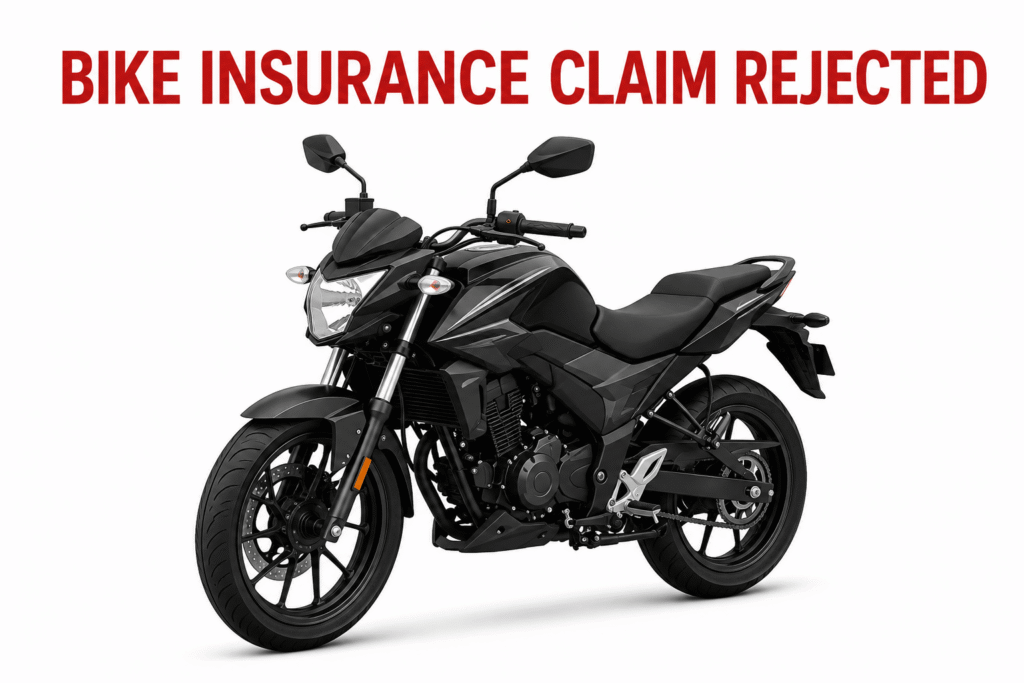
Bike Insurance: One overlooked detail can cost you your entire claim. Know these five red flags before you ever need to file one.
Bike Insurance: Two-wheelers remain the most widely owned vehicle category in India, and bike insurance claims are correspondingly frequent. Yet insurance industry observers note that a meaningful share of these claims get rejected or delayed every year, often for reasons that could have been avoided at the time of purchase or renewal. For policyholders, a rejected claim can mean bearing the full cost of an accident, theft, or damage out of pocket — defeating the very purpose of buying the cover.
Understanding why claims fail is the first step to making sure yours doesn’t. Here are five of the most common reasons bike insurance claims get rejected in India, and what riders can do to avoid each one.
Also Read: Pradhan Mantri Suraksha Bima Yojana: Complete Guide 2026
Bike Insurance: Lapsed or Expired Policy at the Time of the Incident
The single most common reason for claim rejection is straightforward: the policy had already expired when the accident or theft occurred. Two-wheeler insurance in India typically requires annual renewal (or, for the mandatory third-party component, terms of up to five years under IRDAI-mandated long-term policies), and a missed renewal date — even by a single day — can render a claim invalid.
Riders often assume a short grace period exists, similar to some other financial products, but insurers generally treat the policy as void from the exact expiry date and time. Setting calendar reminders well ahead of the renewal date, or opting for auto-renewal where the insurer offers it, is widely recommended as a simple safeguard.
Bike Insurance: Riding Without a Valid Driving Licence
Insurers routinely reject claims where the rider did not hold a valid licence for the specific class of vehicle involved — for instance, a licence for a gearless scooter being used to ride a geared motorcycle, or a licence that had itself expired and not been renewed. This is treated as a fundamental breach of the policy’s terms, since a valid licence is a legal prerequisite to operate the vehicle in the first place.
This reason for rejection extends to cases where a family member or friend without a valid licence was riding the insured bike at the time of the incident, regardless of who owns the policy.
Also Read: Vikram-1 Launch: Who Insures Skyroot’s Rocket When It Flies — and When It Doesn’t?
Bike Insurance: Mismatch or Discrepancy in Documentation
Claims are frequently delayed or rejected due to inconsistencies between the policy documents, the vehicle’s registration certificate (RC), and the details submitted at the time of claim. Common examples reportedly include a mismatch in the engine or chassis number, an outdated RC that hasn’t been updated after a change of ownership, or incorrect personal details carried over from an earlier renewal without correction.
Since insurers verify these details against official records before processing a payout, even small clerical errors can trigger a rejection or a prolonged investigation. Policyholders are generally advised to cross-check every field on their policy document against their RC and licence each time they renew.
Bike Insurance: Modifications Not Declared to the Insurer
Aftermarket modifications — altered exhaust systems, non-standard fuel kits, engine remapping, or cosmetic changes that affect the vehicle’s original specifications — can void a claim if they were not disclosed to the insurer and reflected in the policy. Standard bike insurance policies are underwritten based on the vehicle’s factory specifications, and undisclosed changes are considered a material alteration of risk.
This also applies to CNG or LPG kits fitted after purchase, which typically require a specific add-on cover. Riders who have modified their bikes are generally better served by declaring the change and paying any additional premium than by risking a rejected claim later.
Bike Insurance: Claims Involving Intoxication or Traffic Violations
Claims are commonly denied where the rider was found to be under the influence of alcohol or drugs at the time of the accident, as verified through a police report or medical examination. Similarly, claims arising from serious traffic violations — such as riding without a helmet where required by local law, or an accident during an illegal or unauthorised race — are typically excluded under standard policy wording.
Insurers rely on the First Information Report (FIR) and any accompanying medical or forensic findings to assess whether such exclusions apply, which is one reason prompt and accurate police reporting after an accident matters for a smooth claims process.
Bike Insurance: The Common Thread
Across all five reasons, the pattern is consistent: claim rejections are rarely about the insurer looking for an excuse to deny a payout, and more often about a breach of the basic conditions the policy was sold on — a valid policy, a valid licence, accurate documentation, disclosed modifications, and lawful riding conduct. Policyholders who keep their documents current, renew on time, and report incidents honestly and promptly are significantly less likely to face a rejected claim.