Health Insurance Claim Rejections: No Plan to Prioritise Doctors’ Judgment Over Insurers, Says Govt
Health Insurance claim: The government has told the Lok Sabha that no proposal is under consideration to give treating doctors’ clinical judgment
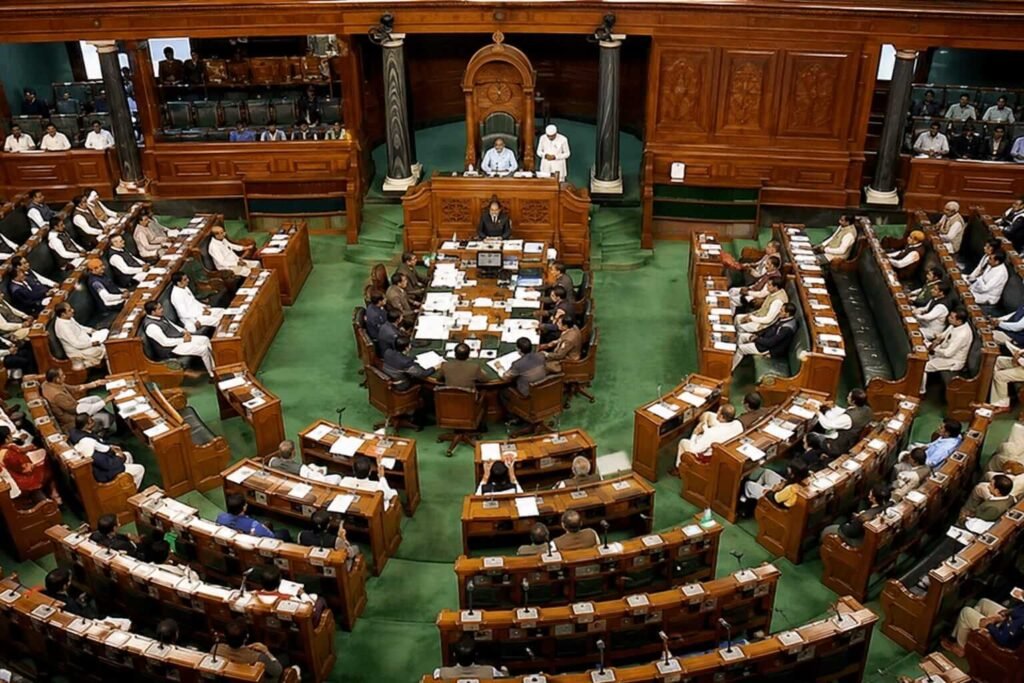
Health insurance claim rejection? Know your rights, understand the reason, and take the right steps to appeal.
New Delhi – Health Insurance Claim: The government has told Parliament that it is not considering any proposal to give a treating doctor’s clinical judgment overriding priority over an insurer’s assessment when it comes to settling health insurance claims, even as concerns persist over policyholders being denied hospitalisation cover on grounds such as “non-medical necessity” or “exclusion.”
The government has told Parliament that it is not considering any proposal to give a treating doctor’s clinical judgment overriding priority over an insurer’s assessment when it comes to settling health insurance claims, even as concerns persist over policyholders being denied hospitalisation cover on grounds such as “non-medical necessity” or “exclusion.”
The clarification came in a written reply in the Lok Sabha on July 24, 2026, from Union Minister of State for Health and Family Welfare Prataprao Jadhav, in response to an unstarred question raised by MP Devesh Shakya on the rejection of claims by private health insurance companies.
Also Read: Pet Insurance: A Complete Guide to Choosing the Right Cover for Your Dog or Cat
Health Insurance Claim: The question raised in Parliament
Shakya’s question, listed as Unstarred Question No. 1146, sought to establish whether the government was aware that private health insurers are rejecting claims for hospital admissions that had been advised by specialist doctors, citing grounds such as non-medical necessity or policy exclusions, and whether this practice was adversely affecting patient treatment.
Beyond seeking acknowledgment of the problem, the question pressed the government on three specific fronts. First, it asked whether national standard guidelines or a medical audit system were being proposed to prevent insurers from interfering with clinical or medical discretion. Second, it asked whether the government, working in coordination with IRDAI and health sector regulators, was considering a mandatory policy that would give overriding priority to the clinical judgment of the attending doctor. Third, it sought company-wise data on the volume of medical claim applications received and the number rejected specifically on grounds of non-medical necessity or exclusion over the preceding three years.
Health Insurance Claim: Government’s response: no override for clinical opinion
Responding to all four parts of the question together, the ministry stated that IRDAI has informed it that insurers assess claims on the basis of policy conditions and the merits of each individual case. This assessment process, per the reply, factors in clinical records, the treating medical practitioner’s assessment, applicable medical standards, and Standard Treatment Protocols wherever these are available, alongside the terms and conditions of the policy itself, in order to determine the insurer’s contractual liability under the health insurance policy.
Crucially, the government stated in unambiguous terms that no proposal is currently under consideration with IRDAI to accord overriding precedence to the clinical opinion of the treating doctor for the purpose of determining insurance claim liability. This directly answers part (c) of the question in the negative, indicating that the existing framework, where insurers weigh clinical input alongside policy terms and protocols rather than being bound by it, is set to continue without regulatory change.
Health Insurance Claim: No mechanism to track rejection data by reason
On the request for company-wise data on claims rejected specifically on grounds of “non-medical necessity” or “exclusion” over the last three years, the government’s answer was that this information is not available in that form. According to the reply, IRDAI does capture data relating to the overall repudiation of health insurance claims by insurers. However, it does not, at present, capture claim repudiation data segregated by specific grounds such as non-medical necessity or exclusion.
As a consequence, insurer-wise data on repudiations attributable specifically to these two reasons could not be furnished to Parliament. This effectively means that while aggregate rejection figures exist within the regulatory system, there is no granular, reason-coded dataset that would allow policymakers, researchers, or the public to identify which insurers are rejecting claims on these particular grounds, or how frequently.
Also Read: How to Lower Car Insurance Premium in India: 5 Proven Ways to Cut Costs
Health Insurance Claim: What this means for policyholders
Read together, the response has two practical implications for policyholders. First, on the substantive question of who gets the final word on a hospitalisation claim, the government’s position confirms that clinical judgment by the treating doctor is one input among several, including policy terms, Standard Treatment Protocols, and the insurer’s own assessment of the case, rather than a determinative or overriding factor. Insurers, in other words, retain contractual discretion to accept or reject a claim even where a specialist has recommended admission.
Second, on transparency, the absence of reason-coded repudiation data means there is currently no official, publicly available way to quantify how often “non-medical necessity” or “exclusion” specifically are being used as grounds for rejection, whether at an industry level or for individual insurers. This limits the ability of patients, policyholder advocacy groups, and researchers to independently assess the scale of the concern raised in Shakya’s original question, since the only rejection data IRDAI currently holds is aggregated rather than broken down by cause.
The reply does not indicate any planned change to this data-capture practice going forward, meaning insurer-wise, reason-wise claim rejection figures are likely to remain unavailable in official responses for the time being.