A Coral Reef Filed a Claim — And Won: How a Hurricane Proved Nature Can Be Insured
Coral Reef: A hurricane has shown how insurance can move beyond people and property to protect nature itself. A coral reef’s successful claim highlights the growing role of innovative insurance in climate resilience.
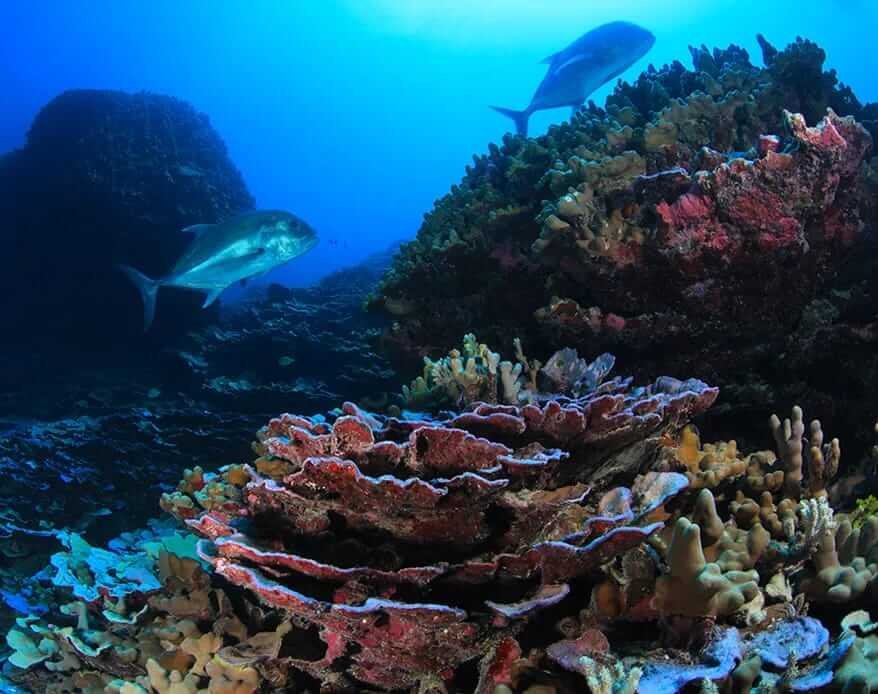
A coral reef became the unlikely beneficiary of an insurance payout after a hurricane. The case offers a glimpse into how nature could be insured against rising climate risks.
Coral Reef: When Hurricane Lala’s winds swept across Hawaii’s Big Island in mid-August as a Category 1 storm, they triggered something beyond the usual round of damage assessments to homes and roads: a $200,000 payout from a parametric insurance policy written specifically to protect a coral reef, the first such claim ever settled in the US. The Nature Conservancy confirmed this week that global reinsurer Munich Re released the payment within days, under a policy the conservation group has held since 2022. The money is now moving to the Hawaiʻi Emergency Reef Restoration Network, so crews can survey broken coral and cement fragments back into place before a second storm system reaches the islands.
Also Read: Amazon for Insurance? Why Bima Sugam Is IRDAI’s Brahmastra Against 30% Commissions
Coral Reef: How the policy works
The was first placed in 2022 through broker WTW, with Munich Re as underwriter, following a competitive placement process. It built on a structure The Nature Conservancy had already tested in Quintana Roo, Mexico, in 2019 — a policy that paid out after Hurricane Delta struck in 2020.
Like most parametric products, the Hawaii policy does not rely on loss adjustment. It pays automatically once tropical-storm-force winds of 50 knots (roughly 57 mph) pass close enough to the reef. Payouts scale from a $200,000 floor to a maximum of $2 million a year, capped at $1 million per storm, according to The Nature Conservancy’s renewal announcement. Government wind-speed data — not a physical inspection of the reef — determines the claim.
That design carries basis risk in both directions: a fast-moving storm could trigger a payout with only light reef damage, while a slower system with weaker winds but heavy sediment runoff could damage a reef without triggering payment at all.
Coral Reef: Why a conservation group buys reinsurance-grade cover
Healthy coral reefs can absorb as much as 97% of incoming wave energy before it reaches shore, according to Hawaii-based conservation researchers, functioning as a natural breakwater for the roads, resorts and homes behind them. When reefs are damaged and left unrepaired, that buffering effect weakens, increasing exposure for properties further inland.
Julia Rose, marine project manager for The Nature Conservancy in Hawaii, told Honolulu Civil Beat she hopes premiums become more affordable as the market for this type of coverage grows. The Nature Conservancy has paid roughly $432,000 in premiums over the past four years — more than double what this single payout covers. Funding is subsidized in part through the Howden Group Foundation, the charitable arm of broker Howden.
Hawaii Insurance Commissioner Scott Saiki told Honolulu Civil Beat that healthy reefs provide meaningful protection for the state’s coastlines and communities, and said his office is encouraged to see insurance capital deployed quickly to fund restoration after damaging storms.
Coral Reef: A model to watch
When The Nature Conservancy launched the original Hawaii policy in November 2022, the experts said it not just as a one-off purchase but as a potential template, noting the mechanism could become a model for defending natural structures around the country if it worked. The 2022 policy carried a roughly $110,000 premium for up to $2 million in coverage across most of the main Hawaiian Islands. That framing has held up: this month’s payout is the first time the “if it works” question has been answered with an actual claim on US soil.
Also Read: Amazon for Insurance? Why Bima Sugam Is IRDAI’s Brahmastra Against 30% Commissions
Coral Reef: Part of a wider — and growing — nature-insurance market
The Hawaii payout is not the first time a reef insurance policy has been triggered globally, and it fits into a pattern that has been building since 2020.
The first-ever reef insurance payout anywhere came from Mexico, where a Swiss Re-underwritten policy protecting the Quintana Roo coastline paid out roughly $850,000 after Hurricane Delta struck the Yucatán Peninsula as a Category 3 storm. That payment funded roughly 80 members of a locally organised “Reef Brigade” to stabilise more than 1,200 large coral colonies within a week of the storm.
A second payout followed in November 2022, when the Mesoamerican Reef (MAR) Insurance Programme — covering sites across Mexico, Belize, Guatemala and Honduras and underwritten jointly by AXA Climate and Munich Re — triggered a $175,000 payment after Hurricane Lisa hit Belize’s Turneffe Atoll at Category 1 strength. That programme, designed by WTW’s Climate and Resilience Hub with the Mesoamerican Reef Fund, has since expanded to cover 11 reef sites across the four countries.
The model has continued to spread. Earlier this month, WTW and the Caribbean Biodiversity Fund launched a separate parametric policy covering roughly 1,800 square kilometres of coral reef along the coasts of the Dominican Republic, Jamaica and other Caribbean nations, with capacity provided by Liberty Mutual and technical support from the InsuResilience Solutions Fund. WTW has also taken the concept to a South Pacific reef in Fiji.
Gallagher Re has cited market data putting the global parametric insurance sector at roughly $11.7 billion in 2021, projected to grow to about $29.3 billion by 2031. More recent industry estimates put the global market at roughly $21–24 billion for 2025–26, with the US accounting for the largest single-country share at an estimated $5.5 billion. Analysts attribute the growth to a widening gap between economic losses and insured recovery: Aon has estimated $260 billion in global economic losses from natural catastrophes in 2025, with roughly half of that uninsured.
The Hawaii policy’s wind-speed trigger does not respond to reef damage from coral bleaching, vessel groundings or marine heatwaves, including the 2015 ocean-warming event from which Hawaii’s reefs are still recovering. Some members of the restoration coalition have questioned publicly whether the premium cost is the most efficient way to fund reef work, given the narrow scope of the trigger.
Coral Reef: What’s next
The Nature Conservancy and its partners are working to assess reef damage and reattach broken coral fragments before Hawaii’s next storm system arrives. Rose and colleagues have said they expect the wind-speed data behind this payout to support future policy pricing discussions with funders. Whether that leads to lower premiums, broader coverage or additional carriers entering the space will determine whether the Hawaii model expands beyond a single pilot.