Norway vs England: Why FIFA’s Insurance Isn’t Enough for Football’s Biggest Star
FIFA insures World Cup players, but its payout caps leave elite stars like Erling Haaland dangerously underprotected. Here’s the private insurance market clubs quietly rely on instead.
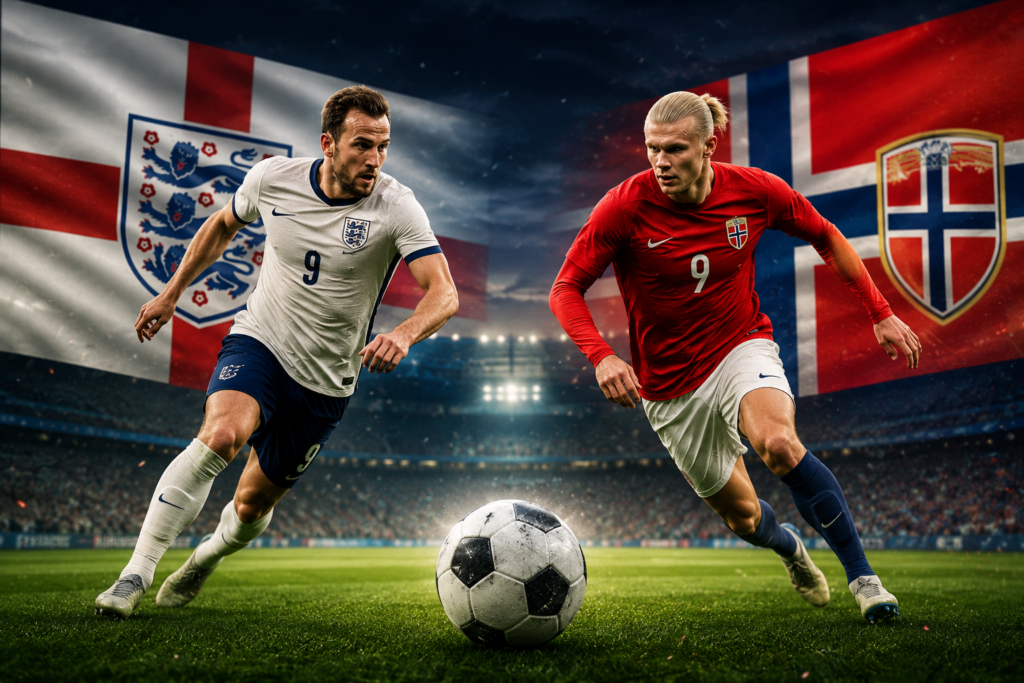
Haaland vs Kane: England and Norway face off in a high-stakes FIFA World Cup 2026 quarter-final, with both sides battling for a coveted place in the tournament's last four.
Today’s Norway vs England World Cup quarter-final puts Erling Haaland’s entire market value on the line, and here’s the uncomfortable truth for Manchester City: FIFA’s own insurance programme almost certainly wouldn’t come close to covering their loss if he suffered a serious injury on that pitch. This gap between what FIFA insures and what elite clubs actually stand to lose is one of the most overlooked corners of the entire insurance industry, and it’s on full display in matches exactly like this one.
FIFA’s Club Protection Programme, which technically covers every player at this World Cup, caps its compensation at a rate matching roughly £120,000 a week in salary. That sounds like a significant number until you consider that a player of Haaland’s calibre carries a transfer valuation running into hundreds of millions of euros, built on years of scouting, development, and performance data. FIFA’s scheme was never designed to protect that kind of asset value — it was designed to cover wages, full stop. Everything above that capped rate, and every euro of value tied to the player as a tradeable asset, sits entirely outside FIFA’s safety net.
This is exactly where the private insurance market steps in, and it’s a genuinely fascinating niche within sports insurance. Major football clubs increasingly purchase standalone player injury policies that go well beyond simple wage protection. These policies are typically structured to cover three distinct types of financial exposure: the shortfall in salary that FIFA’s cap doesn’t reach, the loss of income a club suffers when its biggest draw can’t play, and — most interestingly — the devaluation of the player himself as a financial asset if a serious injury damages his long-term career prospects or transfer value.
Think of it less like a typical health policy and more like insuring a piece of fine art or a rare asset, except this asset runs, tackles, and takes physical impact for ninety minutes at a time, multiple times a month, across club and international competition. The insurance industry has effectively had to build entirely bespoke underwriting models to price this kind of risk, factoring in a player’s age, injury history, position, and playing style, since a targeted forward like Haaland or Kane carries a very different risk profile than a goalkeeper or a deep-lying defender.
What makes today’s match particularly interesting from an insurance standpoint is that it puts two of the highest-valued attacking players in world football directly against each other in a single elimination fixture, the exact scenario private insurers price most cautiously for. Every heavy tackle, high-speed sprint, and goalmouth scramble today carries a financial dimension that has nothing to do with the scoreline and everything to do with how the world’s biggest insurers have learned to price risk around the world’s most valuable athletes.