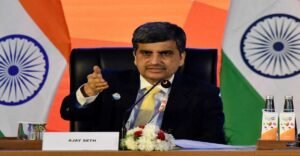
Health Insurance Is Now a Pull Product, Renewal Effort Is Lower: IRDAI Chairman Ajay Seth
IRDAI Chairman Ajay Seth highlights a shift in the health insurance market, where customers are increasingly driving demand and insurers face lower renewal-related effort.
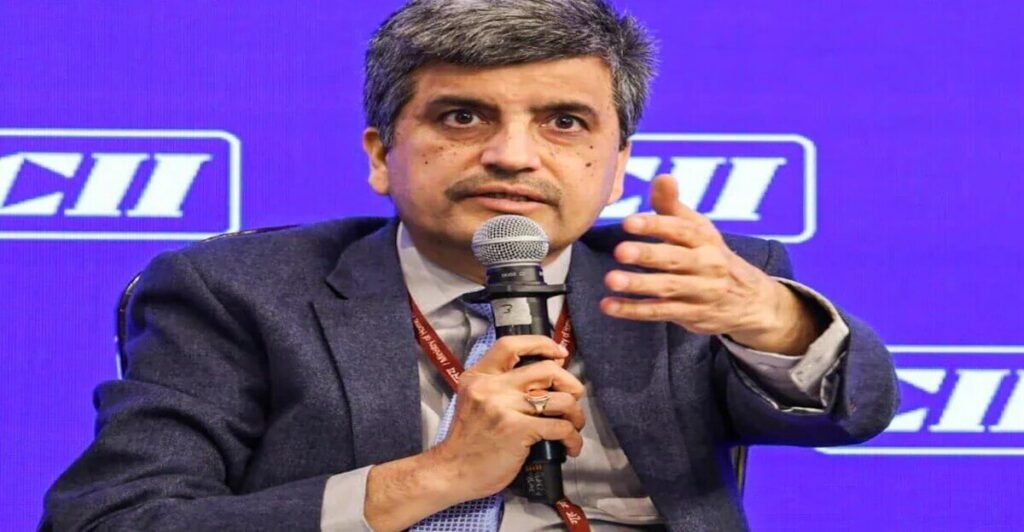
IRDAI Chairman Ajay Seth says health insurance has become a pull product, with rising consumer demand reducing the effort required to secure policy renewals.
NEW DELHI: Health insurance is now a pull product and not a push product, and the effort required for renewal is lower than before, Insurance Regulatory and Development Authority of India (IRDAI) Chairman Ajay Seth has said.
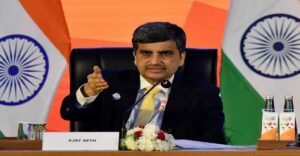
Speaking at the BS BFSI Summit on October 27, Seth said the insurance sector will have to grow at 1.5 to 2 times the pace of the economy for 10 to 15 years. He said he expects the motor insurance product to become operational on Bima Sugam within a month, adding that he would have wanted the platform to be live six months ago, and that the next set of work for the Authority is on claims experience.
IRDAI – Health insurance: pull product, but complaints remain
Seth said health insurance has moved from being sold to being sought, and that policyholders now need less effort to renew. He also said the segment remains an area of concern. He recalled saying at the same forum a year earlier that it was in an “unstable equilibrium”, and that the largest number of customer complaints arises there.
Growth, he said, depends on getting these issues right, and the challenge is not only affordability but also quality. He said the industry currently serves the top 10-15% of the population reasonably well, and that reaching the top 50% would require a transformative change in how insurers are organised. Health insurance, he added, is the largest driver of growth in general insurance.
Also Read: IRDAI’s Commission Cut Plan Risks Hurting Insurance Reach, Warns Its First Chairman
IRDAI: “Transformative, not incremental” change
Seth said the sector has served the country reasonably well at each stage, from the era of Life Insurance Corporation of India and public sector insurers, to the opening of the sector about 27 years ago, to the 2015 reforms that brought a large number of general insurers into the market. He said the recently enacted Sabka Bima Sabki Raksha Act, 2025 has raised the bar further and looks towards the future. Meeting that bar, he said, requires not an incremental change but a transformative one. He added that he will attempt to build consensus for the reforms and is listening to feedback.
He described the unmet demand as large. With India’s real GDP growth targeted at 8%, he said insurance needs to expand at 1.5x or even 2x that rate over the next decade or more. He clarified that the 8% figure is real growth, while the industry’s performance is usually measured in nominal terms. Life insurance has been growing at about 10%, in line with nominal GDP growth, while general insurance has been growing at roughly 1.3 times that rate.
IRDAI: Claims, transparency, digital and Bima Sugam
On what it would take to reach the target, Seth listed three areas. The first is claims management and the claims experience. He said the claims experience should be friendly and work like clockwork, and that this is where the Authority intends to focus in the coming months, particularly for the general insurance industry.
The second is transparency, which he said builds trust. He pointed to the number of products in the market, which he put at about 1,500 in life insurance and about 1,000 in health insurance. Policyholders, he said, cannot easily find out in an understandable form how much effective cover they are getting or what return their savings are earning.
The third is the digital journey. Seth said intermediaries will remain important, but a large part of the public will be comfortable transacting digitally. He said insurance should learn from the efficiencies and user experience built in banking and capital markets, and adopt the practices that have worked there. On online aggregators, he said they play a significant role and are a good model to follow on the digital journey, but cautioned that any platform trying to do too many things can end up with a confused objective.
On Bima Sugam, Seth said he expects the motor insurance product to be operational in a month. He described it as a neutral product on which customers can compare prices, and said prices on Bima Sugam will be much lower.
IRDAI: Why Seth wants to move beyond “penetration”
Asked what the regulator can do to raise India’s insurance penetration, which was described during the discussion as being in the low single digits, Seth said the framing itself should change. He called penetration the lens of the shareholder, since it measures the size of the insurance market as a share of GDP. From an economic perspective, he said, the questions should be how many lives and economic entities are covered, what effective cover they hold, and how effective that cover is per rupee spent. He said these should replace penetration and density as the main metrics, and noted that those are the measures used in mature markets.
He backed this with data. In life insurance, he said, the number of new policies issued each year has stayed below about 3 crore over the last 10 years, and the total number of policies in force has not grown because surrenders and maturities offset new issuance. In retail health insurance, by contrast, he said coverage has grown from about 1.2 crore a decade ago to about 3 crore.
Seth also cited government-backed social insurance schemes. He said about 13 crore people hold cover under the Pradhan Mantri Jeevan Jyoti Bima Yojana and about 25 to 30 crore under the Pradhan Mantri Suraksha Bima Yojana, with year-on-year variation. The basic cover under these schemes is Rs 2 lakh, which he said equals about eight to nine months of per capita income. He said the schemes work well, largely because public sector banks and some private insurers have taken ownership of them.
The larger gap, Seth said, lies with families earning Rs 50,000 to Rs 1 lakh a month. For them, he said, there is demand for simple products customised to different income levels.
IRDAI – FDI: a decade after the 2015 reforms
The moderator also asked Seth to assess the foreign direct investment journey since the 2015 reforms, which raised the FDI limit, noting that 100% FDI is now permitted. Seth began by going back to 2000, when the sector was first opened up, and said that in the first 15 years about 74% of the foreign money that came in went into life insurance. The transcript available ends before he completes his response on FDI.