IRDAI to Examine Hospital Bills and Claim Payouts in New Consultation Paper
IRDAI proposed review will focus on hospital billing practices and claim settlement payouts, potentially shaping greater transparency in health insurance.
IRDAI plans to examine hospital bills and insurance claim payouts through a new consultation paper, aiming to bring greater scrutiny to healthcare costs and claims.
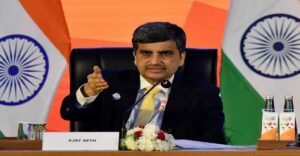
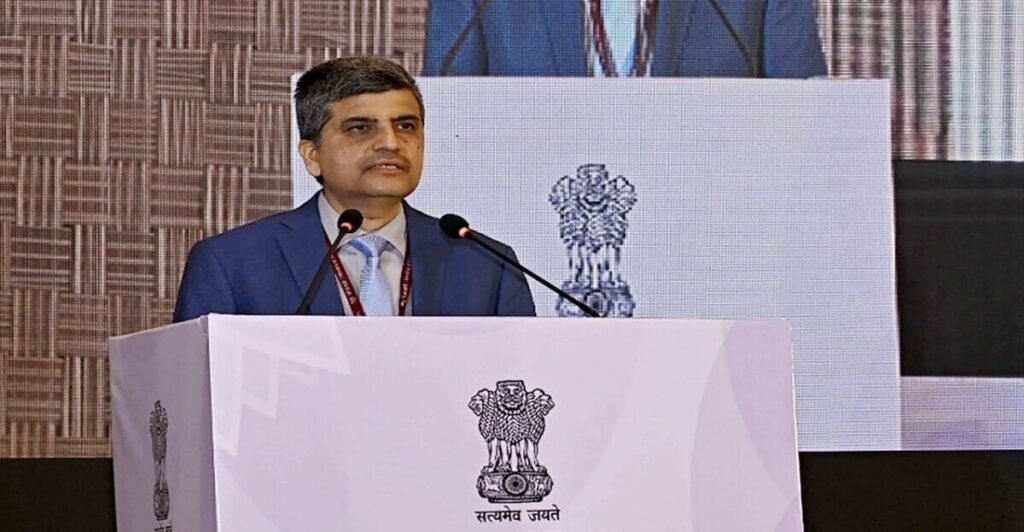
NEW DELHI – The Insurance Regulatory and Development Authority of India (Irdai) will issue a fresh consultation paper on healthcare billing practices and health insurance claims settlement, Chairman Ajay Seth said on Thursday.
Speaking at a banking and financial services summit in Mumbai, Seth said the regulator needs a firmer grasp of treatment costs, utilisation patterns, fraud and the way healthcare providers operate. “We aim to come out with another consultation paper on that,” he said. No release date was announced.
IRDAI: Five Priority Areas for the Insurance Sector
Seth named five areas that need attention: insurance economics, product suitability, claims and health insurance, reinsurance and market conduct, and digital public infrastructure.
He said health insurance complaints are a useful guide to how products and insurers are actually performing. Counting complaints is not enough, he argued. Insurers should look at root causes, how long resolution takes, how many cases are reopened or escalated, and which grievances keep coming back.
He also raised a gap in the product range for middle-income households. “Even for a family earning ₹50,000 a month or Rs 1 lakh a month, there are no suitable products. For Rs 2 lakh and above, there are enough products in the market,” he said, adding that healthcare needs differ across income groups.
He acknowledged work done by the Confederation of Indian Industry and urged insurers and healthcare providers to work together on costs and claims issues.
The concern about the so-called “missing middle” is not new. A NITI Aayog discussion paper estimated that at least 30 per cent of the population, about 40 crore people, remain uninsured despite being able to pay a modest premium. Medical inflation, meanwhile, is estimated at around 14–15 per cent, outpacing wage growth.
IRDAI: Why Claims and Billing Are Under the Lens
Irdai’s data shows a gap between volume and value in health claims. In FY25, general and health insurers settled 3.26 crore health claims and paid out ₹94,247 crore. Seth has previously observed that while the number of claims settled is high, the amount paid, particularly in full, is sometimes lower than expected.
Cashless treatment now accounts for a large share of payouts. Industry presentations put it at roughly 66 per cent of claims, or ₹62,554 crore of the ₹94,248 crore paid. Since August 2024, insurers have been required to decide on cashless pre-authorisation within one hour and give final authorisation within three hours of a discharge request. Insurers and hospitals say that billing formats and insurance terms are not yet standardised, which complicates settlement.
Cost containment has been under discussion elsewhere in the system. A report by the National Health Authority under Ayushman Bharat has reportedly found private hospitals billing two to three times more for insured patients for identical treatments. A regulator-chaired panel has also been reported to be considering standardised treatment rates, uniform coverage and wider use of the National Health Claims Exchange, a common platform for hospitals and insurers to exchange claims and billing data. One source cited in those reports estimated that 10–15 per cent of health claims may be unwarranted or fraudulent.
IRDAI: Distribution Reforms and the Commission Debate
Seth also addressed how insurance is sold and paid for. Premiums, he said, must cover expected risks, operating expenses and distribution costs. When acquisition and servicing costs rise without better coverage or service, policyholder value erodes and pressure builds on premiums or insurer margins. “Affordability means both price and value,” he said.
Distribution, he said, should not be seen as only a sales function, since it also covers risk assessment, product explanation, documentation, servicing and customer relationships. Remuneration should therefore reflect product complexity, channel, effort, service quality and customer outcomes. “High commissions are not automatically unjustified,” he said, noting that complex risks can demand significant effort, while low-cost channels do not automatically deliver better service.
The remarks follow Irdai’s consultation paper titled Recalibrating Economics of Insurance Distribution, released on September 23, 2026. It proposes product- and channel-specific commission caps and tighter expense limits. For general insurers, the expense-of-management ceiling would fall from 30 per cent to 25 per cent over two years and 20 per cent over five. Reported proposals for health insurance include caps of 15–20 per cent on commissions for new policies and 5–10 per cent on renewals and porting. The paper notes that between FY23 and FY25, retail health premiums rose 53 per cent while commissions rose 118 per cent. Insurance and distribution stocks fell sharply the day after its release, and the consultation window closes on October 25, 2026.
Seth listed four objectives for the reforms: better policyholder value, stronger competition, wider and more efficient distribution, and greater accountability.
In a fireside chat later, he said he had met representatives of more than 40 insurers and 10 distributors since the paper was published. “Everybody is saying the direction is right and the strategy is right,” he said.
He acknowledged, however, that insurers and distributors differ in segments, business models and capacity to improve efficiency, and that these differences must be considered in planning the transition. He did not say whether Irdai would offer a glide path for implementation.
The consultation paper, issued ahead of draft regulations, is meant to give stakeholders another chance to comment and to support an orderly transition, he said. “Everybody is saying to take care of or facilitate an orderly transition to an efficient frontier, which is our aim to begin with,” Seth said.