Congress MP asks IRDAI chief, FM Sitharaman to scrap “GST-like” complex insurance proposals
IRDAI: Congress MP said the proposals could add to compliance burdens and make insurance more complicated for consumers and the industry.

IRDAI: A Congress MP has urged IRDAI and Finance Minister Nirmala Sitharaman to scrap proposed insurance measures described as overly complex and “GST-like.
NEW DELHI, IRDAI: Congress Rajya Sabha MP Praveen Chakravarthy has asked the Insurance Regulatory and Development Authority of India (IRDAI) to go back to the drawing board on its proposed overhaul of insurance distributor commissions, warning that the draft framework is too complicated and would weaken the very intermediaries the regulator itself calls vital.
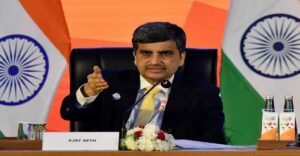
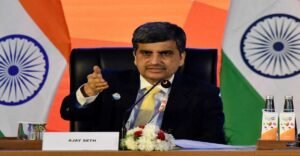
In a letter to IRDAI Chairperson Ajay Seth, with a copy marked to Union Finance Minister Nirmala Sitharaman, the MP urged the regulator to review its consultation paper “Recalibrating Economics of Insurance Distribution” and evolve a simpler, lighter-touch regulatory framework.
IRDAI issued the paper on September 23, and public comments are invited until October 25.
IRDAI: “Read in detail”, studied industry representations
Chakravarthy said he had read both parts of the paper in detail, along with the Reserve Bank of India’s Financial Stability Report and the Economic Survey 2025-26, to which the paper refers. He added that he had also received and studied representations against the proposed regulations from the insurance brokers’ forum and many insurance startups.
Also Read: The Lego Lie: How a Fake Burglary Claim Landed a Man 28 Months in Prison
IRDAI: Three objectives, one delicate balance
The MP said the insurance regulator has a “difficult and delicate task” in balancing three national objectives: expanding the number of Indians covered by life and general insurance, making a large pool of long-term insurance capital available for national projects, and preserving financial stability by minimising the risk of insurer defaults.
To make insurance accessible to the vast majority of families, especially in rural areas and among the poor, he said products must be simple to understand and affordable. That, in turn, depends on intermediaries and distributors, whose incentives must be correctly aligned. At the same time, insurers must be financially stable enough to expand coverage, viable with a low cost structure, and less reliant on capital markets to pay claims.
Chakravarthy agreed that the consultation paper is right to highlight problems with the incentive structure for insurance brokers. But he said the solution it proposes falls short on three counts.
1. A vital role, but weaker incentives
Pointing to page 25 of the paper, which says consumers depend heavily on intermediaries because they cannot confidently compare prices independently, the MP said insurance is a complex product that needs to be explained and sold, not understood and bought automatically. The role of the intermediary is therefore vital, and so are the incentives that drive it.
It is “counter-intuitive”, he said, that IRDAI proposes large commission cuts for a role that, by its own admission, is vital to the industry. Lower commissions will act as a disincentive and lower the quality of intermediaries, he warned.
If the objective is to make insurance accessible to a wider section of the population, Chakravarthy argued, the answer is to strengthen incentives and attract better intermediaries, not the reverse. He called for a commission framework that attracts high-quality intermediaries but also penalises them for mis-selling or repeat selling.
2. A GST-style maze that could hurt the whole industry
The proposed commission structure, the MP said, is complicated. Nearly 100 commission rates are prescribed over four pages, varying by product and distribution channel.
“We must learn from GST, where a complicated rate structure caused confusion,” he said in the letter. With 26 life insurers and 45 general and health insurers, India’s insurance market is competitive enough to benefit consumers under light-touch regulation, he argued.
Such detailed regulation of commissions, he cautioned, can harm the growth and innovation of the sector and turn it into a market of only a few large players. He suggested that IRDAI study global models of commission regulation, such as those in Australia, South Africa, China and the UK, and consider a simpler structure than the one the consultation paper proposes.
3. Protect livelihoods, but keep insurers financially viable
Chakravarthy said a sudden overhaul of the commission structure could disrupt intermediaries and the eight million brokers who earn their livelihood from this work.
At the same time, he noted, it is important that insurance companies keep their costs under control, remain operationally profitable and stay financially viable enough to expand the market.
His alternative: it may be best for IRDAI to regulate the overall cost structure of insurers and fix absolute caps, with one cap for plain vanilla insurance products and another for insurance-cum-investment products.
IRDAI: “Does not strike a balance”
Concluding the letter, Chakravarthy said that in their current form, the proposals do not strike a balance between the national objectives for the insurance sector and commensurate regulatory measures to achieve them.
He requested the regulator to review the proposals and evolve a simpler, lighter-touch framework that widens insurance coverage, protects livelihoods, makes insurers financially stable and still prevents mis-selling.
Chakravarthy is a member of the Parliamentary Standing Committee on Commerce and the Consultative Committee for the Ministry of Commerce.