PB Fintech’s Odyssey: How IRDAI Is Narrowing Its Options Beyond Commission Caps
IRDAI’s commission paper took more than a third off PB Fintech’s value in a single session. The bigger story is what came after: the regulator shutting, one by one, the exits the company was counting on.

PB Fintech faces a widening regulatory challenge as IRDAI’s proposed reforms threaten to reshape the economics of insurance distribution.
In Homer’s The Odyssey, Odysseus must sail past the Sirens to reach home. Their song is so irresistible that sailors who hear it are lured to their deaths. Circe, who knows the danger, has already told him how to get through it. The crew plug their ears with wax and keep rowing. Odysseus wants to hear the song, so he has himself tied to the mast.
The crew and their captain sail the same passage, but they are not exposed to it in the same way. The sailors can shut out the song and keep rowing. Odysseus cannot. He hears every note, and he cannot turn the ship.
Now swap the ship for India’s insurance industry, and the man at the mast for PB Fintech, the parent of Policybazaar and Paisabazaar. I know, comparing Policybazaar to Odysseus is the last thing anyone would expect. But please bear with me.
The insurers in the ship are the crew. For them, commissions are a cost of doing business. For a distributor such as PB Fintech, commissions are the revenue. So the same change in commission structure lands very differently on each. The song is IRDAI’s proposed commission caps, and IRDAI is also Circe, the one that laid out the passage in advance.
The market heard the song first. On September 24, the day after IRDAI published its consultation paper, PB Fintech’s stock fell 36%. The company faces a regulatory challenge that could reshape the economics of a business it has spent 18 years building. But I am not here to tell the obvious story, which we are all aware of. What I am chronicling is how the exits PB Fintech was counting on have been shut by the regulator, one by one.
But First, a Brief Background
PB Fintech is stuck in the eye of a storm. Why? Because India’s insurance regulator IRDAI released its consultation paper, “Recalibrating Economics of Insurance Distribution,” on September 23.
The paper puts hard ceilings on commissions. Just FYI, the 2023 framework had no product-level caps. Term insurance commissions would be capped at 30% for individual distributors and 25% for corporate ones, against up to 51% today. Health insurance commissions would be capped at 15% to 20% on new policies, with renewals and porting at 5% to 10%. For mandatory third-party motor cover, distributors could get little or no commission.
It also tightens what insurers can spend overall. Life insurers move to a company-level expense limit of 15% of premium within two years and 12.5% within five. General insurers go from 30% of gross written premium to 20% of domestic premium. And every form of distributor reward, including contests, trips and co-marketing, now counts as commission.
Also Read: IRDAI Could Enforce Insurance Commission Caps From January 1: Report
The Crew With the Wax
The insurers aren’t much bothered. Some of the biggest players are already close to or inside the proposed expense of management (EoM) limits. SBI Life’s expense ratio of about 10.6% in FY26 is already below the 12.5% benchmark, and brokerages say SBI Life and LIC are relatively well placed to absorb the changes. And at that size, even a 12.5% envelope is an enormous pool of rupees to run a business on.
Nor can insurers quietly make distributors whole. The room to compensate distributors through other spending is limited, because the expense caps still apply and any payment to a distributor is treated as commission. The crew hears a smaller noise because the squeeze lands on someone else’s line.
Three Doors
When the paper landed after the market close on September 23, PB Fintech’s senior management went on an analyst call the next day to calm the nerves. On that call they signalled two routes the company could take to offset what it stands to lose, and a third demand followed in public. But in a series of interviews, the regulator has shut one door after another on PB Fintech.
Door One: The MGA Question
On the September 24 analyst call, management said it would ask the regulator to approve a Managing General Agent framework. That route would let it do underwriting, pricing and policy binding for insurers, rather than only selling.
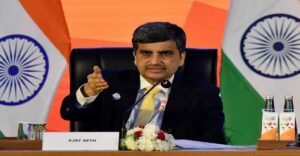
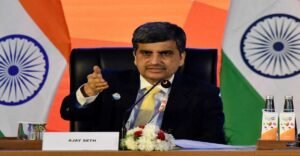
Last week, in a television interview, IRDAI Chairman Ajay Seth indicated that the MGA licence is mainly meant for foreign insurance companies. He categorically denied it for domestic insurers and distributors. That hope of an MGA licence is a distant dream for a company that employs around 35,000 people.
Door Two: Manufacturer or Distributor, Not Both
The second exit was to become an insurer itself. Founder Yashish Dahiya has said that after 18 years of building quality business, it becomes harder to justify not having a manufacturing entity of its own.
Seth has been just as direct from the other side. His stated position is that an entity should be either an insurer or a distributor, not both. So the choice is a rock and a hard place.
Policybazaar either gives up the distribution moat it spent years building, or steps into a role it has deliberately avoided for 18 years. Neither route preserves the business as it exists today.
Door Three: No Glide Path for Distributors
The third demand never came up on the analyst call. The founder, in an interview with a news channel, asked that distributors get a commission glide path in line with the one insurers get on Expenses of Management.
The logic is easy to see. Insurers’ expense reduction is designed as a phased glide path. And the broking industry has asked for the same transition for brokers, warning of a 60-70% revenue impact.
In an interview with an online publication, Seth declined that too. He called the commission reset an immediate priority and warned that the demand could have unintended consequences. So, no gliding for PB Fintech.
The Sliver
IRDAI’s reforms are still proposals. Comments close on October 25, and Seth has said feedback will be weighed if it’s backed by sound economic or business logic. By his own account, draft regulations will go back out for public comment before the final rules are notified. IRDAI is reportedly targeting January 1 or April 1 to start the new regime, and Seth has stayed firm that distribution costs must come down.
There are real unknowns inside that window. Management has said it’s not yet clear whether the caps would apply to existing policies or only new ones. That matters enormously for a company whose annualised renewal revenue reached ₹1,126 crore in Q4 FY26.
Still, the tone and tenor reek of finality. The regulator has cut off the company’s escape routes in public but not directly, one at a time, and the answers all point the same way: it’s going to get difficult for PB Fintech. IRDAI’s strong views on dark patterns are also a headwind for the company. That’s a story for another day, and an interesting one.
For now, PB Fintech is where Odysseus was, bound to the mast and listening. Except this song is no temptation, and the knots only seem to be tightening. Can PB Fintech survive the passage?