Insurance Brokers Push Back on IRDAI Overhaul: ‘Architecture That Exists Nowhere in the World’ Needs Deeper Study
Insurance Brokers are pushing back against IRDAI’s proposed overhaul, saying the framework has no clear global precedent. The industry wants deeper analysis before implementation.

Insurance Brokers have raised concerns over IRDAI’s proposed overhaul, calling its architecture unlike any existing model worldwide.
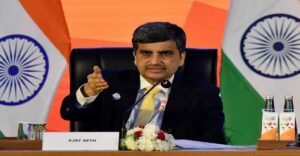
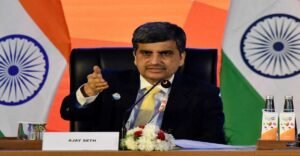
Insurance Brokers: The Insurance Brokers Association of India (IBAI) on Wednesday asked the insurance regulator to slow down on its proposed redesign of how insurance is sold. It said the plan, which it described as a distribution architecture that does not exist anywhere in the world, could have consequences for jobs, small customers and claims servicing that a three-month consultation window is too short to assess.
Addressing reporters at a media interaction, IBAI office-bearers said the industry backs the stated goals of the Insurance Regulatory and Development Authority of India’s (IRDAI) consultation paper, including affordability and higher penetration. Their objection, they said, is to the route chosen to reach them.
Insurance Brokers: Brokers dispute the commission numbers
The consultation paper notes that premium sourced through general insurance brokers rose 37 per cent between FY23 and FY27, while commissions climbed 173 per cent. That gap is central to the regulator’s case for tougher measures.
IBAI representatives said the rise is largely optical. They pointed to the paper’s own mention that, after 2023, marketing and other expenses that had effectively functioned as commissions under the earlier regime were reclassified and brought into the regular system. “Commissions were always being paid before the 2023 reform. They were being paid as marketing expenses,” an IBAI representative said, adding that the shift is also why GST cases arose before the clean-up.
The association stressed that the overall expense of management (EOM) limit is 30 per cent of premium, and that, according to IRDAI’s own data, the industry as a whole is spending about 26.5 per cent. “I’m allowed to spend 30 rupees, I’m spending 26. So there’s no problem,” a representative said. The industry has, in effect, converted fixed costs into variable costs, he argued.
Responding to a question on whether commissions have risen without a matching improvement in penetration, brokers said commission affects the premium a policyholder pays only as part of overall costs, and that the broader economics need to be considered. One representative noted that when the commercial pricing benchmark set by the industry’s burning-cost rate broke last year, premiums on the commercial side fell by about 80 per cent, and broker commissions, being a percentage of premium, fell by the same proportion. He also said hospitalisation costs are now roughly 2 to 2.5 times their pre-COVID levels, which affects retail health pricing.
Also Read: IRDAI Chief Rules Out Glide Path Sought by Brokers on Commission Caps
The association said policyholders are already receiving value, citing a claims payout of about Rs 85 for every Rs 100 of premium against a regulatory norm of Rs 70. A representative put the five-year average at 84.4 and the FY26 figure at 87, against a global average of 70 to 75. The regulator’s stated ambition is a 20 per cent cost ratio, which implies claims of Rs 80, a level the industry has already crossed, they said.
Asked whether they would accept the paper if the regulator guaranteed that savings are passed to policyholders, brokers said they do not see how pricing can be mandated across 25 to 30 insurers, each with different prices and coverage for similar products. Insurers running at an 85 per cent claims ratio would seek to correct it toward 70 per cent through pricing, they argued.
IBAI also said it does not have access to commission data, only premium data, and asked IRDAI to share what it has collected so the industry can examine anomalies and propose corrections together.
Insurance Brokers: ‘Too big and too untested’, say brokers
Insurance Brokers: The industry body said the proposed architecture is a bigger concern than commission levels. It described the industry as roughly Rs 10 lakh crore in size, with about 83 lakh people employed in distribution and around 20 lakh at insurers, and a significant source of inflows into the stock market through health, general and life insurers.
“If you are going to change the entire way a 10 lakh crore industry distributes business, and you are proposing a new architecture which doesn’t exist anywhere in the world, three months may be too short a period,” an IBAI representative said. He suggested that an independent third party carry out a deeper impact assessment, and said the matter deserves the attention of the government. IBAI has written to the Prime Minister and the Finance Minister.
Brokers said that in the last 15 to 20 days they have been discussing the proposals daily, including in board meetings, and are still identifying new consequences.
Asked about unintended effects, IBAI representatives named several:
- Claims advocacy: A broker acts as the policyholder’s representative when a claim arises, and brokers fear that role may be compromised.
- Fewer distributors: A fall in commissions may not degrade servicing on any individual policy, but it could reduce the number of distributors overall, with job losses and a possible impact on penetration.
- Blurred roles: Brokers represent the customer, while corporate agents represent insurers and are responsible for distribution. Clubbing the two, they said, dilutes protection for customers, who would not know whether they are dealing with a customer representative or a product seller.
On the question of open and closed architecture, a journalist noted that the paper says an entity’s classification may depend on regulation rather than choice. Brokers said an insurer’s distribution entity today has the option, but not the obligation, to be open, and reiterated that their responsibilities differ by law from those of a corporate agent.
They also said customer grievances are lowest and claim settlement highest in the broking channel, which they attributed to the more onerous regulation that applies to brokers. One representative said the industry will urge the regulator to hold all intermediaries to the same high standard of governance.
Responding to a query on whether claims support is the broker’s responsibility irrespective of earnings, whether Rs 10 or Rs 2, the association agreed and said that its objection is not to accountability. The association said it has made no submission on the commission rate itself.
Insurance Brokers: Small policies and MSMEs seen most at risk
Brokers cautioned against judging commissions by percentage alone. One representative said absolute rupee earnings matter, giving the example of a two-wheeler third-party policy with a premium of Rs 714. At 2.5 per cent, the commission would be about Rs 20. Brokers said such policies are serviced because they are cross-subsidised by own-damage and larger policies.
A representative of a mid-sized broking firm, licensed in 2002, said the firm expects to lose about 70 per cent of revenue under the proposal. He said the business is a professional service comparable to a chartered accountancy or law firm, and that losses would force brokers to drop their smallest customers. “MSMEs are the ones which are going to suffer the most,” he said, giving the example of a Rs 1,000 home insurance policy with Rs 100 in commission. Such products, he said, need to be actively sold.
Asked whether the changes could trigger consolidation, he said it was unclear why two loss-making companies would merge. A related question on whether the industry had studied the revenue impact of the proposal, and on regulatory reform in other markets, did not draw a separate response from the association.
IRDAI’s consultation process on the paper is under way, and the brokers’ association has said it will continue to engage with the regulator.