Flood in Assam: IRDAI Advises Insurers to Speed Up Claim Settlement
Flood in Assam: IRDAI has directed all insurers, including life and standalone health insurance companies, to fast-track claim settlement for the natural disaster affecting Sivasagar, Charaideo, Jorhat and Golaghat districts of Assam.
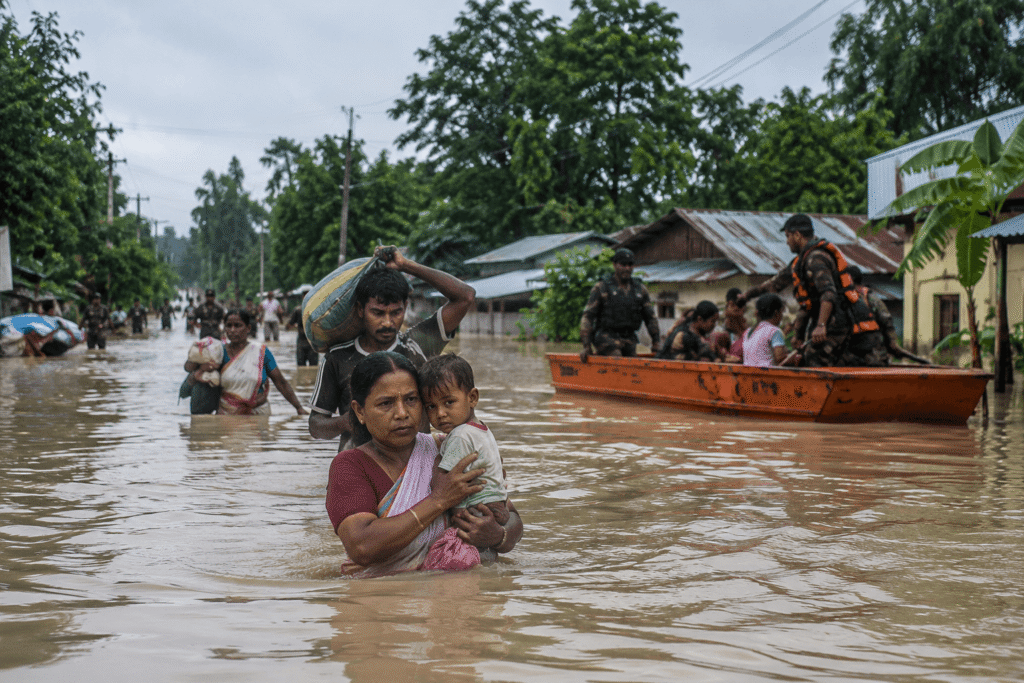
Flood in Assam: IRDAI has instructed insurers to fast-track claims arising from the natural disaster and floods affecting four districts of Assam.
New Delhi-Flood in Assam:The Insurance Regulatory and Development Authority of India (IRDAI) on Wednesday advised all insurers, including life and standalone health insurance companies, to fast-track the settlement of insurance claims arising from a natural disaster and subsequent flooding in four districts of Assam — Sivasagar, Charaideo, Jorhat and Golaghat — according to a press release issued by the regulator. The disaster and the heavy rains that followed have caused widespread loss of lives, damage to homes and business establishments, and damage to infrastructure across the four districts, the release stated.
Also Read: Third-Party Insurance: SC Extends Mandatory Cover for New Vehicles, What It Means For You
Flood in Assam: Surveyors, Loss Adjustors and Investigators to Be Mobilised
Insurers have been directed to make available the services of surveyors, loss adjustors and investigators immediately for the quick settlement of claims, the release stated. IRDAI said the arrangement has been made for the speedy and effective settlement of claims related to the natural disaster and the flooding caused by the heavy rains that followed it.
Flood in Assam: Senior Executive to Be Nominated, Chief Secretary to Be Informed
Insurance companies have been advised to immediately nominate a senior executive and make this information available to the Chief Secretary, according to the release. This nomination is intended to serve as a point of coordination between the insurers and the state administration during the disaster response.
Flood in Assam: District Claims Service Head for High-Claim Districts
In districts where the number of claims is high, insurers are required to appoint a designated District Claims Service Head for each such district, the release stated. This officer will be responsible for monitoring the speedy and effective settlement of claims within that district.
Insurers have also been directed to widely publicise the contact details of these officers on their websites and through various media channels, so that affected policyholders can promptly avail of the necessary assistance and claim settlement services, according to the release.
Also Read: ‘No Insurance, No Fuel’: Supreme Court Cracks Down as 56% of Vehicles Run Uninsured
Flood in Assam: 24×7 Helplines, Special Claims Desks and Delegated Authorities
Insurance companies have been advised to provide necessary assistance and quick service to claimants through their 24×7 helplines, Special Claims Desks set up at the district level, and delegated Claims Settlement Authorities, the release stated. This is meant to ensure speedy processing and settlement of claims for those affected.
Flood in Assam: Early Settlement of Payments, Push for Electronic Communication
Insurers have further been advised to settle claim payments, or interim/on-account payments, at the earliest, according to the release. On-account payments refer to partial disbursements made to policyholders ahead of the final settlement of a claim, allowing affected individuals and businesses to access funds for immediate needs such as temporary housing, repairs, or replacement of essential goods while the complete assessment of the loss is still underway. By advising insurers to prioritise such payments, IRDAI’s directive is aimed at reducing the financial strain on policyholders during the period between filing a claim and its full settlement, a phase that can otherwise involve delays due to the scale of documentation, verification and loss assessment required following a large-scale natural disaster.
The advisory comes at a time when insurers are expected to process a higher-than-usual volume of claims across the four affected districts, given the extent of damage to homes, business establishments and infrastructure described in the release. In such circumstances, the settlement process typically involves multiple stages, including claim intimation, survey and loss assessment, documentation verification, and final payout, each of which can take time when claim volumes rise sharply. IRDAI’s instruction to expedite interim or on-account payments is intended to ensure that policyholders are not left without financial support solely on account of procedural timelines.
Additionally, insurance companies have been encouraged to use electronic communication for correspondence with policyholders wherever possible, the release stated. This includes communication related to claim status updates, documentation requirements, and payment disbursements. Given that the natural disaster has affected infrastructure across the four districts, electronic modes of communication, such as email, SMS, and other digital channels, may allow insurers to reach policyholders more reliably than physical correspondence, which could be hindered by disruptions to postal or courier services in the affected areas. The regulator’s advisory does not specify further operational details beyond these instructions, and insurers are expected to determine the specific implementation of these measures within their own claims processes.