IRDAI Chairman Ajay Seth Defends Distribution Reform Paper, Says Market Reaction Reflects “Mature” Repricing
IRDAI Chairman Ajay Seth said the proposed reforms aim to reshape insurance distribution while addressing market concerns.
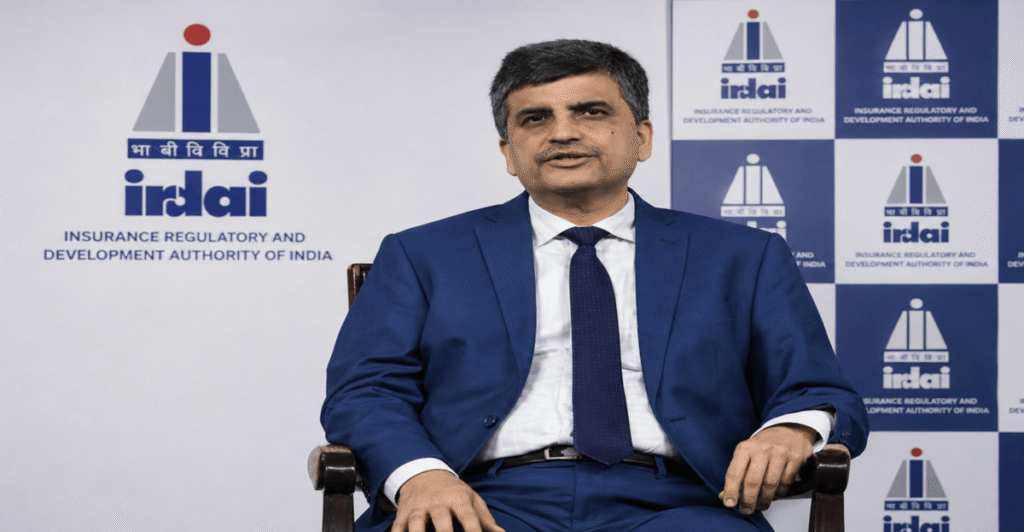
IRDAI Chairman Ajay Seth defended the regulator’s distribution reform proposals, saying the market reaction reflects a “mature” repricing.
IRDAI: Insurance Regulatory and Development Authority of India (IRDAI) Chairman Ajay Seth said the regulator’s newly released discussion paper on distribution reforms is the product of nine months of data collection and industry consultation, and described its long-term impact on the sector as a “win-win,” in a live interview on September 26.
The discussion paper, which proposes a shift in how insurance products are sold and distributed in India, triggered a sharp reaction in equity markets, with Seth acknowledging that insurance-linked stocks saw a combined market capitalisation decline of more than ₹1 lakh crore in the sessions following its release.
IRDAI: Nine Months of Data Collection Behind the Paper
Seth traced the origins of the reform process to the Sabka Bima Sabki Raksha (Amendment of Insurance Laws) Act, which he said mandated forward-looking reforms to help the insurance sector serve the emerging needs of the Indian economy. He said the Reserve Bank of India’s Financial Stability Report and the Economic Survey, both released in January, had flagged concerns related to distribution costs in the insurance industry and helped set the broad direction for the regulator’s work.
Seth said the nine-month process was not conducted solely within IRDAI, and that the regulator held informal and semi-formal one-on-one conversations with industry stakeholders throughout, at both his level and at the level of IRDAI members. He described a process of data collection, analysis, and checking inferences back with the industry before the paper was finalised.
“The industry does require long-term sustainability,” Seth said, adding that a more efficient sector was needed to serve the needs of a developing India. He said he expected a “win-win for everybody” over the medium to long term.
IRDAI: Market Cap Erosion Called a “Cumulative Impact,” Not a Verdict on Reform
Responding to a question on the sharp stock market reaction following the paper’s release, Seth said the fall should be read as a “cumulative impact” rather than a rejection of the reform itself. He noted that the paper was released on a day when global indices also declined, and said the impact on Indian markets reflected India’s integration with global markets in addition to the domestic reaction.
Seth said he had spoken with nine industry CEOs on the morning of the interview and that all had expressed support for the reforms, calling them “much needed.” He said the insurance sector as a whole should view the paper positively, citing potential gains in affordability and business volumes for both insurers and distributors.
On the differentiated stock reaction across companies, Seth said the market had appreciated insurers and corporate agents with business models centred on the customer, while it had not appreciated a company he described as relying on “power of aggregation” combined with “information asymmetry.” He characterised this differentiation as consistent with how a mature market should respond.
IRDAI – Push to “Pull”: Affordability, Self-Directed Buying, and What Comes Next
Seth said a central goal of the reforms is to make insurance more affordable, but stressed that affordability needs to be considered alongside quality, describing the two as “two sides of the same coin.” He said quality outcomes depend on a sufficiently large risk pool and savings pool, which in turn requires the industry to become more cost-efficient so that a greater share of the premium pool goes toward claims rather than the cost of acquiring and servicing business.
He also outlined a shift in how insurance reaches consumers, saying the reforms are designed to move the industry beyond a model where insurance is “only sold” toward one where insurance is also actively “purchased” by consumers. Seth said this shift is enabled by rising technology adoption not only among Gen Z but also among consumers in their 30s, 40s and 50s, provided they have access to clear, easily understandable information.
On the sector’s broader reform roadmap, Seth said the current discussion paper lays a foundation on which three further reforms are planned in the next financial year: claims management reforms, grievance redressal reforms, and product reforms. He said the current round of reforms is scheduled for review in 2028.
Asked about industry concerns over regulatory stability — including the reintroduction of a single-limit structure on commissions after a similar cap was introduced in 2023 — Seth’s response was cut off as the interview continued.