Expired Licence Could Cost You Payout: What Supreme Court’s Ruling Means for Drivers
Driving Licence: The Supreme Court has ruled that while accident victims must still be compensated under the “pay and recover” principle, insurers can recover the full amount from the driver.
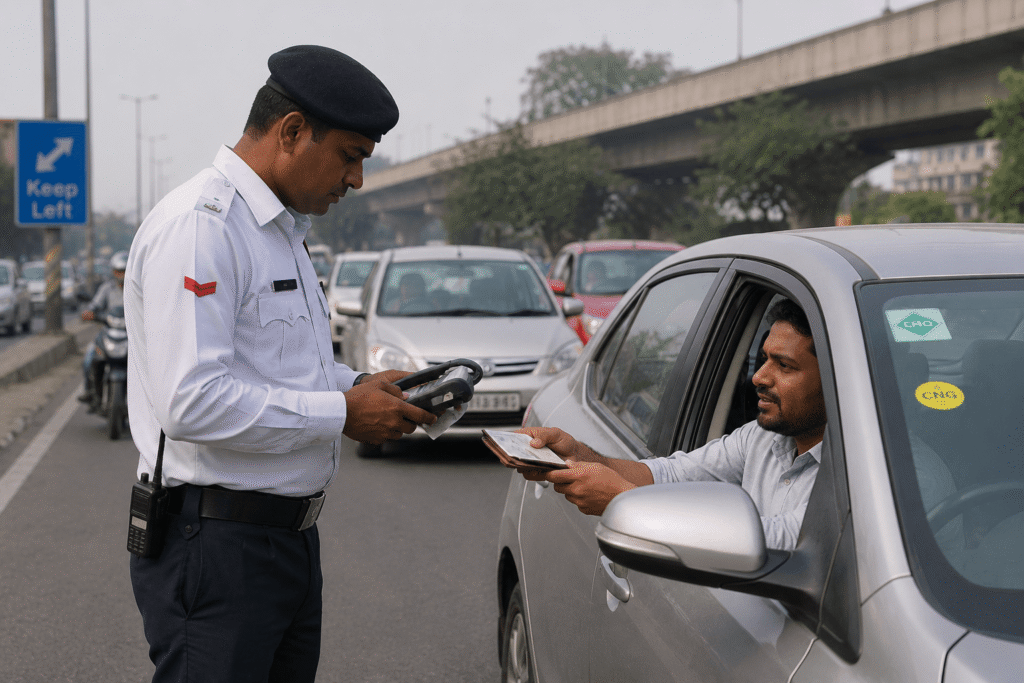
A Learner's Driver Licence alone may not be enough to secure motor insurance coverage, as Karnataka High Court highlights the need to meet prescribed conditions.
New Delhi-Driving Licence: The Supreme Court has ruled that while accident victims must still receive compensation from an insurer, the insurer can recover the entire amount from the vehicle owner and driver if the driver did not hold a valid licence at the time of the accident. The ruling came in Reliance General Insurance Company Ltd. v. Om Parkash & Ors., decided by a bench of Justices Sanjay Karol and N. Kotiswar Singh on July 30, 2026.
The judgment arose from a 2009 road accident in Punjab and prompted the court to urge the Centre and states to launch a nationwide awareness campaign on the importance of renewing driving licences and strengthening the licensing system.
Also Read: Tarapur Nuclear Site: Why Global Reinsurers Stay Away Even as Indian Insurers Wage a Bruising Battle
Driving Licence: What the court ruled
Insurance companies are not liable to bear the final compensation in motor accident claims if the vehicle was being driven by someone without a valid driving licence. While victims will continue to receive compensation under the “pay and recover” principle, the insurer can recover the entire amount from the vehicle owner and the driver.
The court said an insurance company could not be saddled with liability if the offending vehicle was being driven without a valid licence, according to the ruling.
The Court held: “The appellant insurer cannot be held liable to make good the award. The final burden shall be on both the employer and the driver,” directing the insurer to first pay compensation to the claimants and then recover the amount from the driver and owner in accordance with law.
Driving Licence: How “pay and recover” protects accident victims
The court applied the “pay and recover” principle, directing that compensation released to the claimants be retained by them, while granting the insurer liberty to recover the full sum from the vehicle owner and driver. This ensures claimants are not caught in disputes between the insurer and vehicle owner over licence validity.
Driving Licence Background: the Om Parkash case
The case arose from a road accident on October 14, 2009, when a vehicle hit a two-wheeler driven by the claimant. Rash and negligent driving was not in dispute; the controversy centred on the driver’s licence status on the date of the accident.
The Motor Accidents Claims Tribunal (MACT) held that the driver did not possess a valid driving licence at the time of the accident and directed the owner and driver to pay compensation of Rs 86,95,947.
The Punjab and Haryana High Court reversed this finding, relying on a letter from the Motor Licensing Officer stating that due to a “technical error” during data transfer to an outsourced company, licence records for the period 2007-2010 were lost, and certifying that the licence was valid during that period. The High Court ordered the insurer to pay a revised compensation of over Rs 1.08 crore.
The Supreme Court scrutinised the evidence and found the High Court’s reliance on the “missing data” theory to be flawed. It set aside the High Court’s judgment and restored the finding of the MACT, applying the “pay and recover” principle.
Driving Licence: Court flags burden on drivers, owners
The court also highlighted the hardship that a vehicle owner and driver would face in being required to pay a substantial amount due to their failure to ensure the driving licence remained valid, observing that asking a driver or owner to pay such a large sum is a “humongous burden” on them.
The bench added: “This Court cannot be oblivious to the fact that asking a driver or an owner to pay such a large amount… it may throw into disarray their entire lives all because the driver and the owner did not take adequate precaution to ensure that there was no break in the validity of the driving licence.
Driving Licence: Call for nationwide awareness campaign
The court noted that had the licence remained valid, the burden would not have fallen on the driver and owner, and the insurer would have been bound to honour the award. It underscored the importance of maintaining a valid driving licence and suggested that the Ministry of Road Transport and Highways and state counterparts launch awareness campaigns, streamline renewal processes, regulate driving schools, and ensure test accessibility in regional languages.
The bench specifically asked the Ministry of Road Transport and Highways and state transport departments to undertake campaigns through mediums such as awareness drives and social media, and to introduce measures to ensure strict compliance with licensing requirements.
Driving Licence: Case details
Case Title: Reliance General Insurance Company Ltd. v. Om Parkash & Ors. Case No.: Civil Appeal Nos. of 2026 (Arising out of SLP(C) Nos. 6743-6744 of 2023). Bench: Justice Sanjay Karol and Justice N. Kotiswar Singh. Date: July 30, 2026.