Why Your Health Insurance Claim Gets Rejected: Govt Reveals Reasons in Reply to Shashi Tharoor
Bima Bharosa recorded 2.97 lakh insurance grievances in one year, highlighting the scale of policyholder concerns. Shashi Tharoor raised alarm over the high number of complaints and the need for stronger grievance redressal.
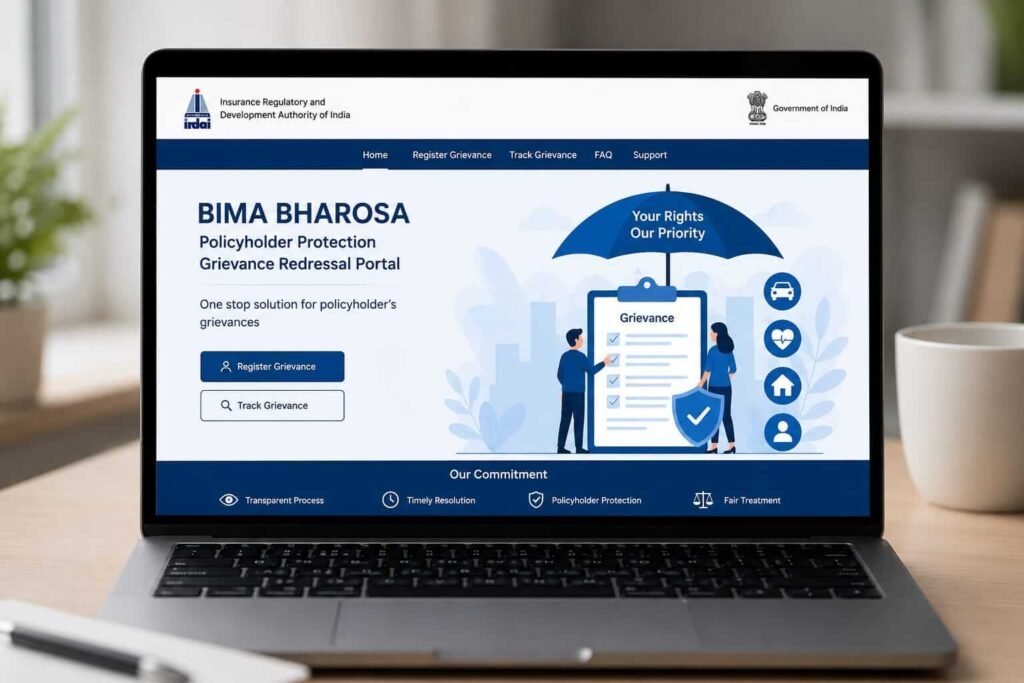
Bima Bharosa recorded 2.97 lakh insurance grievances in one year, highlighting widespread policyholder concerns.
New Delhi, Bima Bharosa: Ever wondered why your health insurance claim got rejected or only partially settled? The government has now spelt out the reasons — in an official reply tabled in the Lok Sabha in response to a question by Congress MP Dr. Shashi Tharoor.
Responding on July 27, Minister of State for Finance Pankaj Chaudhary told Parliament that health claims are primarily repudiated due to non-compliance with policy terms and conditions, exhaustion of the sum insured, misrepresentation, non-disclosure or fraud, and hospitalisation that is either not medically warranted or does not meet minimum duration requirements.
The government also explained why claims are often only partially settled — pointing to sub-limits, co-payment or deductible clauses, room-rent capping, proportionate charging, and non-medical expenses that fall outside policy coverage. These technicalities, insurers argue, are built into policy wordings but frequently catch policyholders off guard at the time of claim settlement.
However, critics note that this answer largely addresses why claims are rejected, not why claims take so long to settle in the first place — which was the more pointed question Tharoor had actually raised. For a sector where delayed reimbursements can mean real financial strain on patients and families, this gap in the official response has not gone unnoticed.
Also Read: Govt’s Bima Bharosa portal received over 800 insurance complaints every day in FY26
What Is the Bima Bharosa Portal?
The Bima Bharosa Portal is the online grievance redressal platform operated by the Insurance Regulatory and Development Authority of India (IRDAI). It allows policyholders to register complaints against insurers, track their status, and escalate unresolved issues — functioning as the primary digital interface between aggrieved customers and the insurance regulator.
Bima Bharosa: Nearly 3 Lakh Complaints Filed in a Single Year
According to the data furnished by IRDAI for FY 2025-26, the portal received a total of 2,97,468 grievances across all insurance segments. Of these, *2,87,496 complaints were disposed of, leaving *9,972 grievances pending — a backlog that, while relatively small as a percentage of total volume, points to specific stress points within the system.
The segment-wise breakup tells a revealing story:
- Life Insurance: 1,19,027 complaints received; 1,18,429 disposed; 598 pending
- Non-Life Insurance: 60,462 complaints received; 56,752 disposed; 3,710 pending
- Health Insurance: 1,17,979 complaints received; 1,12,315 disposed; 5,664 pending
The numbers show that while life insurance — despite having the highest volume of complaints — has an almost negligible pending caseload, health insurance is dragging down the system’s overall efficiency. Health insurance grievances account for roughly 57% of all pending cases on the portal, despite making up only about 40% of total complaints received. Non-life insurance also shows a disproportionately high pendency rate relative to its complaint volume.
Also Read: Have Corporate Health Insurance? Here’s Why You May Still Need a Personal Policy
Bima Bharosa: Over 26,000 Mis-Selling Complaints Despite Regulatory Advisory
A particularly striking figure buried in the government’s response is the scale of complaints related to Unfair Business Practices (UFBP), including mis-selling — a category that recorded 26,667 grievances during FY 2024-25 alone.
This is despite IRDAI having already issued advisories to insurers aimed at curbing exactly this kind of behaviour. The regulator’s response states that insurers have been advised to strengthen product suitability assessments, financial underwriting, Customer Information Sheets (CIS), free-look cancellation options, and distribution-channel-specific controls, along with conducting root-cause analysis of mis-selling grievances on a periodic basis.
The persistence of mis-selling complaints at this scale — even after such measures were recommended — suggests either weak enforcement or slow adoption of these safeguards by insurers on the ground.
Bima Bharosa: The Question the Government Didn’t Fully Answer
Perhaps the most consequential part of Tharoor’s original question was part (c): whether the government had reviewed the reasons behind rejection or delay in settlement of insurance claims, particularly in health and general insurance.
IRDAI’s response does address claim repudiation — listing common reasons such as non-compliance with policy terms, exhaustion of the sum insured, misrepresentation, non-disclosure or fraud, and hospitalisation that doesn’t meet minimum duration requirements or policy criteria. It also notes that claims are often partially settled or disallowed due to sub-limits, co-payment clauses, room-rent capping, or non-medical expenses being excluded.
However, critics point out that this answer conflates rejection reasons with delay reasons — and does not substantively address why claims take as long as they do to settle, which was the crux of the question. For a sector where delayed reimbursements can mean real financial strain on patients and families, this gap in the official response has not gone unnoticed.
No Data on Insurer Integration with Bima Bharosa
Tharoor’s question also sought clarity on measures taken to strengthen the grievance redressal mechanism, including insurer accountability and monitoring. The government’s answer lists several structural steps:
- Insurers have been mandated to set up their own technology-based grievance redressal infrastructure and integrate it with the Bima Bharosa Portal
- A dedicated multilingual call centre (operating in 12 languages) has been established for complaint registration
- Complaints via physical letters and emails are also logged into the system
- IRDAI monitors grievances through MIS reports, periodic reviews, and on-site inspections, with supervisory action taken in cases of non-compliance
- Insurers are required to acknowledge complaints immediately and resolve them within 14 days
Yet, the response stops short of disclosing how many insurers have actually completed this integration — a data point that would have offered a concrete measure of how far implementation has progressed versus how far it remains on paper.
Bima Bharosa: Why This Matters for Policyholders
For the average Indian insurance customer, these numbers translate into a simple but important takeaway: health insurance remains the most friction-heavy segment when it comes to getting grievances resolved. With claim rejections tied to technicalities like sub-limits, room-rent capping, and documentation disputes, policyholders are advised to:
- Carefully read policy wordings, especially sub-limits and co-payment clauses, before purchase
- Retain and review the Customer Information Sheet (CIS) provided at the time of sale
- Use the free-look cancellation window if the policy terms don’t match what was promised
- Escalate unresolved complaints through the Bima Bharosa Portal or IRDAI’s multilingual call centre if not addressed within the mandated 14-day window
Bima Bharosa: The Bottom Line
The exchange in the Lok Sabha underscores a familiar tension in India’s regulatory reporting: official answers that are statistically thorough but strategically incomplete on the questions that matter most to consumers. While IRDAI has clearly built out infrastructure and issued advisories to tackle mis-selling and grievance backlogs, the absence of hard data on claim-delay causes and insurer-level portal integration leaves significant accountability gaps — gaps that health insurance policyholders, in particular, continue to pay for in the form of pending complaints and unresolved claims.
Data source: IRDAI, as furnished in response to Lok Sabha Unstarred Question No. 1203, answered on July 27, 2026