Hackers Turn Up the Heat: Supermarket Freezers Hit 50°C Across Europe
Supermarket Freezers have become the target of a major cybersecurity incident in Europe, disrupting refrigeration systems and exposing retailers to significant operational risks.
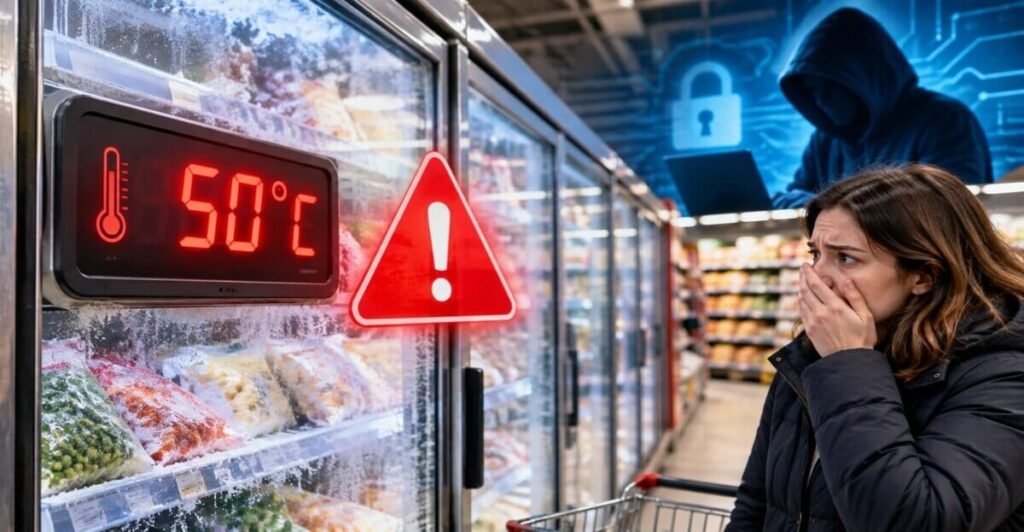
Supermarket Freezers across Europe reportedly reached temperatures of 50°C following a cyberattack, raising concerns over food safety and potential stock losses.
Supermarket Freezers: A fresh wave of cyberattacks on supermarket refrigeration systems spread across Europe on Monday, forcing stores from Sweden to Belgium to throw away stock after fridges and freezers overheated, Reuters reported. The incident follows a similar attack on French retailers last month, and no group has claimed responsibility for either.
Supermarket Freezers: Stores in Sweden, Belgium, Luxembourg and Ireland affected
The overnight attack raised temperatures in cooling units at dozens of stores. Swedish grocers ICA and Coop were hit, as were Belgian and Luxembourg outlets of Ahold Delhaize and Colruyt, and at least one IKEA store in Belgium. In Ireland, wholesaler Musgrave said systems at 13 of its SuperValu stores were affected and that it pulled some chilled and frozen products from sale.
The intrusion reportedly took place around 2 a.m., but staff at some stores did not notice until hours later. An ICA franchise manager in Stockholm said the freezers in her store climbed to 50 degrees Celsius and that everything inside was ruined. ICA said a limited number of its stores had refrigeration and freezer systems disrupted overnight. Coop said 7 of its roughly 800 stores were affected, and Colruyt said five shops it runs under the Spar banner in Belgium were hit. Carrefour said 15 of its 700 Belgian stores were affected. Carrefour was also among the chains hit hardest in France.
Also Read: IRDAI Holds Dark Pattern, Aadhaar Classes for Insurance Companies’ Officials
Smaller businesses felt the damage too. A Belgian butcher who owns a chain of shops was called at 3:30 a.m. and found his fridges running at up to 18 degrees Celsius. He estimated the loss at about €15,000 in meat. He said he had contacted police and believed the aim was to destabilise European economies.
Supermarket Freezers: What happened in France, and the Danfoss link
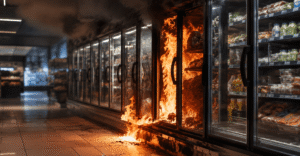
Supermarket Freezers: The French attack took place on the night of October 11. Retailers including Intermarché, Coopérative U, Carrefour, Monoprix and E.Leclerc reported hundreds of affected stores. Temperatures were pushed as high as 50 degrees Celsius, spoiling food and, according to Paris prosecutors, causing fires at some sites. French media reported that the attackers appeared to trigger the controllers’ defrost function remotely and keep it running.
Investigators and reports point to refrigeration controllers made by Danish company Danfoss. At least some of the units affected on Monday used the same company’s temperature control technology. Danfoss has said many of the French units were older models that no longer receive software or security updates, or were running outdated firmware, and that it had advised customers to migrate to current systems. Security firm Claroty had flagged vulnerabilities in Danfoss systems in 2025, and the manufacturer released patches for some newer models that year. Authorities have not linked those specific flaws to the French attack.
These controllers manage every fridge and freezer in a store and can often be reached over the internet so maintenance firms can adjust settings remotely. French authorities advised operators not to leave such management interfaces exposed online. One researcher counted more than 2,700 Danfoss systems visible online shortly after the French attack, most of them in France.
Danfoss said on Monday it was working with customers on fixes. Paris prosecutors opened a criminal investigation into the French incident, and France’s national cybersecurity agency ANSSI was tasked with coordinating with other European countries.
Supermarket Freezers: Sabotage concerns and the official response
The pattern has raised alarm among European officials. No ransom demand has surfaced in either attack, which a researcher at cybersecurity firm SentinelOne said points toward sabotage rather than extortion. He added that retail is an easy target because chains run huge numbers of refrigeration controllers, building management systems, door access panels and payment terminals, and that an intruder who simply logs into an exposed panel leaves almost no trace. In his words, a teenager and an intelligence service can look much the same to a defender.
Belgium’s Centre for Cybersecurity said it may never be known who is responsible and voiced concern about the growing number of incidents, partly because artificial intelligence now makes it easier for skilled attackers to exploit weak systems. EU agriculture commissioner Christophe Hansen called the attacks a deliberate attempt to disrupt the food supply chain and shake consumer confidence, and said the repeated incidents were deeply concerning.
Authorities have raised the possibility of hybrid threats to infrastructure amid security tensions since Russia’s 2022 invasion of Ukraine. Moscow has repeatedly denied involvement in sabotage or hybrid operations, and Reuters said it could not establish who was behind Monday’s attacks or whether they were connected to those in France.
Separately, Ahold Delhaize reported a cybersecurity incident to Dutch police last month. That incident affected IT systems, websites and apps, and the Dutch National Cyber Security Centre said at the time it had no reason to believe it was linked to attacks elsewhere. Reports also say US defence officials are examining whether freezer units on military bases were affected by similar activity.