Wrecked on Purpose: South Korea Cracks Down on Fake Car Crash Rings
Car Crash: South Korea is stepping up action against fake Car Crash schemes, targeting fraud rings that exploit motor insurance policies through deliberately staged collisions.
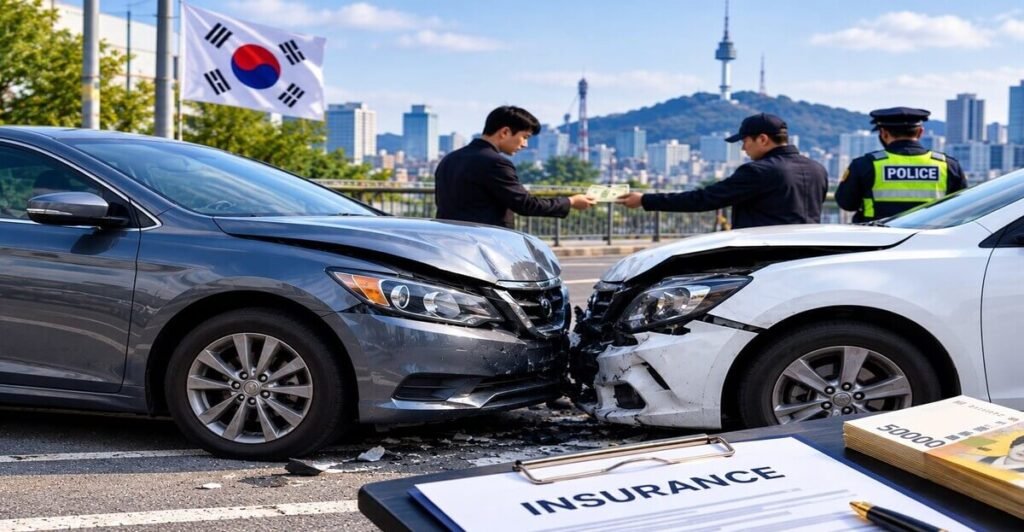
Car Crash insurance fraud is under scrutiny in South Korea as authorities crack down on organised groups suspected of staging accidents to make fraudulent insurance claims.
Car Crash: South Korean police have arrested 911 people suspected of deliberately causing road accidents to collect false insurance payouts. The National Office of Investigation at the Korean National Police Agency announced the result of a four-month operation that ran from June to September 2026. Investigators uncovered 2,045 cases and detained 12 suspects. Confirmed losses totalled about 7.5 billion won, or roughly US$5.4 million.
The crackdown comes as insurance fraud in the country keeps climbing. The Financial Supervisory Service recorded a high of 1.16 trillion won in detected fraudulent payouts for 2025, up from 1.08 trillion won in 2022 and 1.12 trillion won in 2023. In the first half of 2026, detected fraud reached 620 billion won, a rise of 9.1% on the same period a year earlier, and the number of suspects rose 5.6% to about 53,865. The Financial Services Commission estimates that total fraud, including undetected cases, may be around 9 trillion won.
Car Crash: Lane-Change Collisions Dominate Staged Accident Cases
Deliberately caused accidents made up 76.2% of the cases, or 1,559 incidents. The most common method was targeting vehicles while they changed lanes, which accounted for 600 cases, or 29.3%. Drivers changing lanes are generally treated as the party at fault, which gives the people staging the crash an advantage when they file a claim and makes it harder for insurers to contest it.
Other methods included falsifying accident details (336 cases, 16.4%), collusion between the at-fault and injured parties (319 cases, 15.6%) and people deliberately throwing their bodies against moving vehicles (209 cases, 10.3%). In one Daegu case, 59 people were apprehended for allegedly filing 60 false claims between February 2023 and September 2025 and collecting around 300 million won. In Gyeonggi Province, three suspects allegedly targeted lane-changing vehicles 29 times between March 2023 and May 2025 and collected about 240 million won.
Also Read: Bima Sugam to Go Live in 4 to 6 Weeks, With Fees Capped at 5%
Earlier cases show how these schemes are organised. In 2025, Seoul police apprehended 182 people linked to a ring that collected about 2.3 billion won through staged crashes. The ringleaders recruited participants through neighbourhood acquaintances and online communities using coded slang for the vehicle causing the crash and the vehicle struck. In a separate case, a family in Goyang was referred to prosecutors for allegedly causing 22 accidents between 2020 and 2024 to collect around 120 million won. Police said the pattern showed up in repeated crash locations and methods, and that vehicles had been scrapped three times to hide accident histories.
Car Crash: Young and Jobless Suspects Recruited Through Social Media
Car Crash: People in their 20s were the largest group among those arrested, with 263 suspects, or 28.9%. They were followed by 182 people in their 30s, or 20%. Police data covering 2022 to 2025 shows that 72% of those arrested for staged accident fraud were in these two age groups, and that unemployed people made up 20% of arrests. People in their 30s and 40s were more often involved in schemes such as swapping drivers or falsifying accident details, which require an existing policy and access to a vehicle.
Social media is a major recruitment channel. Suspects advertised “short-term, high-paying part-time jobs” and easy money to draw in accomplices. Police have warned the public not to respond to such offers. Under revised fraud-prevention law, people who solicit, broker or advertise insurance fraud can also face criminal punishment, even if they take no direct part in a crash. Participating carries penalties of up to 10 years in prison or a fine of up to 50 million won.
Car Crash: Fraud Losses Climb as Regulators Tighten Rules and Turn to AI
Auto insurance accounted for 288 billion won, or 46.5%, of detected fraud in the first half of 2026. Manipulated accident details, including inflated claims, made up 61.3% of the half-year total, followed by fabricated accidents at 17.4% and intentional accidents at 13.9%. The country’s five largest non-life insurers reported a combined auto underwriting loss in the first half of 2026. That loss has been linked to pricing gaps in fleet business rather than to fraud specifically.
Court outcomes have drawn attention. A review of verdicts from 2023 to early 2025 found that 40.2% of insurance fraud defendants received only fines and 33.3% received suspended sentences. Auto insurance cases made up 66% of the verdicts examined.
Authorities are responding on several fronts. A revision to the Insurance Business Act passed by the National Assembly takes effect in March 2027 and will let regulators cancel an insurance planner’s registration after a fraud finding without the usual hearing process. In June 2026, the Financial Services Commission launched a task force to build an AI-based fraud detection platform.
The task force brings together police, financial regulators, health insurance bodies and industry associations, and its plan was finalised in September, with legal amendments to follow. Regulators say forged documents and altered photos made with generative AI are already getting past conventional checks, and in 2025 a man in his 20s received South Korea’s first prison sentence for AI-based insurance fraud, two years for defrauding 11 insurers of 150 million won.
Vice Chairman Kwon Dae-young of the Financial Services Commission said fraud has moved beyond individual misconduct into organised crime involving medical institutions, repair shops, brokers and agents. General Insurance Association of Korea chairman Lee Byung-rae called for a systematic, government-wide response, saying individual institutions cannot tackle the problem alone.
Police said they will keep up year-round enforcement, combining local station-level case identification with metropolitan-level analysis of social media recruitment and payout patterns. They will also work to protect victims, including by revoking administrative penalties and refunding surcharged premiums. Since 2009, about 24,000 policyholders have received a combined 11.2 billion won in refunded surcharges.