Messi’s Legs Are Worth More Than Most Countries’ GDP
Lionel Messi will face England for the first time in his career when Argentina meets the Three Lions in the 2026 FIFA World Cup semifinal on July 16 in Atlanta. What most fans don’t know is that the leg delivering those match-winning strikes is reportedly insured for a sum that would make most insurers blink twice.
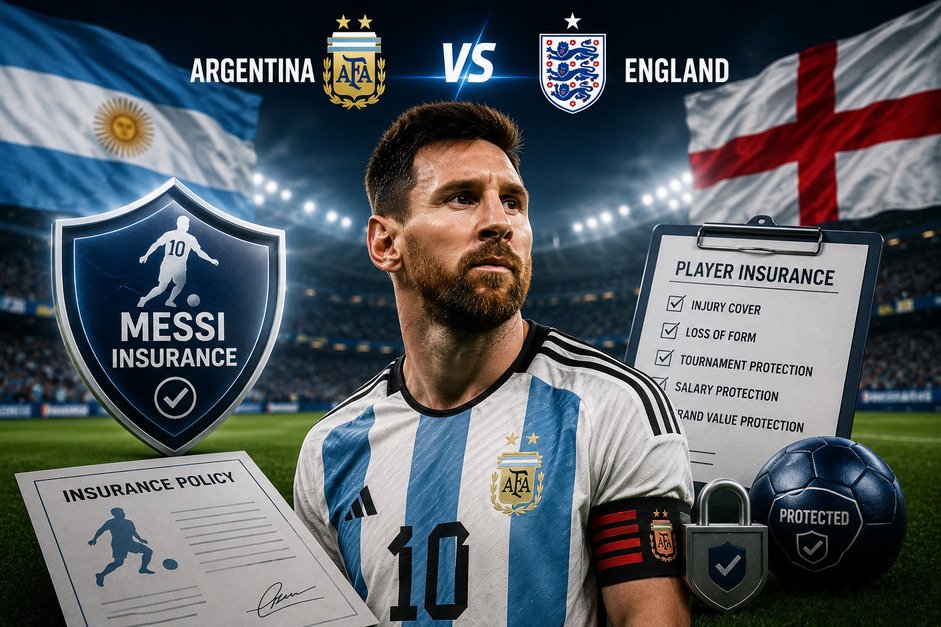
Lionel Messi's brilliance on the pitch is backed by an extensive insurance ecosystem designed to protect elite athletes from injuries, career interruptions and commercial risks.
Lionel Messi has played six World Cups, faced Brazil fourteen times, and beaten every football superpower on the planet — except one. England. In more than two decades of international football, Messi has never shared a pitch with the Three Lions. That changes on Wednesday, July 16, 2026, when Argentina and England collide in the World Cup semifinal at Atlanta Stadium, with a place in the final at stake.
It is a fixture soaked in history and rivalry, but for insurance watchers and finance nerds, the Argentina vs England semifinal carries a subplot most casual fans never think about: the eye-watering sums riding on Messi’s body simply being able to walk onto that pitch in one piece.
Messi: The Leg That’s “Insured” For Almost A Billion Dollars
Reports circulating for years — and resurfacing heavily around this World Cup — claim that Messi’s left foot alone carries insurance coverage of around $900 million, with some more recent estimates pushing the figure closer to $1 billion when his legs are considered together. These numbers are not officially confirmed by Messi, his camp, or any named insurer, and should be read as widely reported industry estimates rather than a disclosed policy document. But the scale of the number is not entirely implausible once you understand how athlete body-part insurance actually works.
For context, here’s how Messi’s reported figure stacks up against other global sporting icons whose insurance details have made headlines:
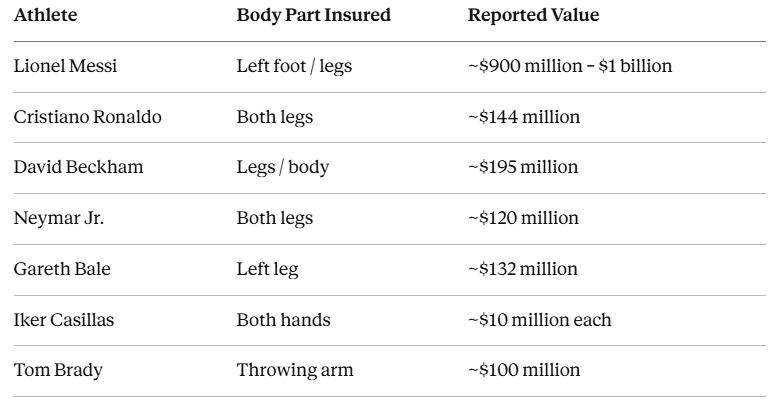
Whatever the exact figure for Messi, one thing is consistent across every report: no athlete comes close.
Lionel Messi: Why Would Anyone Insure A Leg For That Much Money?
It sounds absurd until you look at the economics behind it. A footballer at Messi’s level isn’t just a salaried employee — he is a revenue-generating asset for his club, his sponsors, and his national federation. A serious injury doesn’t just cost him personally; it can wipe out endorsement deals, broadcast value, ticket sales, and merchandising tied directly to his ability to perform.
Also Read: World Cup 2026: The Hidden $7.5 Million Insurance Policy Protecting Top Stars
This is where “key person” or “loss of value” insurance comes in — a category of personal accident and disability cover that protects against the financial fallout of an athlete’s career being shortened or ended by injury. Clubs, and sometimes players themselves through management companies, take out these policies with specialist underwriters, historically centered around Lloyd’s of London, which has insured everything from footballers’ legs to musicians’ voices and chefs’ taste buds. The premium is calculated actuarially, factoring in age, injury history, playing position, and the athlete’s commercial value — which is precisely why a 39-year-old Messi, still delivering goals and assists deep into this World Cup, remains such an expensive risk to underwrite.
Messi in England vs Argentina: What Actually Triggers A Payout
Contrary to popular belief, these policies typically don’t pay out for a routine hamstring strain or a knock that keeps a player out for two weeks. Most athlete disability policies are structured around permanent or career-ending disability — meaning the payout is triggered only if the injury is severe enough to end the athlete’s professional career entirely, or significantly and permanently reduce their earning capacity. Short-term injuries are usually covered separately through club medical insurance or workers’ compensation-style arrangements, not the headline-grabbing nine or ten-figure policies that make the news.
This distinction matters. It’s the difference between a policy sitting quietly in the background for years, and one that suddenly becomes the biggest insurance payout in sporting history if the worst happens on the pitch.
The Bigger Insurance Lesson Hiding In A Football Headline
Here’s what gets lost in the viral “Messi’s leg is worth a billion dollars” posts: the underlying principle is exactly the same one that applies to any professional, anywhere in the world — including in India. Personal accident insurance and loss-of-income protection exist precisely because your ability to earn is itself a financial asset worth protecting, whether you’re a World Cup footballer, a surgeon, a content creator, or a small business owner. The zeros attached to Messi’s policy are extraordinary, but the underlying logic — insuring the thing that generates your income, not just the thing itself — is available at far more modest premiums to ordinary earners through personal accident and disability riders offered by mainstream Indian insurers.
Athlete insurance also highlights something often ignored in retail insurance conversations: valuation is subjective and forward-looking. Underwriters aren’t just pricing Messi’s leg as a body part; they’re pricing his projected future earning potential, sponsorship pipeline, and career trajectory. That same principle — insuring future income potential, not just current salary — is increasingly relevant for young professionals and gig-economy earners assessing how much life and disability cover they actually need.