Healthcare in India: Kerala Households Spend 8x More Than Bihar’s — Out of Pocket
Healthcare in India: Kerala households spend nearly eight times more than Bihar’s on out-of-pocket healthcare, new data shows, exposing a sharp regional divide in India’s health spending.
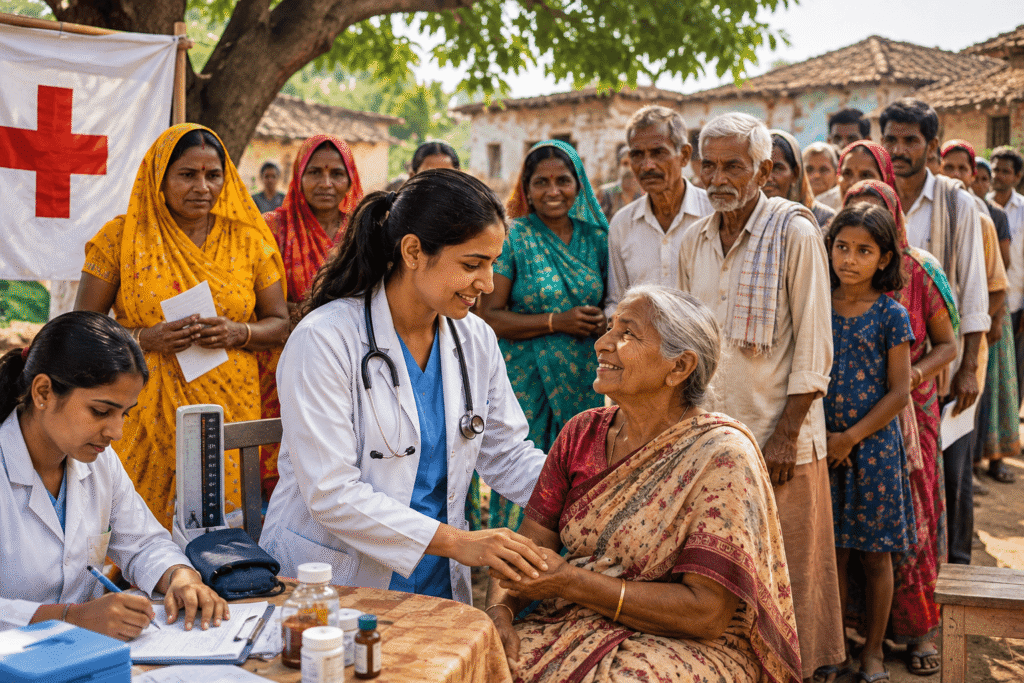
Healthcare in India is evolving through better hospitals, wider access and stronger community care. From advanced treatment to rural outreach, the focus remains on making quality healthcare more accessible to all.
New Delhi —Healthcare in India: Households in Kerala spent more than eight times what households in Bihar spent on healthcare in 2022-23, according to state-wise data on Out-of-Pocket Expenditure (OOPE) tabled in the Lok Sabha.
Per capita OOPE in Kerala stood at ₹8,388 in 2022-23 — the highest among the 21 states listed — compared to just ₹1,043 in Bihar, the lowest figure in the data. The gap has persisted for years: in 2018-19, Kerala’s per capita OOPE was ₹6,772 against Bihar’s ₹811, meaning the absolute difference between the two states has only widened over the five-year period covered.
The figures were shared by Union Minister of State for Health and Family Welfare Anupriya Patel in a written reply to an unstarred question in the Lok Sabha, in response to a query on Out-of-Pocket Expenditure on healthcare by Adv. Gowaal Kagada Padavi.
Also Read: Health Insurance Premium: 6 Legal Ways to Cut Costs
Healthcare in India: What is OOPE
As per National Health Accounts (NHA) estimates, Household Out-of-Pocket Expenditure is defined as the expenditure paid by households or individuals at the point of receiving healthcare services. This covers inpatient and outpatient care, childbirth, antenatal and postnatal care, family planning devices, therapeutic appliances, patient transportation, immunisation, over-the-counter drugs, and other medical costs such as blood and oxygen. The figure is net of any reimbursements, whether from insurance or philanthropic sources.
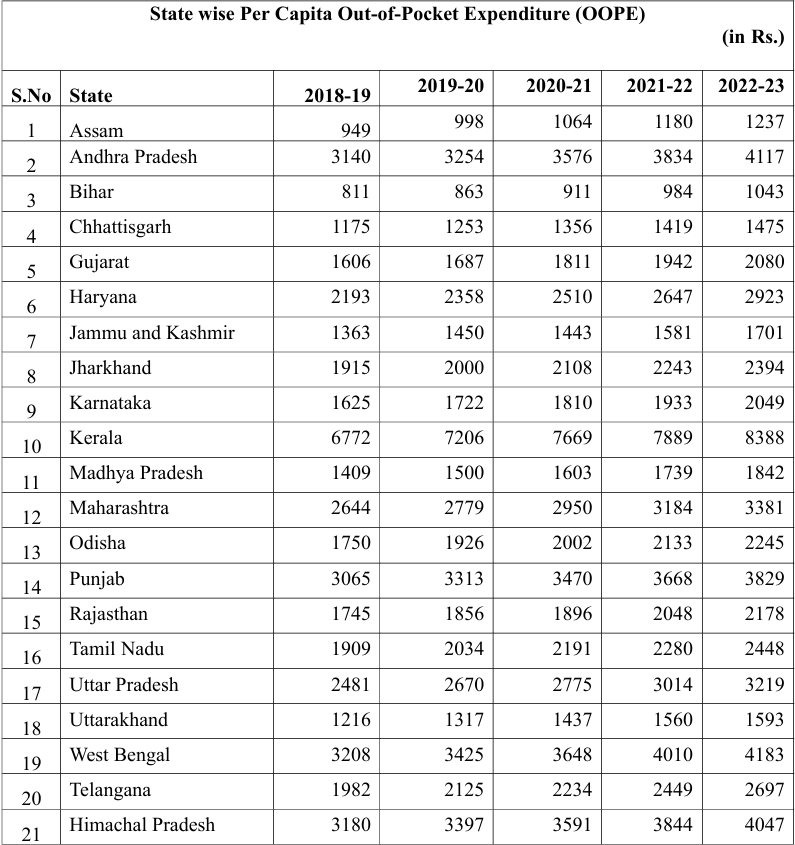
Source:NationalHealthAccountsEstimates2018,2019,2020,2021,2022.
Notably, the Ministry clarified that National Health Accounts Estimates do not maintain data on OOPE incurred per household — only per capita figures are available.
Healthcare in India: A rising national trend
Nationally, per capita OOPE at current prices has risen every year over the five-year period for which data was shared:
- 2018-19: ₹2,155
- 2019-20: ₹2,289
- 2020-21: ₹2,415
- 2021-22: ₹2,600
- 2022-23: ₹2,767

This marks an increase of nearly 28 percent over five years.
Healthcare in India: The state-wise divide
Besides Kerala and Bihar, other states with high per capita OOPE in 2022-23 include Himachal Pradesh (₹4,047), West Bengal (₹4,183), and Andhra Pradesh (₹4,117). At the lower end, alongside Bihar, Assam (₹1,237) and Chhattisgarh (₹1,475) reported some of the lowest figures.
The data also comes with a caveat from the Ministry: at the sub-national level — particularly for Union Territories, small states, and North-Eastern states — estimates may not be statistically significant due to small sample sizes in the underlying surveys.
Also Read: Cashless Health Claim Refused? A Step-by-Step Guide For Escalation
Healthcare in India: Government’s response
In its reply, the Ministry outlined several measures aimed at reducing OOPE, including:
- Ayushman Bharat-Pradhan Mantri Jan Arogya Yojana (AB PM-JAY), which provides health cover of ₹5 lakh per family per year to more than 12 crore economically vulnerable families, and has been expanded to cover 6 crore senior citizens aged 70 and above (4.5 crore families) under the Vay Vandana Card, irrespective of socio-economic status.
- 1.87 lakh Ayushman Arogya Mandirs operationalised across the country under the National Health Mission (NHM) to deliver comprehensive primary healthcare services.
- National Free Drugs Service Initiative and Free Diagnostics Service Initiative, providing financial support for essential drugs at public health facilities — 113 drugs at Sub Health Centres, 179 at Primary Health Centres, 301 at Community Health Centres, 318 at Sub-District Hospitals, and 381 at District Hospitals.
- *Pradhan Mantri Bhartiya Janaushadhi Pariyojana (PMBJP), offering quality generic medicines at affordable prices, along with *AMRIT Pharmacy stores set up in select hospitals.
- Broader infrastructure support through the Pradhan Mantri-Ayushman Bharat Health Infrastructure Mission (PM-ABHIM) and the Pradhan Mantri Swasthya Suraksha Yojana (PMSSY).
Despite these interventions, the data tabled in Parliament shows that per capita OOPE increased in every state and at the national level in each of the five years under review.
Source: Lok Sabha Unstarred Question No. 3415, answered on August 7, 2026, Ministry of Health and Family Welfare. Data from National Health Accounts Estimates 2018–2022.