IRDAI Commission Cap: Star Health CEO Backs Move to Cut Costs
IRDAI Commission Cap may lower insurers’ distribution expenses, potentially translating into cheaper health insurance premiums for policyholders.
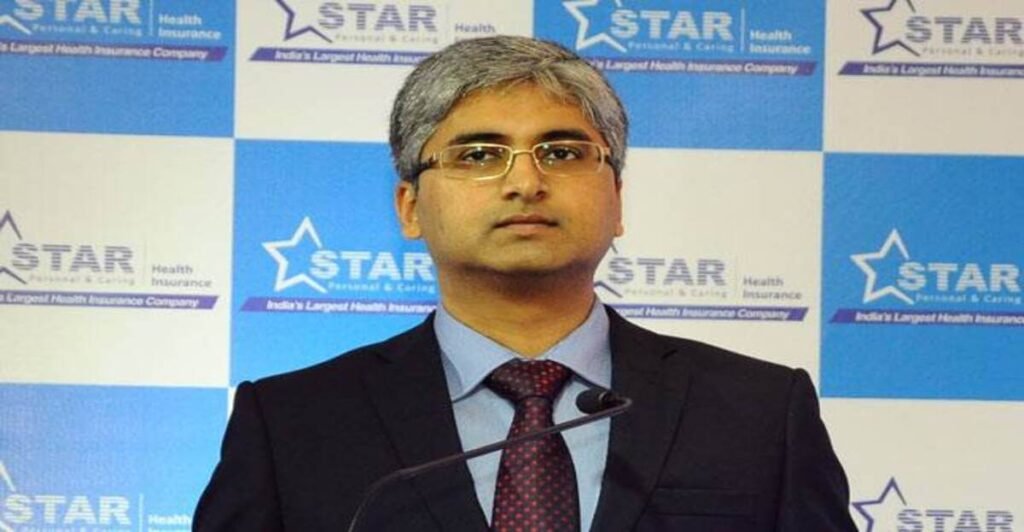
IRDAI Commission Cap could reduce health insurance costs and make policies more affordable for customers, says Star Health CEO.
IRDAI Commission Cap: Anand Roy, managing director and CEO of Star Health and Allied Insurance Company, has backed the Insurance Regulatory and Development Authority of India’s (IRDAI) proposed commission cap, saying higher commissions increase the cost of insurance products, affect affordability and limit insurance penetration. He said the proposed reforms are in the right direction and would have no major impact on Star Health, given its strong agency-led distribution network and digital presence.
IRDAI Commission Cap: What IRDAI’s Consultation Paper Proposes
IRDAI’s consultation paper proposes commission caps that vary by product and by sales channel. Institutional distributors such as banks would receive significantly lower payouts than individual agents. The paper also changes the expenses of management (EoM) limit.
Standalone health insurers previously had a ceiling of 35% of gross written premium, while general insurers had 30%. IRDAI now proposes a common ceiling of 25% for both categories in the first two years, to be reduced to 20% over five years.
Also Read: Zurich P&C Insurance Premiums Jump 7% to $42.1 Billion as Solvency Ratio Beats Estimates
IRDAI Commission Cap: Why Star Health Says the Impact Will Be Limited
Roy said more than 84% of Star Health’s business comes through the agency channel, followed by 12% to 13% from the digital channel. He described the company’s distribution as largely proprietary, built on agents and digital platforms. Star Health has the largest agent network among general insurers, with 8.5 lakh agents. On the lower EoM ceiling, Roy said the company has no objection.
Its main suggestion to IRDAI is to exclude distribution costs relating to motor third-party, crop insurance and government-sponsored health insurance schemes when EoM is calculated. He said this would better reflect the actual cost of operations and ensure a level playing field for standalone health insurers compared with general insurers.
IRDAI Commission Cap: Young Star NEO Targets the Under-40 Market
Star Health also launched Young Star NEO, a health insurance policy for individuals aged 18 to 40. Roy said that over 60% of the company’s new customers are aged 35 and above, while a large section of the younger population remains uninsured.
The policy offers sum insured options from ₹10 lakh to ₹1 crore, including an Unlimited Sum Insured option, with terms of one, two or three years. Its Time Travel feature lets customers keep the premium advantage of buying young even after a first eligible claim. After a claim, the renewal premium is calculated on the entry age plus one year instead of the actual age, subject to applicable terms. Star Health is the country’s largest standalone health insurer, covering over 25 million lives.
IRDAI Commission Cap: Star Health Targets ₹24,000 Crore GWP in FY27
Star Health and Allied Insurance Company expects to close FY27 with gross written premium (GWP) of ₹23,000-24,000 crore, representing year-on-year growth of around 18-19%, Anand Roy said. The standalone health insurer is targeting GWP of ₹30,000 crore by FY30, with a focus on expanding its retail health insurance business and increasing insurance penetration in smaller cities.
The company recorded GWP of approximately ₹9,500 crore in the first half of FY27, registering growth of around 18%. New business premium grew 36% to ₹1,600 crore during the period.
During the first six months of FY27, Star Health settled nearly 22 lakh claims, including inpatient and outpatient claims, with total payouts of approximately ₹6,700 crore.
Roy also said the company had witnessed an improvement in margins over the last four quarters, supported by improvements in its claims and combined ratios.
On geographical expansion, he said nearly 70% of Star Health’s business comes from Tier 2 and Tier 3 cities. These markets will remain a key focus as the company looks to expand health insurance penetration.