DGCA Drone Pilot License 2026: Eligibility, Fees and the Insurance Clause Few Pilots Notice
Drone Pilot License: India’s booming drone sector comes with strict regulatory fine print. From 10-year license validities to mandatory.
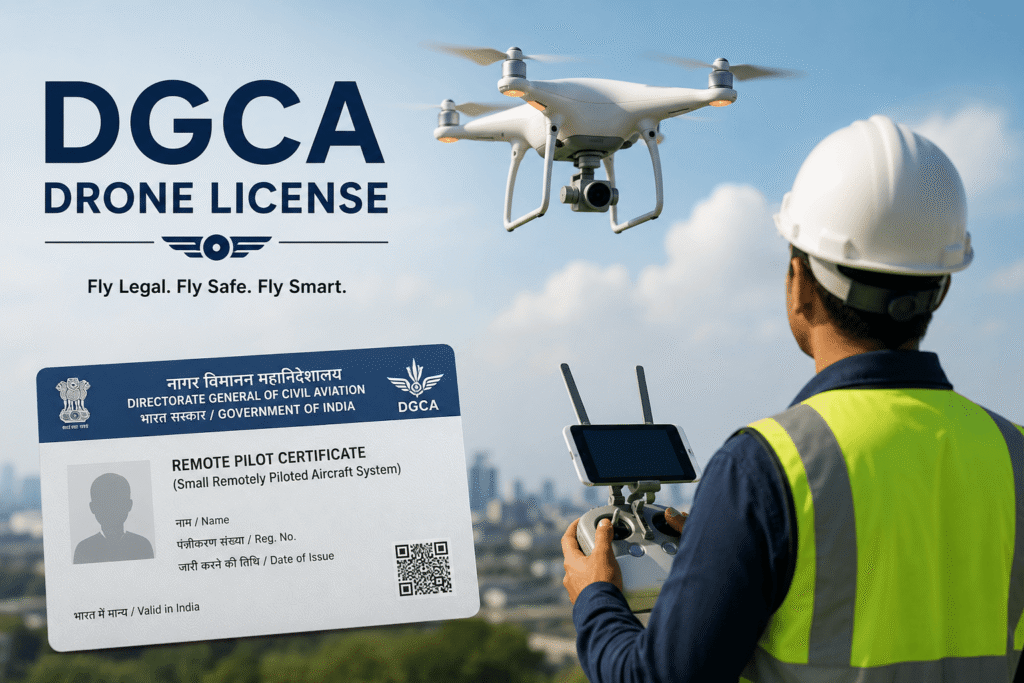
Drone Pilot License: Here’s a quick breakdown of DGCA eligibility, 10-year license validity, and the crucial insurance fine print most pilots overlook.
Drone pilot license: India’s drone economy is scaling fast, but the paperwork behind it — specifically, who is allowed to fly and under what insurance cover — is where most first-time operators get tripped up. With commercial drone use expanding across agriculture, infrastructure inspection, and logistics, the Directorate General of Civil Aviation (DGCA) has built out a licensing framework that is more accessible than it once was, but comes with compliance obligations that many new pilots reportedly overlook, particularly around insurance.
Also Read: 34 Crore EPFO Accounts Credited With 8.25% Interest for FY2025-26 — Here’s How to Check Your Balance
Drone pilot license: The Regulatory Backdrop
All drone operations in India currently sit under the Drone Rules, 2021, administered by the DGCA under the Ministry of Civil Aviation. That said, the framework isn’t static. In September 2025, the Ministry introduced a draft Civil Drone (Promotion and Regulation) Bill, 2025, which is expected to eventually replace the existing rules entirely once enacted. Until then, operators continue to work within the 2021 rules and subsequent amendments.
Every step of compliance — registration, Unique Identification Number (UIN) allotment, airspace permission, and pilot licensing — is processed through the DigitalSky platform at digitalsky.dgca.gov.in, which functions as the single window for the entire system.
Drone pilot license: Eligibility – Who Can Actually Apply
The eligibility bar itself is low by design. Applicants need to be at least 18 years old, have passed the 10th standard, and must hold a basic medical fitness certificate issued by a Registered Medical Practitioner (MBBS doctor). A Remote Pilot Certificate (RPC) — commonly referred to as the drone pilot license — is mandatory for anyone looking to fly commercially, or to operate a medium or large drone. Micro drones used purely for non-commercial or hobby purposes are exempt from this requirement, though several operators obtain an RPC anyway for insurance and incident-reporting purposes.
Drone pilot license: The Training and Fee Structure
Getting licensed involves more than an online form. Candidates must enrol at a DGCA-approved Remote Pilot Training Organisation (RPTO), where the curriculum covers ground theory — meteorology, air regulations, and navigation — combined with practical flying hours, followed by a theory exam and a practical skill test. Once cleared, the resulting certificate is valid for 10 years on DigitalSky and is renewable.
On cost, course fees at India’s DGCA-approved training schools — spread across cities like Mumbai, Delhi, Bengaluru, Hyderabad, and Pune — range between ₹15,000 and ₹40,000. Industry estimates put the number of approved RPTOs at around 244 as of 2026, a figure that should be read as indicative pending DGCA’s updated central directory.
Also Read: Why Is RBI Worried About Policyholders Surrendering Their Life Insurance Policies?
Drone pilot license: Where Most Pilots Miss the Fine Print: Insurance
This is the clause that catches newer operators off guard. Third-party insurance is mandatory for all drones above 250 grams (Micro category and above), regardless of whether the operator holds a commercial RPC or flies purely for hobby purposes. For licensed commercial pilots, this mandatory insurance is what covers third-party liability in case of damage during a flight. But hobby pilots flying without commercial certification remain personally liable for any damage they cause, a gap that many casual flyers don’t fully register until an incident forces the issue.
That distinction matters more than it might first appear. A licensed commercial operator effectively transfers a portion of financial risk to an insurer. An uninsured hobbyist, even one flying a drone just over the 250-gram threshold, does not — and could be personally on the hook for damages, medical costs, or property loss resulting from a crash or malfunction.
Drone pilot license: Compliance Obligations Don’t End at Licensing
The DGCA’s operational rules apply continuously, not just at the point of certification. These include a ban on night flying without a special waiver, restrictions on flying over crowds or densely populated areas without explicit permission, limits on carrying hazardous payloads, and a requirement to maintain a flight logbook for every operation. Penalties for violations range from ₹10,000 to ₹1,00,000 depending on severity, with criminal liability possible in serious cases — underscoring that licensing is a starting point, not a one-time formality.
The Bigger Picture for Insurers
With India’s registered drone base crossing 38,500 units and certified remote pilots nearing 40,000 as of 2026, the scale of exposure — and opportunity — for insurers is growing in step with the sector itself. Mandatory third-party cover for drones above 250 grams currently forms the baseline, but the wider gap around hobbyist liability, hull damage, and payload risk for commercial fleets remains comparatively underserved. For Indian insurers, that gap looks less like a footnote in DGCA’s rulebook and more like an emerging product category still waiting to be built out properly.