Injured at CJP Protest: Will Health Insurance Cover the Hospital Bill?
CJP Protest: Health insurance and CJP protest injuries: with hospitalisations mounting after violent clashes in Delhi, we explain when a mediclaim policy is likely to cover treatment — and when insurers may invoke the “breach of law” exclusion to deny a claim.
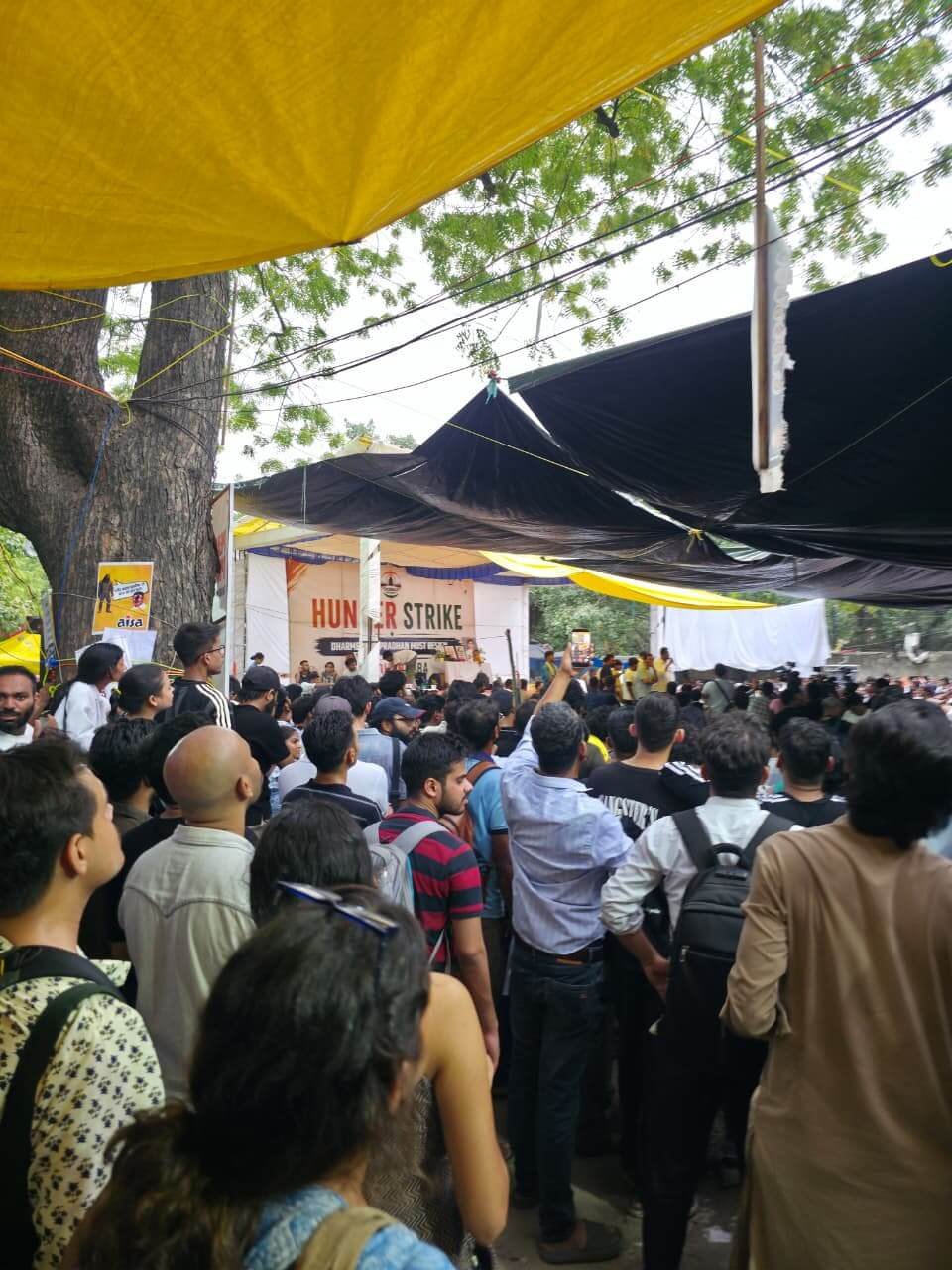
Hurt at the CJP protests in Delhi? Your health insurance might still pay the bill — but only if insurers can't prove you broke the law.
CJP Protest: As protests linked to the Cockroach Janata Party (CJP) movement have turned violent in Delhi in recent days, with reports of scores of protesters and security personnel requiring hospital treatment, a practical question is surfacing alongside the political one: if you’re hurt at a protest, does your health insurance actually pay for the hospital bill?
The answer, insurance experts say, is not a simple yes or no. It depends on policy wording, how the injury is documented, and whether the insurer can establish that the claim falls within a specific exclusion — something insurers are required to prove, not simply assert.
Also Read: Pradhan Mantri Suraksha Bima Yojana: Complete Guide 2026
CJP Protest: What triggered the question
Delhi has seen repeated flare-ups since the CJP campaign — a youth-led protest movement demanding the resignation of the education minister over exam-paper leaks — began organising street marches toward Parliament. Reports over the past week describe baton charges, tear gas, and injuries on both sides, with protesters and police reportedly hospitalised at facilities including Safdarjung Hospital and Vardhman Mahavir Medical College. As visuals of bruised and bandaged demonstrators circulate widely, many of those affected — and their families — are now asking their insurers whether the hospitalisation will be reimbursed.
CJP Protest: Does health insurance in India exclude “riot” injuries?
Unlike fire and property insurance, where riot and civil commotion are standard, explicitly named perils and exclusions, most retail health insurance (“mediclaim”) policies in India do not carry a blanket “riot” or “protest” exclusion. IRDAI’s 2016 Health Insurance Regulations lay out a narrow set of permanent exclusions — chiefly war, invasion, civil war, military coup, and nuclear or biochemical events — none of which describes an ordinary street protest.
Where insurers can, and sometimes do, push back is through a different, more commonly invoked clause: the standardised exclusion for injuries arising from an insured person’s own breach of law with criminal intent. This clause — part of IRDAI’s 2019 standardisation of health insurance exclusions — is typically the one insurers reach for if they want to deny a claim tied to unrest, arguing the policyholder was participating in an unlawful assembly or a riot rather than a peaceful demonstration.
Also Read: Blackstone, Ex-HDFC ERGO CEO Anuj Tyagi Join Hands for New General Insurer — First 90% FDI Play
CJP Protest: Why the distinction between “protest” and “riot” matters
This is where most disputes are likely to hinge. A lawful, permitted protest is not, in itself, a criminal act, and insurers would need to show that the specific circumstances of the injury meet the legal definition of rioting or an unlawful act — not simply that the injury occurred in the vicinity of unrest. Legal commentary on similar disputes elsewhere has noted that insurers carry the burden of proving an exclusion applies; a blanket denial merely because a claimant was “at a protest that turned violent” would not, on its own, satisfy that burden.
For someone caught in tear gas or baton action while attending a march that was not itself declared unlawful, or for a bystander, commuter, or journalist injured nearby without participating in any violence, the case for a straightforward claim is considerably stronger than for someone shown to have taken part in stone-pelting, arson, or attacks on police personnel.
CJP Protest: What could complicate a claim
A few practical issues are likely to come up for anyone hospitalised after the recent unrest:
The First Information Report (FIR) and hospital admission records will matter enormously. If police records or media documentation frame a claimant as an active participant in violence rather than a peaceful attendee, insurers may cite this while assessing the claim. Conversely, a clean medical record describing “assault injury” or “trauma due to crowd incident,” without reference to criminal conduct, gives the insurer less room to invoke the breach-of-law clause.
Cashless claims at network hospitals may face additional scrutiny or delay if the admission note references a protest, since third-party administrators sometimes flag such cases for manual review before authorising cashless treatment. In such situations, policyholders can usually still pay upfront and file for reimbursement, submitting bills, discharge summaries, and any available documentation showing they were not engaged in unlawful activity.
CJP Protest: What policyholders should do if hospitalised
Anyone hospitalised after being injured in the protests would be well advised to retain every document from the encounter: hospital admission and discharge papers, treating doctor’s notes, any FIR or police documentation, and if possible, contemporaneous evidence such as photos or witness accounts describing the circumstances of the injury. If a cashless claim is denied or delayed, filing for reimbursement with complete documentation preserves the right to appeal.
If an insurer does reject a claim citing the breach-of-law exclusion, IRDAI’s grievance redressal framework and the Insurance Ombudsman remain available avenues, and past regulatory guidance has emphasised that claim rejections must rest on “sound logic and valid grounds” rather than a blanket assumption of wrongdoing.
The bigger picture
As the CJP movement’s leadership has said it will pause further street marches over safety concerns, the number of people needing follow-up hospital care may only grow in the coming days. For India’s health insurers, this is likely to be an early test of how the country’s post-2019 standardised exclusion framework holds up against a real, fast-moving instance of civil unrest — and for policyholders, a reminder that the fine print in a mediclaim policy can matter as much during a protest as it does during a medical emergency.