HDFC Ergo CEO Flags Claim Rejections and Costly Premiums as Top Health Insurance Problems in India
HDFC Ergo CEO highlights concerns over expensive health insurance policies and rejected claims, calling attention to key gaps in India’s healthcare coverage.
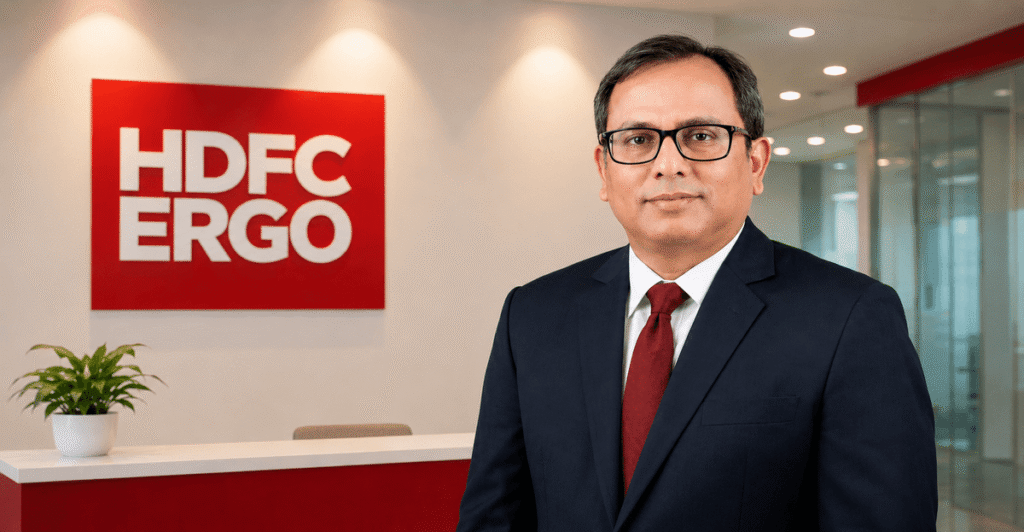
HDFC Ergo CEO flags claim rejections and rising health insurance premiums as two major challenges facing India's health insurance sector.
NEW DELHI, HDFC Ergo: Claim rejections, rising premiums and long waits for discharge approval are still the biggest problems for health insurance customers in India, according to the head of one of the country’s leading general insurers.
Speaking at the second National Health Insurance Summit in Calcutta, organised by the Bengal Chamber of Commerce and Industry, Parthanil Ghosh, managing director and chief executive of HDFC Ergo General Insurance, said the industry must rebuild trust with policyholders and make cover affordable for the long term. He argued that someone who buys a policy at 25 should be able to keep it for decades without being priced out.
HDFC Ergo: Why Are So Many Health Insurance Claims Rejected?
Ghosh said insurers reject about 10 percent of health claims on average, and that policyholders often feel cheated when it happens. He blamed part of the problem on how policies are priced. Premiums are built around classical treatment protocols, which often fail to account for newer medical techniques such as robotic and minimally invasive surgery.
When a hospital uses a modern method that the policy did not anticipate, the claim can be disputed or rejected even though the treatment was medically justified. Ghosh stressed that insurers and healthcare providers need to build trust and agree on common protocols.
Doctors at the summit backed this view. Vishal C Soni, a robotic gastrointestinal, hernia and obesity surgeon at Apollo Hospitals International in Ahmedabad, said insurers should consult surgeons and physicians when designing policies. He pointed out that doctors face the consequences when something goes wrong, including a rejected claim, and said all parties must work from the same understanding.
Industry data points to the same pressure. The General Insurance Council recorded 2.1 lakh grievances up to March 31, 2026, and 75 percent of them concerned health insurance. The council is running a grievance month in November and aims to resolve 25 percent of the pending complaints. Other industry reports put claim rejections at nearly 8 percent in FY25. Non-disclosure of pre-existing conditions at the time of purchase is widely cited as a leading cause of rejection, and many policyholders also report claims that were approved at admission but disputed during treatment or at discharge.
HDFC Ergo: Rising Premiums and the Case for a Medical Inflation Index
Affordability is the second major concern. Ghosh noted that premiums go up every year even when the policyholder has made no claim. He said insurance depends on predictability and probability, and that customers have little way of knowing how fast healthcare costs are rising year after year. To fix this, he called for a medical inflation index that would make the basis for premium revisions clearer to both insurers and buyers. He also said that if hospitals and insurers agree on treatment protocols, premium increases could be kept in check.
The pressure on premiums is real. Industry premiums grew about 9 percent in FY2024-25 to roughly ₹1.27 lakh crore, and the regulator has linked the rise to medical inflation and higher claim costs. Insurers handled more than 3 crore health claims worth about ₹1.2 lakh crore in FY2024.
HDFC Ergo: Delayed Discharges and the Three-Hour Rule
For patients, the most visible frustration is the wait at the hospital after treatment is over. Many insured patients sit for hours after being declared fit to go home because the insurer has not issued final clearance. A LocalCircles survey found cases where discharge took 10 to 12 hours after the patient was medically ready.
The Insurance Regulatory and Development Authority of India (IRDAI) tried to address this through its master circular on health insurance products, which replaced 55 earlier circulars. Under the rules, insurers must decide on cashless pre-authorisation requests within one hour and issue final discharge authorisation within three hours of receiving the required documents from the hospital. If the insurer misses the deadline and the hospital levies extra charges, the insurer must bear that cost. The regulator has also pushed insurers toward fully cashless settlement, and after 60 months of continuous cover a claim can be rejected only on proven fraud.
Ghosh said digital platforms have been built to speed up claims processing, and that insurers and hospitals are working together through the Confederation of Indian Industry to close the remaining gaps. Abhijit Mazumdar, chairperson of the BCC&I national health committee and CEO of the Apollo Hospitals Group’s Calcutta region, said the chamber wants to bring all stakeholders onto one platform and will keep working to encourage cooperation among insurers, hospitals and doctors.
HDFC Ergo: What Policyholders Can Do
Experts advise buyers to disclose all pre-existing conditions accurately, renew policies on time to preserve continuity benefits, and inform the insurer in advance of planned hospital admissions, usually a few days before. Policyholders whose claims are rejected can approach the Insurance Ombudsman within a year of the rejection, and the hearing is free. As regulators, insurers and hospitals try to align on protocols and pricing, the test will be whether faster approvals and fewer rejections actually reach the patient at the hospital bed.