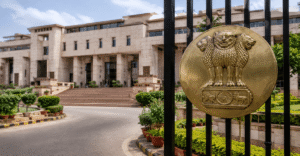
SEBI Asks IRDAI to Add Insurance Policies to Your CAS
SEBI proposal seeks to bring insurance policies into the CAS framework, helping policyholders track their insurance coverage alongside other financial investments through a consolidated state

SEBI has asked IRDAI to include insurance policies in the Consolidated Account Statement (CAS), giving investors a more comprehensive view of their financial holdings in one place.
NEW DELHI – Most Indian households keep their financial lives in pieces. Shares sit with a broker, mutual funds with a fund house, deposits with a bank and policies in a drawer or an email folder. The Securities and Exchange Board of India (Sebi) has now moved to bring those pieces together. It has written to the Insurance Regulatory and Development Authority of India (IRDAI) asking it to consider adding insurance policy information to the Consolidated Account Statement (CAS).
Sebi Chairman Tuhin Kanta Pandey disclosed the step on Thursday on the sidelines of the Samvaad India Open Finance Summit 2026. He said the aim is to give investors a financial ledger covering all their holdings, not only those in the securities market. The proposal would extend CAS to stocks, mutual funds, bank deposits, pension savings and insurance in one statement.
SEBI: What the Consolidated Account Statement does today
CAS is a single statement, built around an investor’s PAN, that shows holdings and transactions across demat accounts and mutual fund folios. It is issued by the two depositories, NSDL and CDSL. Sebi first mandated it through a 2014 circular, and statements began in March 2015.
Pandey said CAS already carries details of demat and non-demat holdings, mutual funds and shares held across brokers. Pension information is also being integrated. NPS holdings, for example, appear in a depository CAS once the investor gives explicit consent through the pension recordkeeping agency. Insurance would be the next addition. Pandey said it could be added subject to the necessary arrangements and customer consent. No timeline has been announced for the change.
Also Read: IRDAI to Examine Hospital Bills and Claim Payouts in New Consultation Paper
SEBI: Bank deposits and Account Aggregators
The insurance proposal follows a related step from the Reserve Bank of India. In its October 7 announcement, the RBI said it has facilitated Sebi-regulated depositories to include bank deposit account information in their Consolidated Account Statements through NBFC Account Aggregators. Both measures are expected to be implemented by December 31, 2026. The RBI also said customers without demat accounts would still be able to get a consolidated view and share it through Account Aggregators.
Pandey said Sebi is working to bring bank deposit data into the electronic CAS through the Account Aggregator framework. He described the RBI’s plan for interoperability among Account Aggregators as a welcome step. Once in place, investors would be able to access and share financial data more smoothly. They would no longer be limited by the contractual tie between a particular information provider and a particular aggregator.
The framework is already operating at scale. About 338.04 million accounts had been linked through it by August 2026, up 24% from 272.46 million in February. India has 17 RBI-licensed Account Aggregators, and cumulative fulfilled consents reached 566.26 million by August. Account Aggregators are licensed non-banking financial companies that move financial data between institutions only with the customer’s consent.
SEBI: Where insurance data stands, and Sebi’s wider agenda
Insurance is already moving towards digital records. IRDAI has mandated that new policies be issued electronically and held in an e-insurance account with an insurance repository. IRDAI has also proposed a Public Insurance Registry that would give policyholders a consolidated view of policies and claims across insurers, including unclaimed benefits. The regulator has invited comments on privacy, consent, data standards and governance for that system. Sebi’s letter adds another route: carrying that information into the securities-market statement that investors already receive.
Speaking at a separate industry event, Pandey described a wider set of reviews under way at the regulator. A comprehensive review of the Listing Obligations and Disclosure Requirements (LODR) framework is meant to make it more contemporary and streamlined. Proposals include stronger monitoring of how issue proceeds are used, along with measures to ease compliance without weakening investor protection. The SME IPO framework is also being reviewed so that genuine enterprises can raise capital while investors stay protected.
On the bond side, Sebi is developing a market-making framework to improve liquidity in the secondary corporate bond market, and it plans to widen retail access through regulated online bond platforms. Reviews of short-selling and the Securities Lending and Borrowing Mechanism (SLBM) are aimed at better liquidity and price discovery. The second phase of Demat 2.0 is expected to enable secondary-market trading of tokenised corporate bonds, and Sebi is also exploring an AI sandbox to test applications in a controlled environment.