IRDAI Chief Ajay Seth: Cut Costs, Correct Commissions, Tell Policyholders More
IRDAI chief Ajay Seth outlines key priorities for the insurance industry, focusing on cost efficiency, commission practices and greater transparency for customers.
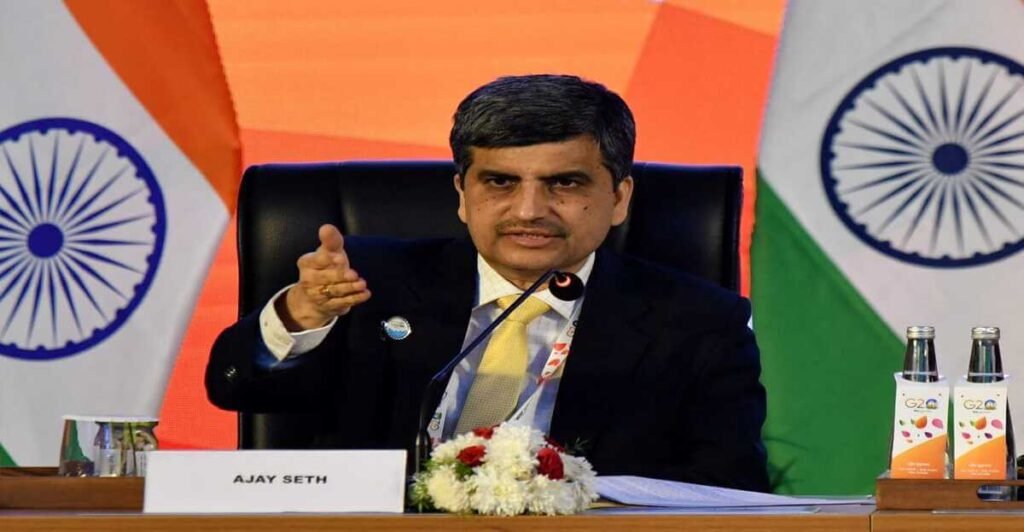
IRDAI chief Ajay Seth calls for lower costs, fairer commission structures and better disclosures to policyholders across the insurance sector.
NEW DELHI: IRDAI Chairman Ajay Seth has said the insurance sector has to become far more cost-efficient, with commission rates corrected and policyholders given clearer information on what they are buying, as the regulator takes forward its consultation paper on costs and commissions.
In an interview, Seth said general insurers spend a little more than 30% of premium on the cost of doing business, which leaves about ₹70 of every ₹100 in the risk pool. In life insurance, he said, the two-thirds of the market that spends least takes out 12% of premium, while the remaining third takes out 22%.
IRDAI: “I don’t get that sense”
Asked about the pushback on social media and in industry representations, Seth said he had not detected an uproar. Insurance industry is “supportive” of the overall direction of reform, with a few suggestions.
The impetus, he said, is the Sabka Bima Sabki Raksha Act, which Parliament passed in December 2025 and which was ratified in February 2026. It has three aims: faster growth of the sector to serve the economy and its people, stronger protection for policyholders, and more transparency in the governance and operations of regulated entities, so that trust in the industry rises. Protecting policyholders, he noted, has always been the regulator’s effort. “Some efforts have succeeded, some had mixed results.”
Told that distributors in particular were disputing the figures, Seth was unmoved. The data, he said, came from the industry and had been “checked, rechecked again and again,” and the regulator has “a high degree of confidence” in it. The objections, he said, come from distributors whose business model is misaligned with the policyholder’s interest. Those whose models are aligned, he said, are not complaining. He added that he believes every business must make a profit, but that profitability has its root in a satisfied customer.
Also Read: IRDAI chief: 10% health co-pay ‘yet to reach’ regulator, ‘nobody is milking anything’
On inferences, he was open. This is a consultation paper. Anyone who draws a different conclusion from the same data is welcome to say so, and the regulator would “be the first one to acknowledge it.” He also explained that the paper gives averages across the industry, products and channels, and maximums too. The maximums show how far a distributor can go where there are no guardrails, while the proposals are pegged to the averages.
IRDAI: The cost problem
Seth’s argument starts with a comparison of what the sector spends and what it keeps. In life insurance, he said, two-thirds of the market takes out 12% of total premium as the cost of doing business, and the remaining third takes out 22%. In general insurance the figure is a little over 30%, which leaves about ₹70 of every ₹100 in the risk pool.
Implementation, he said, would begin from either 1 January 2027 or 1 April 2027. Some commission rates, he said, will need to be corrected from day one. But he insisted the exercise is not only about commission. “It is also about the operating cost.” Insurers, distributors and the regulator all have to be more productive, he said, and the sector needs “a relentless pursuit of productivity, reducing cost of intermediation, and keeping policyholder at the centre.”
Asked why commission caps were lifted in 2023, Seth gave the history. Product-level caps, he said, lasted until 2016 and were removed by 2023, while expense-of-management limits in life insurance have never been removed. The thinking had been that freedom would bring more innovative products and a better way of regulating than a single overall cap. “Both have not happened,” he said. That is why the regulator now wants firmer guardrails and more effective supervision, led by data.
He used an image to describe what the rules are for. An expressway has guardrails, speed limits and cameras that catch speeding. The proposed limits, he said, work the same way, so that everybody behaves as expected.
IRDAI: Why policies lapse, and what to do about it
On whether life insurers should be held to a minimum persistency, Seth said it cannot simply be mandated. Savings-linked insurance is a long-term product with a lock-in, he explained. A large upfront commission spread over a long period does not change the final value much. But if the policy runs for a shorter time, the same commission makes a big difference and the surrender value ends up far lower.
Policyholders, he acknowledged, do not all have a steady income. A saver may see the next four or five years clearly, and then income changes or new liabilities arrive and the policy is discontinued. His answer was to tie incentives more closely to the long term so that upfront commission is not very high. That would reduce mis-selling, he said, and let the policyholder’s pot start larger and then grow.
He also wants products designed for people with variable incomes or variable savings. A person who cannot keep paying after five or seven years should be able to stay invested in the policy without being forced to take the money out, he said.
The regulator’s history, in his telling, shows why attention cannot lapse. In its first decade it was building the sector. By 2013 the problems were large surrenders and low value for policyholders, and the first comprehensive effort then improved matters for six or seven years. After that, he said, there was no focused effort to pursue cost and transparency, and things slid back.
IRDAI: A scorecard for the person selling you the policy
Asked whether a buyer could ever see an agent’s track record the way a rider can see a driver’s rating, Seth said certainly. A customer, he said, should be able to see how many of the 100 policies a given distributor sold ended in surrender, in disclosed or undisclosed pre-existing disease, or in mis-selling cases.
The vehicle is the public insurance registry, now out for consultation. Its aim, he said, is to make information available consistently, as a public good, beginning with the product itself and then the distributor’s performance. He said the regulator is looking at product performance disclosure: which products sell, which see more surrenders, and what returns they actually deliver.
IRDAI: What comes next
The consultation paper, Seth said, is “the first step.” Three more policyholder-facing areas are planned: claims management that is timelier, more consistent and fairer; the speed and consistency of the grievance redress mechanism; and products that are more transparent and simpler to understand. One industry-facing area, the return on insurers’ own investments, will ultimately affect what policyholders receive.
His closing request was to the public. The regulator has looked at the data, drawn inferences and settled on a strategy it believes will work, but there may be a better way. Comments are invited on the paper’s questions, and Seth asked people to answer whatever is relevant to them, in their own language. Insurance, he reminded, is the one sector where a person pays a price today for a promise of service in the future. In general insurance, if no claim arises, both sides are happy. “If it were to arise, it has to work like a clock.”