Zerodha-backed Ditto Insurance co-founder flags risks from IRDAI’s reforms
Zerodha-backed Ditto Insurance co-founder has raised concerns over the potential impact of IRDAI’s reforms.
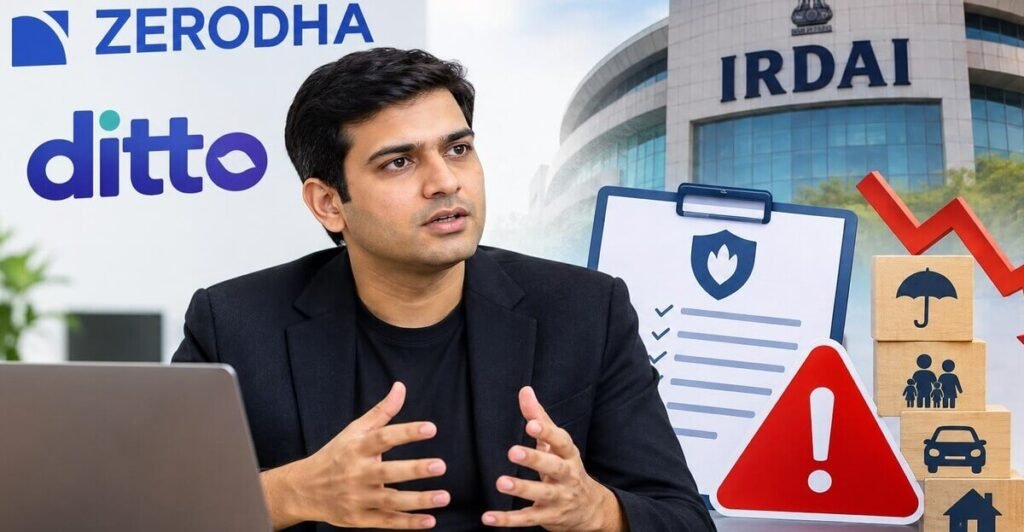
Zerodha-backed Ditto Insurance co-founder flags potential risks from IRDAI’s proposed reforms.
NEW DELHI: Pawan Kumar Rai, co-founder of Ditto Insurance, a Zerodha-backed insurance advisory and distribution platform, has said the Insurance Regulatory and Development Authority of India’s (IRDAI) proposed distribution reforms could put honest, advice-led distributors at risk. He made the remarks in a LinkedIn post on September 28, days after the regulator released a consultation paper on commissions and expense limits.
Rai said a distributor that keeps up need-based selling faces a steep cut in revenue on a short timeline, and that banks would be better placed to absorb the changes. He also said he expects Ditto itself to manage the transition.
Ditto sells health and term insurance and offers advisory consultations to customers. It has raised around ₹34 crore ($4 million), including a seed round led by Zerodha, which is its largest external stakeholder.
Also Read: Pashudhan Bima Portal Launched: Now Insure Your Cow, Buffalo, Goat Online
What Rai said
Rai wrote that Ditto sells no savings plans, ULIPs, motor or other mandatory products, and that advisors tell customers when a policy does not fit and end the sale. He said about 95% of its health customers renew each year and that its NPS is the best in the category. He added Ditto built this model without regulatory force.
He said the model is people-heavy, with about 70% of costs going to it. His post listed an advisory force that holds ten full consultations to sell one policy, a quality team that audits nearly all of them, an operations team that fills gaps in insurers’ customer journeys, a claims team that takes calls at 1 am, a training team that spends three months on each new cohort, and a central team that works on improvements. Rai said many distributors run some version of this.
He described a scenario in which a distributor is told to continue all of this while its revenue is halved and it has six months to adjust, while insurers get five years to bring down their costs. Rai said hundreds of other distributors may not cope, and that banks would do fine because servicing an insurance customer was never a separate cost for them. He said customers could then be handed back to banks, petrol pumps and hospitals. He added that he agrees the economics need fixing and customers need protection.
What IRDAI has proposed
IRDAI released the consultation paper, titled Recalibrating Economics of Insurance Distribution, on the evening of September 23, and it is open for comments until October 25. The proposals are at the consultation stage and do not yet change commission payments on existing policies.
The paper moves away from the flexible framework introduced in 2023 towards limits that vary by segment, line of business, channel, product complexity and effort, and would make commission an all-inclusive cost covering incentives, awards and reimbursements.
Life insurers would move to a company-level expense of management cap of 15% of gross direct premium within two years and 12.5% within five. General insurers would go from 30% of gross written premium to 25% within two years and 20% within five. Open-architecture distributors, including brokers and banks and NBFCs registered as corporate agents, would get lower commission caps than tied agents.
Under the draft, third-party motor commission would be nil for open-architecture channels on new vehicles, loan-linked term cover would be capped at 2% to 2.5%, and health renewals would be capped at 5% to 10%.
IRDAI’s case rests on its own data. Between FY23 and FY25, motor premiums grew about 34% while distributor commissions grew 259%. In retail health, premiums grew 53% and commissions 118%.
PB Fintech: share price and analyst call
Shares of PB Fintech, the parent of Policybazaar and India’s largest insurance distributor, fell nearly 36% to ₹1,207.20 on September 24, their biggest single-day fall. The fall wiped out about ₹31,430 crore of market value and took the stock to a 52-week low. On Monday the shares traded 3.5% higher at ₹1,207.40, after a two-day fall of about 38%.
In a statement on the price movement, PB Fintech said the proposed limits, if enforced as they stand, may not align with the servicing costs of online distribution, and that it would give detailed feedback within the consultation timeline.
On an analyst call, the company described the proposals as extreme and said the impact on general insurance could be significant while the impact on life insurance would be more limited. It said life and non-life contribute roughly equally to its business and that if general insurance commissions fell 60%, higher volumes could offset part of the loss. It said it expects hiring to slow, will rework its POSP business, expects FY28 to be volatile and aims to be back on track by FY29. It said it may explore seeking an insurance licence.
HSBC downgraded the stock to hold and cut its target from ₹2,100 to ₹1,150. Jefferies retained its Buy rating, cut its valuation multiple by 30%, and noted that the paper may change after feedback. Sixteen of 25 analysts still rate the stock a buy.