IRDAI’s insurance distribution paper is a solution in search of a problem
Insurance industry veteran Balasundaram R says IRDAI’s new distribution proposals promise reform but deliver control, threatening to hollow out broking and favour the industry’s largest players.
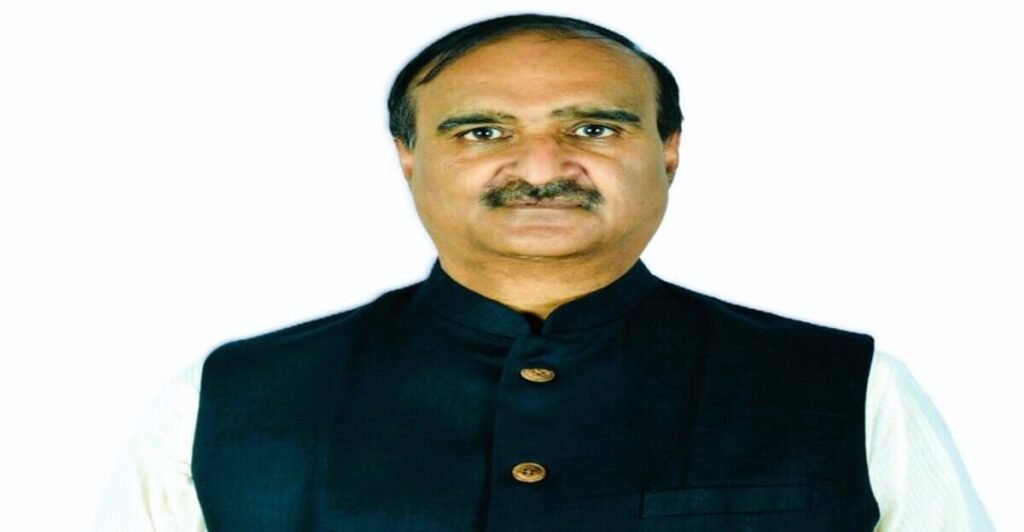
IRDAI's new distribution draft claims to fix insurance economics, but reads more like a control exercise. Brokers, policyholders, and market choice all stand to lose, says Balasundaram R.
By: Balasundaram R
If someone offered you an elephant for ₹100, would you buy it? Almost certainly not, even at that ridiculously low price, because you have no need for an elephant and see no value in owning one. That, in a nutshell, is the flaw at the heart of IRDAI’s new consultation paper on insurance distribution. Titled “Recalibrating Economics of Insurance Distribution,” it has almost nothing to do with economics. It is, in essence, about control.
This draft anti-broking. What follows are the consequences of adopting it in its current form: some intended, some plainly not thought through.
A Surgical Strike, Performed by Untrained Surgeons
At first glance, it appears to be a surgical strike (The stock markets reacted unfavourably), performed by untrained surgeons with blunt scalpels. Yes, the authors of this draft seem confused at many places — The difference between Life and Non-life issues, within non-life too, the difference between retail lines and commercial lines. etc.
On the one hand, the paper says — ‘Same activity, same regulation’ and in the same breath says ‘same business, differential commission regulations’, the difference being compensation for closed architecture vis-a-vis open architecture. What a logic, Sirji!
The main point bluntly stated is this consultation draft is ‘Anti- Broking’. All types of brokers be they traditional corporate brokers, MISP brokers, PoSP sponsoring brokers, Technology-first brokers are proposed to be hammered in myriad ways. This to a channel which the paper says contributes 33% of the non-life industry premium! Seems a case of throwing out the baby with the bath-water.
The most damaging aspect of this report is to the self-esteem of brokers, who pride themselves as consultants for the clients rather than distributors of products. In one stroke, brokers are told ‘you are no different from any other channel of distribution. So, we will ease the entry-level limits for you, distribute non-insurance products too to earn your livelihood because not only are we reducing commissions across products BUT paying you lesser than IDPs because they are better equipped to provide technical advice on large commercial businesses, be they in structuring solutions or providing claims advocacy and support. How else does one explain the below commission caps suggested?
Property & Engineering – IDEs (which includes brokers) 6.25% & IDPs -7%
Marine cargo – IDEs 10% & IDPs 15%
Miscellaneous corporate – IDEs 10% & IDPs 15%
Imagine an IDP structuring a complex Mega-Risk policy, or a global marine program or a D & O policy for a global operation. The reform proposal appears to be an attempt to weaken the Broking industry that provides employment directly and indirectly to lakhs of people or to gradually let broking die and we go back to only the pre-2000 modes of distribution viz. Agents and Direct (this time through online methods). This at a time when the much-hyped Bima Sugam is yet to see the light of day and the talk is about creating more MIIs.
Also Read: Bima Sugam to Go Live by November, IRDAI Chairman Ajay Seth Confirms
The Broker Disappears, and So Does Accountability
The most immediate casualty is the word “broker” itself. Under the proposed framework, the insurance broker vanishes from the Indian insurance lexicon altogether, folded into a broader category called IDEs (Insurance Distribution Entities), with entry-level capital requirements lowered to just ₹10 lakh and permission to sell products well beyond insurance. The entire body of broking regulation would be scrapped and replaced with a common rulebook for all IDEs.
Odder still is the commission structure this creates. IDEs would face lower commission caps across product lines than IDPs (Insurance Distribution Persons): the weak justification being that IDPs, operating in a closed architecture, need to be paid more because they work harder to sell. But what about the customer, whose interests are supposed to come first? Closed architecture means no choice between insurers, no comparison of pricing, and health insurance portability becomes a joke, unless, of course, the regulator is comfortable with a single individual quietly holding multiple IDP licences under different insurers and different names. We have seen this film before, and it does not end well.
The fallout for the industry will be swift. Many small and mid-sized brokers will simply shut down. Others will surrender their broking licences and reinvent themselves as corporate agents or IDPs. Even the larger players will survive only by freezing expansion, trimming headcount, and cutting salaries.
The Value Illusion: Cheaper Premiums Won’t Fix Penetration
At the core of this paper sits a deeply flawed assumption: that capping commissions lowers premiums, and lower premiums automatically translate into higher insurance penetration. This is, frankly, preposterous. People buy insurance when they perceive value in it and have trust in the system, not simply because it’s cheap. Nobody buys an elephant at any price if they don’t need one. Creating that value perception, and building trust in the insurer, is precisely the job a distributor does. Strip that away, and no commission cap will move the needle.
The paper compounds this by never explaining how reduced commissions are supposed to reach the customer as lower premiums. There’s no glide path, no mechanism to ensure savings are passed through, and no indication of how the regulator intends to supervise any of it. On this point, the draft is simply shallow.
And even if we assume the full commission saving is passed on, the industry’s GDPI (Gross Direct Premium Income) will take a hit of several thousand crores. Ironically, this barely moves the Expense of Management (EoM) needle for insurers either, since the denominator (GDPI) shrinks right along with it.
The real casualties of a demotivated distribution network will be MSMEs, SMEs, and small businesses, particularly in smaller towns and villages, where trust in insurance is already thin and getting thinner. Distributors, with little financial incentive left, will simply stop expanding into new geographies.
This misreading extends to claims and mandatory covers too. The draft assumes mandatory insurances, like motor third-party cover, “sell themselves.” Yet more than 40% of vehicles, especially two-wheelers, are uninsured even for basic TP cover today. If that’s the reality with active distribution, what happens without it? The uninsured percentage will only rise, and the real victims will be accident survivors and grieving families left without recourse.
Then there’s pricing itself. In July 2026, IRDAI warned insurers that their property insurance pricing was unviable and disconnected from Board-approved policies and actuarial advice. Two months later, the same regulator is asking for further premium reductions via commission caps. That isn’t a policy, it’s a paradox.
Selling Is Only Half the Job: Service and Claims Are the Other Half
Perhaps the draft’s most basic misconception is treating a broker’s function as limited to selling. It isn’t. Every broker, large, medium, or small, employs far more people in servicing than in sales; the servicing headcounts, if anyone bothered to look, would be eye-opening. Squeeze viability, and servicing is the first thing to be compromised, a compromise policyholders will feel directly.
Technology, and Bima Sugam in particular, is being held up as the cure-all, with more Marketplace Model Intermediaries (MMIs) envisioned to fill the gap. My humble request here: either IRDAI or the Bima Sugam Federation needs to publish a white paper, now, on timelines, platform architecture, and costs, with full transparency. As things stand, to the average observer, Bima Sugam looks like a black hole consuming taxpayer money, given that government-owned insurers have contributed to its capital too. Technology isn’t cheap, and brokers have already invested heavily in their own systems. Squeeze their viability, and that investment, upgrades, development, everything, dries up. The one left holding the bag, as always, is the policyholder.
Claims tell the same story. Without brokers, whose claims-support role is written into current regulations, policyholders will face insurers alone, and not on equal footing. The draft is silent on who takes responsibility for claims servicing once brokers are pushed out. Insurers, meanwhile, would be more than happy to operate without broker intervention, since it hands them a free hand while the policyholder has none. Tellingly, the regulator’s own data shows that most complaints reaching the insurance ombudsman are decided in favour of policyholders, yet little has been done to drive better insurer behaviour. Even published claims data (settled, declined, and so on) follows no common standard, with each insurer using its own formula. So is a broker’s role really just to source business and pocket a commission, as this draft seems to presume?
There is a broader cost too: frequent, disruptive tinkering with regulation is corrosive to business continuity in insurance, and will almost certainly dampen foreign investor appetite for the sector.
Which raises the obvious question: who benefits?
To summarise: in the short-to-medium term, before, one hopes, wiser counsel prevails, the stakeholders hit hardest will be policyholders and distributors, brokers especially, with job losses and lower compensation as an inevitable corollary.
Benefit won’t reach all insurers, as one mid-sized insurer’s CEO has pointed out with admirable candour. The real beneficiaries are the well-entrenched insurers looking to widen their moat and raise the barrier to entry for smaller, newer competitors. Is the regulator, intentionally or not, engineering an oligopoly, and shrinking customer choice in the process? The regulator has gone on record saying nine insurers welcomed the draft. Nine out of how many, exactly?
Here’s the part that doesn’t add up: pricing isn’t regulated. Policy wordings aren’t regulated. So why single out commissions for a regulatory cap? Commission is embedded within GDPI, and insurers are already free to reprice their products. They don’t, because they fear a smaller competitor undercutting them, and so everyone keeps prices low instead. If insurers can’t manage their own competitive dynamics, is the answer really to penalise distribution instead? That’s warped logic, dressed up as reform.
One hopes the consultation that follows is genuinely free, fair, and transparent, and that these issues get properly thrashed out. Where commissions are obnoxiously high, by all means, prune them. But you don’t take a sledgehammer to kill a fly. All you’ll get for your trouble is a broken floor.
The author is Balasundaram R, an insurance industry veteran and former Secretary General of the Insurance Brokers Association of India (IBAI).
Editorial Disclaimer: This is a contributed article. The views and opinions expressed are those of the author(s) and do not necessarily reflect the position of The Insurance Reporter, which does not endorse or take responsibility for the accuracy of claims made herein. Readers should conduct their own due diligence before making any financial or insurance-related decisions.