Motor Insurance Claim Rejected? Here’s Exactly What You Can Do About It
Moter Insurance: A motor insurance claim rejected can feel like the final word, but it rarely is. Insurers must cite a specific policy clause for every denial, and vague or unsubstantiated rejections can themselves become grounds for appeal.
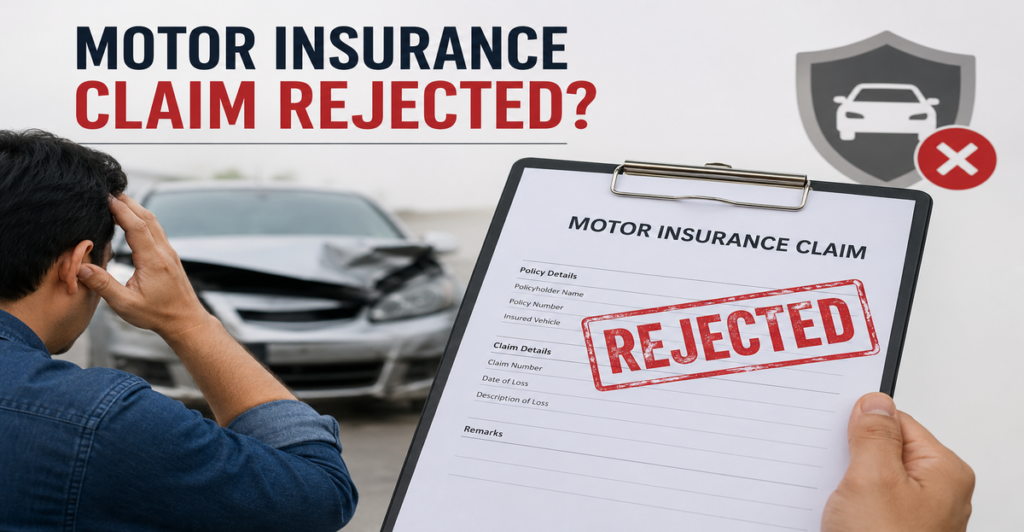
Motor insurance claim rejected? Understanding the reasons behind a denial can help policyholders protect their rights and take the right next steps.
Motor Insurance: Getting a motor insurance claim rejected is one of the most frustrating experiences a car or bike owner can face, especially right after an accident or theft when money is already tight. Insurers reject motor claims for reasons ranging from a lapsed policy to a technicality buried in the fine print, and many policyholders simply accept the denial without realising they have clear, enforceable rights under Indian insurance law. Understanding why claims get rejected, and the exact steps to challenge an unfair denial, can be the difference between recovering your money and writing off the loss entirely.
Also Read: Things to Check Before Buying Car Insurance in India: A Complete Buyer’s Guide (2026)
Motor Insurance: Why Motor Insurance Claims Get Rejected
Insurers do not reject claims arbitrarily; every rejection is supposed to be backed by a specific policy clause or regulatory ground, though in practice many rejections are contested successfully once challenged. The most common reason is a lapsed or expired policy at the time of the incident, which immediately voids coverage. Late intimation of the claim is another frequent trigger, since most insurers require accidents or thefts to be reported within 24 to 48 hours, and delays are often used as grounds for denial even when the delay was reasonable.
Driving without a valid licence, or with a licence that doesn’t match the vehicle class involved in the accident, is a near-automatic rejection ground. Claims are also denied when the driver is found to have been under the influence of alcohol or drugs at the time of the accident, a determination usually based on a police FIR or medical report. Using a private vehicle for commercial purposes, such as a personal car being used as a cab without the corresponding commercial policy, voids the private-use cover entirely.
Non-disclosure or misdeclaration at the time of buying the policy, such as under-reporting the vehicle’s usage or modifications, can also be cited. Pre-existing damage that wasn’t disclosed, or damage that the insurer’s surveyor claims occurred before the policy period, is another common dispute area. Finally, claims can be partially or fully rejected if the vehicle wasn’t roadworthy, if safety devices like anti-theft systems required by the policy weren’t installed, or if repairs were carried out before the surveyor could inspect the vehicle.
Motor Insurance: Your Rights When a Claim Is Rejected
Every policyholder has the right to receive a written rejection letter that states the specific reason for denial, referencing the exact policy clause relied upon. Insurers cannot simply reject a claim verbally or leave the reasoning vague; the Insurance Regulatory and Development Authority of India (IRDAI) requires transparency in claim communication. If the rejection letter is vague or doesn’t cite a clause, that itself can be grounds to challenge the decision.
Policyholders also have the right to request the surveyor’s report, which forms the technical basis for most rejections. Reviewing this report often reveals discrepancies, such as damage assessments that don’t match the actual accident circumstances or documentation errors that can be corrected. You also retain the right to escalate the matter internally before it goes anywhere near a court, since every insurer is required to maintain a grievance redressal mechanism under IRDAI regulations.
Step-by-Step: How to Challenge a Rejected Motor Insurance Claim
The first step after receiving a rejection is to request the rejection letter and the surveyor’s report in writing if they haven’t already been shared. This documentation is essential because most successful appeals hinge on identifying a factual or procedural error in the insurer’s own assessment rather than a legal argument.
Next, file a written complaint with the insurer’s internal grievance redressal officer, attaching all supporting documents such as the FIR, repair estimates, medical reports if relevant, and any evidence contradicting the insurer’s stated reason. Insurers are typically required to respond within 14 to 15 working days of a formal complaint.
If the internal escalation doesn’t resolve the issue, the next step is the Insurance Ombudsman, a free, quasi-judicial forum specifically created for insurance disputes involving amounts up to Rs 50 lakh. The Ombudsman route is faster and less expensive than civil litigation, and awards are binding on the insurer if the policyholder accepts them. Complaints can also be registered on IRDAI’s Bima Bharosa portal, which tracks grievances against insurers and can prompt regulatory follow-up.
For claims where the Ombudsman route doesn’t apply, or where the policyholder wants a legally binding order with compensation for harassment or mental agony, the Consumer Disputes Redressal Commission at the district, state, or national level is the appropriate forum. Consumer courts in India have repeatedly ruled in favour of policyholders where insurers rejected claims on technical or unsubstantiated grounds, directing insurers to pay the claim amount along with interest.
Also Read: Things to Check Before Buying Car Insurance in India: A Complete Buyer’s Guide (2026)
Motor Insurance: When to Bring In a Lawyer or Advisor
Most straightforward rejections, especially those involving documentation gaps or minor procedural issues, can be resolved through the insurer’s grievance cell or the Ombudsman without legal representation. However, cases involving large claim amounts, allegations of fraud or misdeclaration, or repeated stonewalling by the insurer often benefit from legal counsel experienced in insurance disputes, particularly when the matter is headed to a consumer commission.
Motor Insurance: The Bottom Line
A rejected motor insurance claim is not the end of the road. Policyhoalders in India have multiple layers of recourse, from internal grievance redressal to the Insurance Ombudsman and consumer courts, and a meaningful share of rejected claims are eventually overturned once challenged with the right documentation. Reading the rejection letter carefully, requesting the surveyor’s report, and escalating promptly through the correct forum gives policyholders a real chance at recovering what they’re owed.