IRDAI’s Motor Insurance Circular Explained: What Changes for Vehicle Owners and Why It Matters
IRDAI Circular reshapes motor insurance by separating third-party liability, passenger protection, personal accident and own-damage cover into distinct sections.
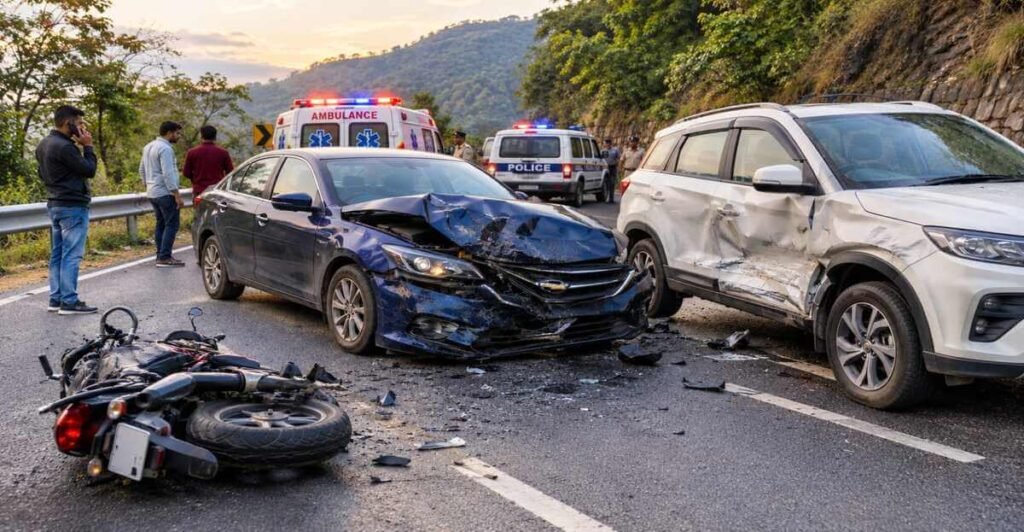
IRDAI Circular introduces a four-layer motor insurance structure from December 15, 2026, following a Supreme Court judgment that called for greater clarity in insurance coverage.
New Delhi, IRDAI Circular: The Insurance Regulatory and Development Authority of India (IRDAI) has issued a new circular, dated November 2, 2026, restructuring motor insurance policies for private cars and two-wheelers into four distinct sections. The new framework, which takes effect from December 15, 2026, gives vehicle owners greater control over the protection they buy, while requiring insurers to disclose the cost of individual covers rather than present them as an indistinguishable bundle.
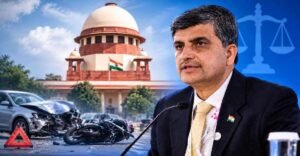
The circular follows the Supreme Court’s August 4, 2026 judgment in National Insurance Company Ltd. v. Smt. Thungala Dhana Laxmi. Although the case began as a dispute over an accident compensation claim, the court widened its examination to address a larger problem: the gap between compulsory motor insurance under the law and the protection that vehicle owners and occupants actually receive.
The resulting regulatory framework attempts to bring clarity to a market where third-party liability, passenger protection, personal accident insurance and damage to one’s own vehicle have often been sold together, leaving customers with limited understanding of what each component covers.
To understand why IRDAI has introduced the new structure, it is necessary to look at the case that brought the issue before the Supreme Court, the distinction between different types of motor insurance and what the regulator has now prescribed.
Also Read: IRDAI Motor Insurance Circular: 7 Key Changes You Should Know
IRDAI Circular: The Supreme Court case that set the process in motion
The origins of the new framework lie in an accident that took place on July 13, 1996.
T. Ramu was returning from Tirupati to his village in a Maruti 800 when an unidentified lorry struck his car from behind near Singarayakonda in Andhra Pradesh. He suffered injuries and subsequently died during treatment. His family approached the Motor Accident Claims Tribunal seeking compensation, arguing that the car was insured with National Insurance Company.
The insurer contested the claim, maintaining that no additional premium had been paid to cover the personal risk of the vehicle owner. The Tribunal accepted the insurer’s position and rejected the family’s claim in December 2009.
The Telangana High Court took a different view in July 2024. It held that the comprehensive motor insurance policy covered the vehicle owner, who was travelling in the insured car, and awarded the family compensation of Rs 10,00,500, along with interest at 7.5% a year.
National Insurance Company challenged that decision before the Supreme Court.
On August 4, 2026, the Supreme Court dismissed the insurer’s appeal on this issue. It observed that the IRDA’s circular dated November 16, 2009 had clarified that occupants of a private car were covered under a comprehensive or package motor insurance policy. The court said that the High Court had correctly applied this position and that motor accident claims should not be decided through an unnecessarily technical interpretation of policy terms.
The 2009 circular is important to understanding the present reform. It had reiterated that the standard motor package policy covered the insurer’s liability towards occupants of private cars and pillion riders on two-wheelers, provided they were not carried for hire or reward, subject to the policy’s terms.
In other words, passenger protection under a package policy was not an entirely new concept introduced in 2026. The regulator had clarified this position much earlier, following disputes between insurers and accident claimants.
The Supreme Court’s 2026 judgment reaffirmed that position in the case before it. But the court went further. It examined why motor insurance policies were structured differently across companies, why consumers often struggled to understand their coverage and why mandatory third-party insurance remained poorly enforced.
In its judgment, it cited an estimate that nearly 56% of vehicles plying on Indian roads were uninsured. The figure represented approximately 16.54 crore vehicles out of a total of 30.48 crore, based on government data cited in the proceedings. This is a figure relied upon by the court, not a fresh estimate of the uninsured vehicle population in November 2026.
The concern was not merely regulatory non-compliance. An accident involving an uninsured vehicle can leave victims and their families struggling to identify the party responsible for compensation. The financial consequences can be particularly severe where an accident results in death or permanent disability.
The court also noted that motor insurance policies contained differences in wording and that consumers did not always understand the distinction between the various types of coverage.
It was against this background that the court considered IRDAI’s proposal for a four-layer structure. The objective was to make the basic protection and optional covers clearly identifiable, allowing a buyer to make an informed choice rather than relying on an unclear package of benefits.
The court also issued separate directions to strengthen enforcement of compulsory insurance. These included integrating Automatic Number Plate Recognition (ANPR) cameras with the Insurance Information Bureau and VAHAN databases to identify uninsured vehicles, besides providing state police with handheld devices or applications to verify insurance status.
It further directed that the mandatory third-party insurance period for new cars be increased from three years to four years and for new two-wheelers from five years to six years.
These are important parts of the broader judgment, but they should not be confused with the four-layer product framework contained in IRDAI’s November circular. The latter deals specifically with how motor insurance coverage is structured and sold.
IRDAI Circular: The basic distinction: third-party, package and own-damage insurance
Before examining the four layers, it is important to understand what motor insurance actually protects.
Under Section 146 of the Motor Vehicles Act, third-party insurance is compulsory. It protects against specified legal liabilities arising when the insured vehicle causes death, bodily injury or property damage to another party.
A third-party-only policy does not pay for damage to the insured vehicle itself. Nor should a vehicle owner assume that merely having the minimum compulsory insurance means every person travelling in the vehicle is covered.
This is where comprehensive or package insurance comes in. Traditionally, such policies have combined third-party liability with protection for the insured vehicle and, under the standard package-policy framework, liability towards occupants and pillion riders, subject to applicable terms and conditions.
Own-damage insurance, meanwhile, covers loss or damage to the insured vehicle, such as damage arising from an accident, fire or theft, according to the policy.
These are different risks. A driver who damages another person’s vehicle may face third-party liability. A passenger injured in the insured car raises a different question of occupant protection. Damage to the insured car itself falls under own-damage insurance.
The new IRDAI structure separates these elements so that the customer can see the protection being purchased and the price attached to each component.
IRDAI Circular: The four layers: What IRDAI has changed
IRDAI circular introduces four principal sections, with personal accident protection further divided between the owner and other occupants.
- Third-party liability remains the mandatory foundation
Section I provides third-party liability insurance in accordance with the Motor Vehicles Act.
This remains the compulsory foundation of a motor insurance policy. Vehicle owners cannot opt out of this cover and continue to use their vehicles legally on public roads.
The purpose is to ensure that a person who suffers injury, death-related loss or property damage because of another vehicle has an insurance mechanism against which the applicable liability can be pursued.
The third-party section is therefore different from the other covers in the new structure. It is not an optional benefit that customers can remove to lower their premium.
- Passenger liability becomes a separately priced optional cover
Section II is among the most significant changes in the circular.
It provides a separate legal liability cover for occupants of a private car or pillion riders on a two-wheeler. The cover also includes the insured’s employees.
To understand its importance, consider a situation in which a passenger travelling in a private car suffers serious injuries in an accident. The vehicle owner may face legal liability arising from that accident. Section II provides an insurance cover for that liability if the owner has purchased it.
It is important not to confuse this with personal accident insurance. Passenger liability cover protects the vehicle owner’s legal liability. It is not simply a fixed accident benefit payable to every passenger whenever an accident takes place.
The circular also specifies exclusions. The cover does not extend to the vehicle owner, the owner’s immediate family members, including parents, spouse and children, or a driver who is not an employee of the insured. Protection is limited to the vehicle’s seating capacity and does not apply where passengers are carried for hire or reward.
The policyholder can choose the liability limit and pay the applicable additional premium.
This section deserves particular attention because customers will now have to make an explicit decision about purchasing passenger liability protection. Choosing not to buy it could leave the vehicle owner without this additional insurance protection against eligible passenger-related liabilities.
- Personal accident cover is divided between the owner and occupants
Section III deals with personal accident protection, but the circular divides it into two parts.
Section III(i) covers the vehicle owner. This cover is mandatory, although the owner can opt out if personal accident protection is already available elsewhere.
Section III(ii) provides personal accident cover for occupants, pillion riders and drivers other than the owner. This is optional.
The distinction matters because personal accident protection is different from legal liability insurance. It provides benefits for specified accidental death or disability rather than simply reimbursing the vehicle owner for a liability owed to someone else.
The circular also standardises the benefit structure. The prescribed payout is 100% of the insured amount in the event of death, loss of two limbs or both eyes, and permanent total disability. Loss of one limb or one eye attracts 50%.
The prescribed death or disability must occur within six months of the accident. Self-inflicted injuries and suicide are excluded.
For owner personal accident cover, the circular also provides that the benefit applies to individual owners and not companies or firms. Where an individual owns multiple vehicles, the cover is limited to one vehicle, and only one policy will make a payment for a particular accident.
- Own-damage cover remains optional and market-driven
Section IV of the circular covers loss or damage to the insured vehicle itself.
Unlike third-party liability, own-damage insurance is not compulsory under the Motor Vehicles Act. A vehicle owner can choose whether to purchase this protection.
IRDAI has retained flexibility for insurers in designing and pricing own-damage policies. Companies can continue to determine premiums, introduce add-ons and modify exclusions, subject to the basic coverage requirements of the prescribed framework.
This means that the regulator is standardising the broad structure of motor insurance without removing competition in the own-damage market.
Insurers can still differentiate their products through pricing, add-on benefits and service features.
The bigger change may be how motor insurance is sold
The four layers explain what the policy covers. The circular’s other important provisions deal with how customers will choose those covers and how insurers must document the transaction.
IRDAI Circular: A mandatory option form
Every customer will have to be given an option form showing the different sections of the policy.
The customer must indicate whether they wish to opt in or opt out of the applicable optional covers. This requirement will apply to both online and offline purchases.
For digital transactions, insurers will have to record consent through an OTP sent to the customer’s registered mobile number or email address.
The completed form becomes part of the policy document. An insurer cannot issue the policy without obtaining this form.
This is important because the choice of optional protection will no longer be left to an informal understanding between the buyer and the intermediary. There must be a recorded decision.
IRDAI Circular: A Customer Information Sheet at the point of sale
Insurers must also provide a Customer Information Sheet (CIS) when selling the policy.
The sheet is intended to explain the various covers, the protection available under each section and the options available to the customer.
The idea is straightforward: a buyer should be able to understand the difference between third-party liability, passenger liability, personal accident and own-damage insurance before deciding what to purchase.
Follow us on Twitter for latest updates
IRDAI Circular: Separate premium disclosure
The policy schedule must show the coverage and premium for each section separately.
This could make a material difference to the way customers compare motor insurance products. Instead of seeing only a single combined amount, buyers will be able to identify the price of each component.
For insurers and intermediaries, this will require changes to policy schedules, sales journeys, technology systems and documentation.
It also places greater responsibility on insurers to explain the consequences of declining optional protection.
IRDAI Circular: What happens to an existing motor insurance policy?
The circular provides an important facility for policyholders who already have third-party insurance.
They can add the new Section II passenger liability cover during the existing policy period by paying an additional premium. There is no requirement to cancel the existing policy and purchase a new one.
However, the additional cover must be obtained from the same insurer that issued the existing third-party policy. The protection will begin from the date specified in the endorsement.
The provision gives existing customers a way to add passenger liability protection without waiting for the next renewal.
IRDAI Circular: What happens to premiums and insurer competition?
The new framework standardises the broad coverage structure, but it does not remove the role of individual insurers in pricing products.
The Supreme Court’s directions allowed insurers to determine the pricing of optional covers, while own-damage products would continue to be influenced by market forces.
Under the new structure, the policyholder can choose the liability limit for Section II, with the applicable premium disclosed separately.
This leaves an important question unanswered for customers: how much will passenger liability protection cost across different insurers?
The circular establishes the structure and requires transparency, but it does not prescribe a single uniform market price for the optional passenger liability cover.
As a result, premium differences and the limits offered by individual insurers could become important factors in policy comparisons.
IRDAI Circular: Other provisions that policyholders and insurers should know
Beyond the four main coverage sections, the circular also addresses policy cancellation, continuity and implementation.
Third-party policies can be cancelled only in specified circumstances, including double insurance, proven fraud or total loss of the vehicle. In the event of a vehicle sale, cancellation requires proof of new third-party insurance. A prescribed refund structure applies to double insurance, while no refund is payable where a claim has been made.
The circular also provides that where the sole insured person dies, the policy will remain valid for three months or until its original expiry date, whichever is earlier, to allow legal heirs to transfer it.
It further states that a rejected claim will be treated as abandoned if legal proceedings are not initiated within 12 months of the rejection.
Another implementation requirement is the integration of the four-layer motor insurance products with Bima Sugam. Insurers must make these products available on the platform from December 15, 2026.
The new structure will require insurers to update their policy wordings, pricing systems, option forms and customer-facing documents before the deadline.
IRDAI Circular: A change in the contract, not just the format
The importance of IRDAI’s new motor insurance circular lies in the way it separates risks that were often presented together.
The Supreme Court’s intervention began with a dispute over compensation and expanded into a wider examination of uninsured vehicles, policy inconsistency and consumer understanding. Its directions brought the insurer, regulator and government into a common framework for addressing both enforcement and coverage.
IRDAI’s four-layer structure is one part of that response. It gives policyholders a clearer breakdown of their insurance protection, creates a separate choice for passenger liability and makes individual premiums visible.
But transparency alone does not guarantee adequate protection. A customer who declines a cover without understanding what it protects may discover the gap only after an accident. Insurers and intermediaries will therefore have to do more than present a set of checkboxes. They will have to explain the risks attached to each choice.
For the industry, the December 15 deadline is a product and technology transition. For vehicle owners, it is a change in how they should read and buy motor insurance.
The central question will no longer be simply whether a vehicle is insured. It will increasingly be what, and whom, that insurance actually protects.