Marine War Risk Premiums Surge as Strait of Hormuz Tensions Shake Global Shipping Insurance
Marine war-risk insurance premiums are climbing sharply as renewed attacks near the Strait of Hormuz prompt some insurers to advise shipowners against sailing through one of the world’s busiest energy corridors.
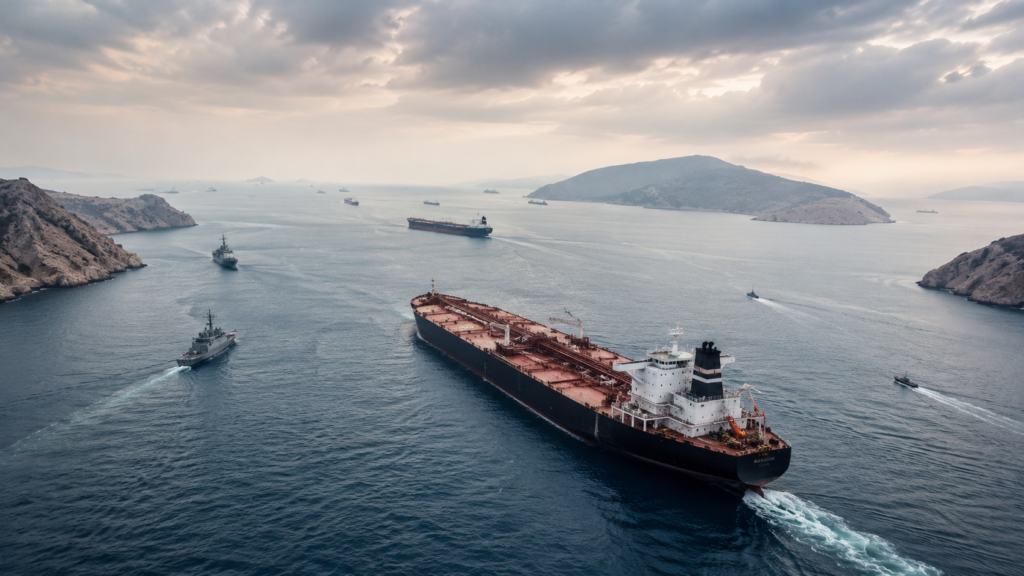
An oil tanker transits the Strait of Hormuz as heightened geopolitical tensions drive marine war-risk insurance premiums higher, increasing costs for global shipping and energy trade. AI Image
London: The global marine insurance industry is once again at the centre of escalating geopolitical tensions as war-risk premiums for vessels transiting the Strait of Hormuz climb sharply following renewed attacks on commercial shipping in the Gulf.
The latest developments have prompted some specialist war-risk insurers to advise shipowners to temporarily suspend voyages through the strategically important waterway, highlighting growing concerns over crew safety and the financial risks associated with operating in the region. The Strait of Hormuz handles roughly a fifth of the world’s seaborne oil trade, making any disruption a major concern for insurers, shipping companies and global energy markets.
Insurance brokers and market participants say the cost of obtaining war-risk cover has risen significantly over the past week. Premiums that were recently around 2% of a vessel’s insured value have climbed to nearly 3% in many cases and could rise to as much as 5% if hostilities intensify further. For a very large crude carrier valued at hundreds of millions of dollars, even a one-percentage-point increase can translate into millions of dollars in additional insurance costs for a single voyage.
The latest increase follows attacks on commercial tankers near the Strait of Hormuz, which triggered retaliatory military action by the United States and renewed fears of a broader regional conflict. While commercial shipping continues, vessel traffic through the strait has slowed considerably as operators reassess risks and alter sailing schedules. Some ships have reportedly switched off tracking systems or opted for routes closer to the Iranian coastline in an attempt to reduce exposure.
Marine war-risk insurance is designed to protect shipowners against losses arising from conflict-related events, including missile strikes, mines, piracy, terrorism and other acts of war. Unlike standard marine hull insurance, war-risk policies are priced dynamically and can change almost overnight as geopolitical conditions evolve.
Industry experts note that insurers are not withdrawing from the market altogether. Instead, underwriters are repricing risk to reflect the heightened probability of losses. Coverage remains available, but at significantly higher costs and under stricter underwriting conditions. Some voyages may also require additional approvals before insurers agree to provide cover.
The International Maritime Organization (IMO) has also urged caution, stressing that the safety of seafarers must remain the industry’s top priority. The agency has called on governments and insurers to work together to ensure that commercial shipping can continue safely while avoiding unnecessary disruptions to global trade.
Higher insurance costs are expected to ripple across the broader supply chain. Shipping companies typically pass increased insurance expenses to charterers through freight rates, while importers and exporters ultimately bear part of the additional costs. For energy markets, the implications are particularly significant given that millions of barrels of crude oil and liquefied natural gas transit the Strait of Hormuz every day.
Analysts warn that prolonged instability could push freight rates higher, increase fuel transportation costs and contribute to inflationary pressures in countries dependent on Middle Eastern energy supplies. Even without a formal closure of the waterway, elevated insurance premiums effectively function as an additional cost on every voyage through the Gulf.
The renewed volatility also highlights the critical role played by the specialty insurance market, particularly Lloyd’s of London and global marine underwriters, in maintaining international trade during periods of geopolitical uncertainty. Their ability to continue providing cover—even at higher prices—helps keep global shipping moving despite heightened security risks.
For insurers, however, the challenge lies in balancing commercial opportunity with prudent risk management. A single major maritime loss involving an oil tanker or LNG carrier could result in claims worth hundreds of millions of dollars, making accurate pricing and exposure management more important than ever.
As tensions in the Middle East remain elevated, the marine insurance market is expected to stay under pressure. Shipowners, charterers and insurers alike will closely monitor developments in the Strait of Hormuz, where geopolitical events are once again demonstrating how quickly conflict can reshape the economics of global shipping and insurance.
The latest spike in war-risk premiums serves as a reminder that insurance is often one of the earliest industries to reflect geopolitical uncertainty. As risks evolve, the cost of protecting global trade evolves with them, making marine insurance a key barometer of confidence in one of the world’s most vital maritime corridors.