Safe Drivers May Get Cheaper Car Insurance, Rule-Breakers to Face Penalties: Gadkari
Car insurance rules may reward responsible driving while imposing higher costs or penalties on motorists who repeatedly violate traffic rules, according to Gadkari.
Car insurance premiums could become more closely linked to driving behaviour, with safer drivers potentially paying less.
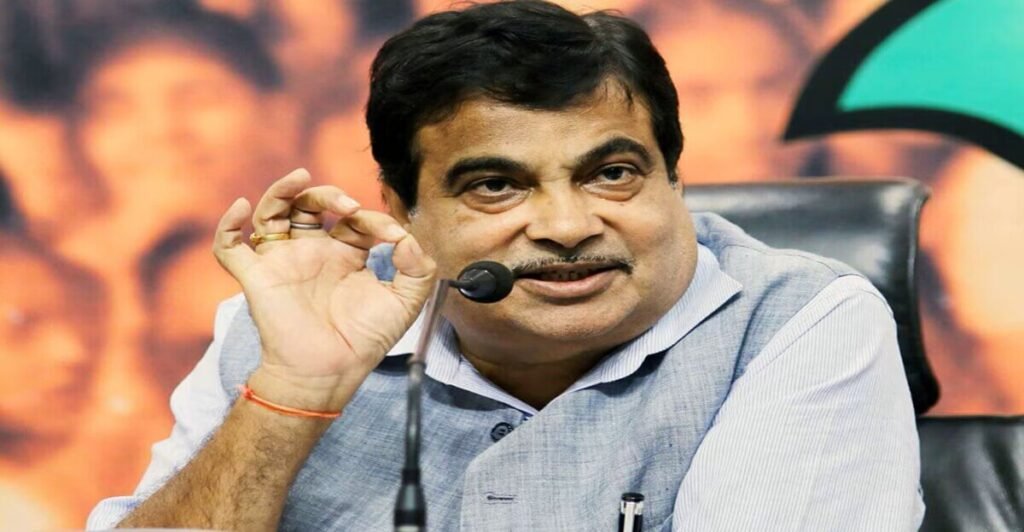
Car Insurance: Motorists who maintain a clean driving record could soon see their vehicle insurance costs come down, while those who break traffic rules face a tougher regime of penalties, Union Road Transport and Highways Minister Nitin Gadkari said on Monday, September 21, in Mumbai.
Speaking at an industry event, Gadkari said the government intends to notify a policy shortly that ties insurance premiums to how responsibly a person drives. “Good drivers should pay less for insurance; reckless drivers and rule-breakers should face penalties,” he said, describing the move as an effort to nudge motorists toward safer conduct on Indian roads.
Car Insurance: Usages-Based Insurance Gains Ground
The announcement builds on remarks Gadkari made earlier this month at the Global Fintech Fest 2026, also held in Mumbai, where he said the ministry was examining a usage-based insurance model, one in which premiums would be calibrated to a driver’s actual conduct rather than fixed, one-size-fits-all rates.
The proposal is being positioned as a complement to a separate, and more widely discussed, initiative from the ministry: a graded penalty-points system for driving licences and vehicle registration certificates (RCs). Gadkari said his ministry is planning to introduce a graded points system for driving licences and vehicle registration certificates, under which repeat traffic offenders could face suspension or cancellation of their licences.
Also Read: Insurance Claim Fraud: Rajkot Police Book Man for Setting Car on Fire
Car Insurance: How The Points System Would Work
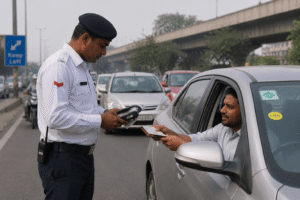
Under the framework as described by the minister, every traffic offence would cut points from a driver’s licence, and once a driver crosses a specified threshold, the licence could be suspended or even cancelled. Officials have compared the underlying logic to a credit-score-style model used in banking, where sustained good behaviour is rewarded rather than merely the absence of violations being penalised.
Gadkari has been explicit that the scheme is not designed only to punish. Drivers who accumulate good points would stand to receive incentives, potentially including benefits from insurance companies, while those who repeatedly violate rules would face escalating penalties. The government has also signalled that responsible drivers could receive insurance-related incentives as part of the same push, aimed at creating a clear distinction between careful motorists and repeat offenders.
The minister first outlined the broader points-based approach at the Society of Indian Automobile Manufacturers’ 66th Annual Convention earlier in September, where he flagged driver behaviour as one of the central challenges in India’s road safety record. At that event, he cited roughly 5 lakh road accidents and 1.5 lakh deaths annually, with the 18-36 age group accounting for 66% of fatalities. Separately, official data for calendar year 2024 puts the toll at 4.68 lakh road accidents and 1.77 lakh deaths nationwide.
Car Insurance: Road Safety Push Extends Beyond Insurance
The insurance and points-based measures are part of a wider set of road-safety initiatives the ministry has been rolling out. Gadkari has said Bharat NCAP 2.0, an updated vehicle safety assessment programme, will be rolled out from October 2027, expanding evaluation across the entire vehicle safety chain rather than conventional crash tests alone. The ministry is also working on a retrofit emission-control device for BS4 vehicles, expected to cost between Rs 4,000 and Rs 5,000, which trials have shown can bring emissions closer to BS6 standards.
Neither the usage-based insurance policy nor the graded points system has been formally notified yet. Gadkari’s Monday remarks in Mumbai reiterated that a notification on the insurance-linked framework is expected soon, though the ministry has not specified a timeline, the mechanics of how premiums would be calculated, or which insurers and regulators would be involved in implementation.