IRCTC Ticket Insurance: How 45 Paise Buys Rs 10 Lakh in Coverage
IRCTC Ticket Insurance: For a 45-paise add-on, IRCTC’s Optional Travel Insurance delivers up to ₹10 lakh in accidental death and disability coverage.
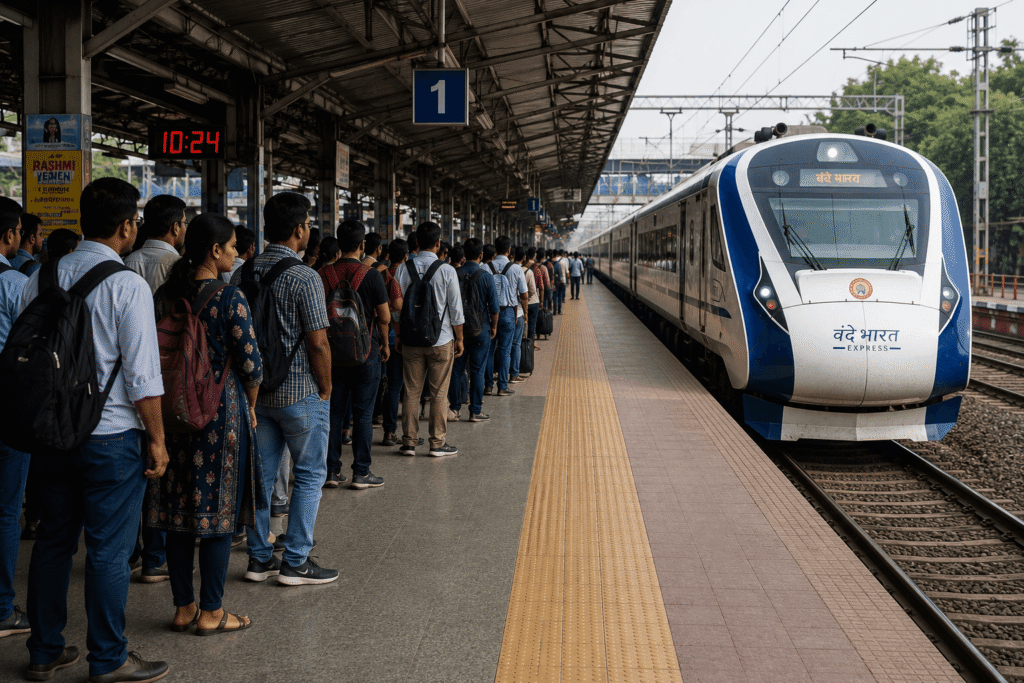
IRCTC Ticket Insurance: Millions of rail passengers opt for IRCTC ticket insurance, adding an extra layer of financial protection to every journey at a nominal cost.
IRCTC Ticket Insurance: Every time a passenger books a train ticket on the IRCTC website or the Rail Connect app, a small checkbox appears near the fare summary: “Travel Insurance.” Most travellers click past it in seconds, unaware that this near-invisible add-on is one of the cheapest financial protection products sold in India today — costing 45 paise per passenger, inclusive of taxes.
The scheme has existed for years, but it resurfaces in public conversation almost every time a major rail accident makes headlines, as passengers and families scramble to understand what compensation they are entitled to. For an industry that moves roughly 2.3 crore passengers a day, the gap between how widely available this cover is and how few travellers actually understand its terms remains striking.
IRCTC Ticket Insurance: How the IRCTC Insurance Scheme Works
The optional travel insurance is available exclusively to passengers booking e-tickets through IRCTC’s website or app; it is not offered on physical tickets purchased at railway counters.
- Journey Duration: Coverage applies specifically to the insured journey — from the time of boarding to alighting, including the process of entraining and detraining.
- Empannelled Insurers: The policy is underwritten by insurance companies empanelled with IRCTC (which have included Liberty General Insurance, SBI General Insurance, and ICICI Lombard). Insurers are rotated or added periodically by Indian Railways.
- Facilitator Role: Once a passenger opts in, the claim relationship is strictly between the insured (or their nominee) and the insurer — IRCTC acts solely as a facilitator at booking.
Also Read: Vikram-1 Launch: Who Insures Skyroot’s Rocket When It Flies — and When It Doesn’t?
IRCTC Ticket Insurance: Who Is Eligible — and Who Isn’t
- Citizenship: Open only to Indian citizens booking e-tickets. Foreign nationals travelling on Indian trains are excluded.
- Age Restrictions: Children under five years of age are excluded, even if travelling on a ticket with insured co-passengers.
- Booking Rules: The option must be selected at the time of booking — it cannot be added retroactively once a ticket is confirmed. When selected, the policy covers all eligible passengers listed under that PNR.
IRCTC Ticket Insurance: Making a Claim: What the Process Looks Like
Should an insured event occur, the nominee or legal heir must notify the insurer and submit a formal claim:
- Reporting Window: Claims must be filed within 4 months (120 days) from the date of the incident.
- Required Documents: Railway authority confirmation/accident report, medical records, discharge summaries, disability certificates from a medical board (where applicable), and original ticket details.
- Settlement Timeline: Insurers typically process and settle claims within 15 days of receiving all required documents.
IRCTC Ticket Insurance: The Bottom Line
What makes the IRCTC scheme noteworthy isn’t just the payout structure — it’s what it reveals about consumer awareness in India’s insurance market. A product priced at less than half a rupee, capable of delivering a ₹10 lakh payout, remains underutilised largely because it is presented as a minor checkbox rather than explained as a benefit.
Follow us on Twitter for latest updates
For an industry focused on micro-insurance and financial inclusion, IRCTC’s model — near-zero friction, near-zero cost, meaningful cover — is arguably one of the most successful micro-insurance initiatives in the country.
RCTC Ticket Insurance: The Fine Print and Key Exclusions
While the 45-paise policy provides substantial financial protection, understanding its strict exclusion boundaries is essential to avoid surprise claim rejections. Beyond excluding personal baggage theft and loss, the policy does not cover incidents occurring outside the official journey window—such as injuries sustained before boarding or after completely exiting the station platform. Claims will be summarily rejected if the death or injury is caused by intentional self-harm, suicide attempts, or accidents occurring while under the influence of alcohol or drugs. Additionally, crossing railway tracks illegally, participating in criminal acts during travel, natural deaths stemming from pre-existing medical conditions, and unconfirmed waitlisted tickets are entirely outside the scope of coverage.