Crop Insurance Claims May Rise in Maharashtra, Karnataka, AP as Drought Spreads
Crop insurance claims are expected to rise in Maharashtra, Karnataka and Andhra Pradesh as expanding drought conditions put crops at risk.
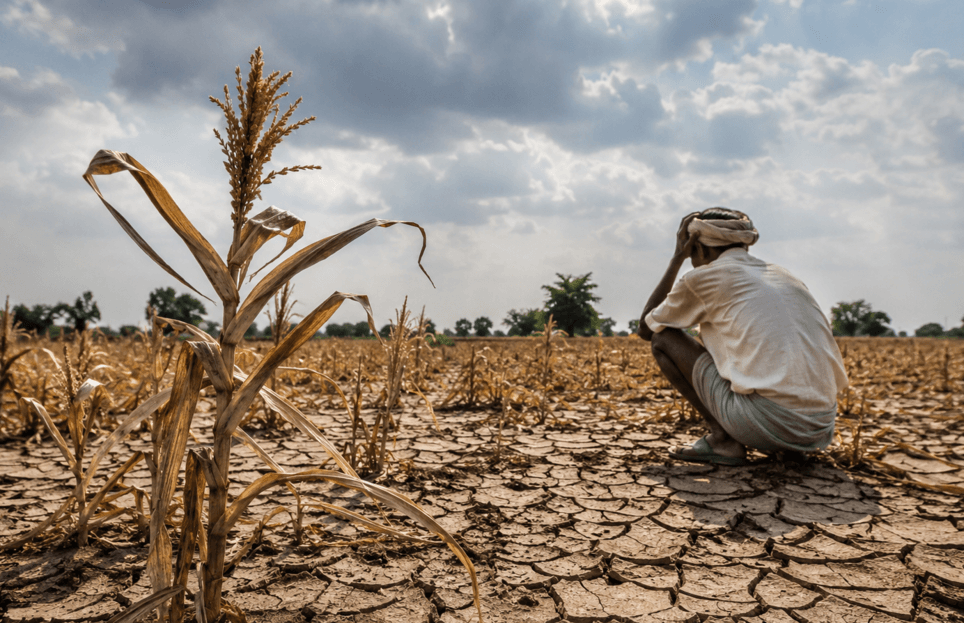
Crop insurance claims may increase across Maharashtra, Karnataka and Andhra Pradesh as drought conditions spread and threaten agricultural output.
NEW DELHI: After a monsoon that fell well short across peninsular and central India, crop insurers are preparing for a heavier claims season in Maharashtra, Karnataka and Andhra Pradesh. The size of the bill is still unknown. Its distribution is already clearer: in Maharashtra, much of the risk above a set limit passes to the state, while in Karnataka insurers carry the risk they underwrote.
Crop Insurance: Three states, three drought declarations
Maharashtra has declared drought in 265 of its 358 talukas, roughly three-quarters of the state, across 32 districts. Rainfall between June 1 and late September was about 18% below normal. The declaration sits at the first trigger stage of the state’s drought code, based on rainfall deficit and dry spells. District collectors have been told to carry out crop-loss surveys with geotagged photographs, and a separate order on financial assistance is due after those surveys are complete.
Karnataka has gone further. It has notified 217 of its 240 taluks as drought-affected in phases since late August, after a cumulative monsoon deficit of about 35%. The state has put crop losses in the 177 taluks assessed so far at around Rs 46,300 crore, an estimate based on the cost of cultivation, and has sought central relief. This is an economic loss estimate, not an insurance claims figure. The state says a record 37.5 lakh farmers are enrolled under the Pradhan Mantri Fasal Bima Yojana (PMFBY) this season and wants eligible claims settled without delay.
Also Read: India Rolls Out Two Credit Risk Insurance Policies for Shipbuilders
Andhra Pradesh declared drought in 388 of its 688 mandals across 21 districts on October 1, earlier than the October 31 deadline it was working to. The state recorded a rainfall shortfall of about 53% between June and August. The state’s agriculture minister said in late August that crops worth about Rs 13,983 crore had been insured this season.
Forecasters have linked the weak rains to a strengthening El Niño. US climate forecasters see a very high chance of a very strong event through the winter.
Crop Insurance: How the risk is shared: Maharashtra’s 80:110 model
The exposure insurers face depends heavily on the model each state has chosen. Maharashtra uses the 80:110 “cup and cap” structure, which ties an insurer’s liability to the premium collected.
If claims stay below 80% of the premium pool, part of the surplus goes back to the state. Between 80% and 110%, insurers pay the claims. Beyond 110%, the state government pays.
The pool in Maharashtra has shrunk to about Rs 1,400 crore this year from Rs 3,400 crore last year, which puts the 110% threshold at about Rs 1,540 crore. That figure is the ceiling on insurer liability, not a forecast of total claims, which will depend on how much crop is actually lost. Farmers’ entitlements under the scheme do not change under the arrangement. Only the split of the cost between insurers and the state does.
The structure traces back to Beed district. Insurers declined to bid there in 2020 after two bad monsoons, and the formula was devised as a way to keep cover available in drought-prone areas. Maharashtra later extended it statewide. Several other states have since adopted the same model.
Karnataka has taken the opposite route in the areas covered under PMFBY. It has chosen full risk transfer, which leaves insurers exposed to the claims they underwrote, without a state backstop above a set ratio.
The model cuts both ways. It limits insurers’ downside in a bad year, but it can leave the state with a bigger bill if claims climb sharply.
Crop Insurance: What insurers say, and what comes next
Industry leaders are cautious about putting a number on claims. Mini George, chairman and managing director of Agriculture Insurance Company of India (AIC), said El Niño-linked conditions are hurting crops but that estimating claims now is premature, since many crops have yet to be harvested or are mid-harvest. Crop-cutting experiments and yield assessments for kharif crops are under way, she said, and final claims will depend on the yield estimates states upload to the National Crop Insurance Portal.
AIC has deployed extra field staff and stepped up coordination with state governments to assess losses and process claims on time.
The drought arrives as the market itself is shrinking. Industry estimates suggest crop insurance premium collections could fall to about Rs 20,000 crore this fiscal year from nearly Rs 30,000 crore last year, reflecting changes in state schemes and aggressive bidding by insurers. The industry’s claims ratio was about 76% last year. How far this season pushes it up will only become clear once yield data comes in.
For farmers in the affected districts, the next steps are the crop-loss surveys and the yield figures that determine what each insured area is owed.