Colombia Earthquake Death Toll Crosses 130, Insurers Brace for Property and Aviation Claims
Colombia Earthquake: A powerful magnitude 7.4 earthquake in western Colombia has killed over 130 people and damaged more than 1,600 structures across key cities.
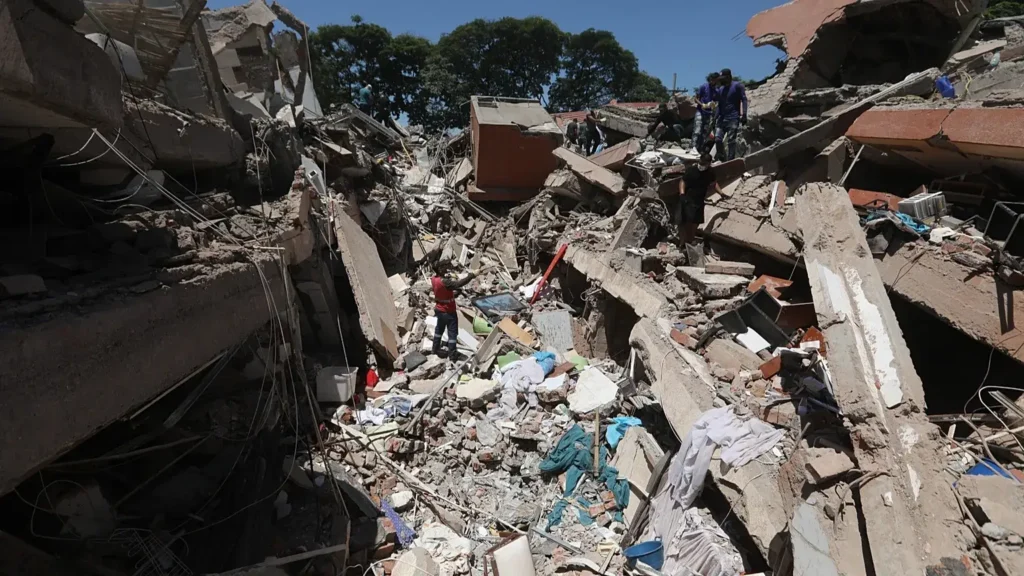
Colombia Earthquake: The earthquake caused widespread damage across parts of Colombia, leaving buildings damaged and communities shaken. Rescue teams continue relief and recovery efforts as authorities assess the impact. Source: Twitter.
Colombia Earthquake: Colombia’s death toll from Monday’s magnitude 7.4 earthquake crossed 130, with the confirmed count reaching 132 dead and 570 injured by late Monday night, as rescue operations continued into Tuesday across the western part of the country, according to the news reports.
Also Read: Insurance Claim Disputes Tripled in 4 Years, Govt Tells Parliament
Colombia Earthquake: What happened, where, and when
The earthquake struck at 7:34 a.m. local time on August 10, 2026, with its epicenter near San José del Palmar in the Chocó department, roughly 240 kilometers (150 miles) west of Bogotá. The Colombian Geological Service recorded the depth at approximately 103 kilometers, while the U.S. Geological Survey put it at 107 kilometers. The Colombian Geological Service described the quake as the most powerful to hit Colombia this century, and it was caused by strike-slip faulting at an intermediate depth along a fault system in the region. At least 21 aftershocks followed within hours of the main tremor.
Colombia Earthquake: Toll climbed through the day, region by region
The death toll rose in stages as officials received updated reports from affected municipalities. Early Monday morning, local officials cited roughly 69 deaths, with 40 in the Risaralda region — where the hard-hit city of Pereira is located — and 27 in Valle del Cauca, home to Cali. By Monday afternoon, newly inaugurated President Abelardo De La Espriella confirmed 111 dead and 87 injured, declaring a national disaster to mobilize emergency response, and stated that more than 1,600 buildings had been damaged across the country. By Monday night, the toll rose further to 132 dead and 570 injured, with 60 of the deaths recorded in Pereira alone, according to the Colombian Association of Capital Cities.
Colombia Earthquake: Insurance and aviation exposure
Colombia’s aviation authority reported disruption at airports serving Pereira, Manizales, Quibdó, Armenia, Cartago and Buenaventura, with several terminals temporarily closed for structural inspection. This is expected to widen the claims picture beyond property lines into aviation, logistics and business interruption coverage, particularly for operators and exporters in the coffee-growing region who depend on regional transport routes.
Property losses are expected to span residential, commercial and public-sector buildings, with engineering assessments required before standing structures can be confirmed safe for reoccupation. Business interruption claims may also surface where physical damage has forced companies to halt operations, though policy response will vary based on individual earthquake coverage terms, deductibles and waiting periods. Loss adjusters are expected to face delays in Chocó and other harder-to-access areas while rescue operations and aftershock monitoring continue.
Also Read: Govt’s Bima Bharosa portal received over 800 insurance complaints every day in FY26
Colombia Earthquake: How insurers structure earthquake coverage in Colombia
Colombia sits in a zone of high seismic risk shaped by the interaction of four tectonic plates, and more than 80% of the population lives in the Andean mountain corridor covering Bogotá, Medellín and Cali — the three cities that together account for roughly 80% of the country’s total insurance premiums. Earthquake insurance is compulsory for mortgage-linked properties in Colombia, covering an estimated 700,000 home loans, while voluntary coverage in urban centers is estimated at between 30% and 40% of the eligible property base, leaving a significant share of buildings and homes uninsured or underinsured against seismic risk.
On the insurer side, Sura and Mapfre have historically ranked among the largest underwriters of natural catastrophe premiums in the Colombian market. Domestic insurers are required by the Superintendencia Financiera de Colombia to calculate their maximum probable loss and pure risk premium for earthquake exposure using an approved catastrophe model, a regulatory requirement built on Solvency II-style reserving principles. Catastrophe modelling firms such as AIR Worldwide have had Colombia-specific earthquake models approved by the regulator since 2017, incorporating ground shaking, tsunami and liquefaction risk into their loss estimates — the kind of modelling now expected to inform early loss projections from Monday’s quake.
Large-scale earthquake losses of this kind are rarely absorbed by primary insurers alone. Colombian insurers typically cede a portion of catastrophe risk to international reinsurers through excess-of-loss treaties, which pay out once losses cross a pre-agreed threshold, spreading the financial impact of a single event like this across the global reinsurance and retrocession market rather than concentrating it on domestic balance sheets.
In recent years, insurers and reinsurers globally have also increasingly used catastrophe bonds — instruments that transfer risk to capital-market investors and pay out when losses cross a defined trigger — as an additional layer of protection against major natural catastrophe events, though it remains too early to say whether any bonds with Colombian earthquake exposure will be triggered by Monday’s event.
Colombia Earthquake: Wider regional context
Monday’s earthquake follows twin quakes that struck neighboring Venezuela less than two months earlier, killing more than 6,100 people — a disaster still fresh in the region’s memory as Colombia’s new administration confronts its first major crisis just days after taking office.
No official estimate of total economic or insured losses had been released as of Tuesday. Early damage figures, including the 1,600-building count cited by the president, remain preliminary and subject to revision as municipal inspections continue.
Note: Casualty, injury, building-damage and insurance-penetration figures are evolving and sourced from Colombian government, civic body and industry updates; all current figures should be treated as provisional pending official confirmation.