Term Insurance Claim Rejected Over Other Policies: Commission Orders Rs 1 Crore Payout
Term Insurance Claim dispute highlights the importance of fair claim settlement, with the Raipur Commission directing the insurer to pay Rs 1 crore despite objections over multiple policies.
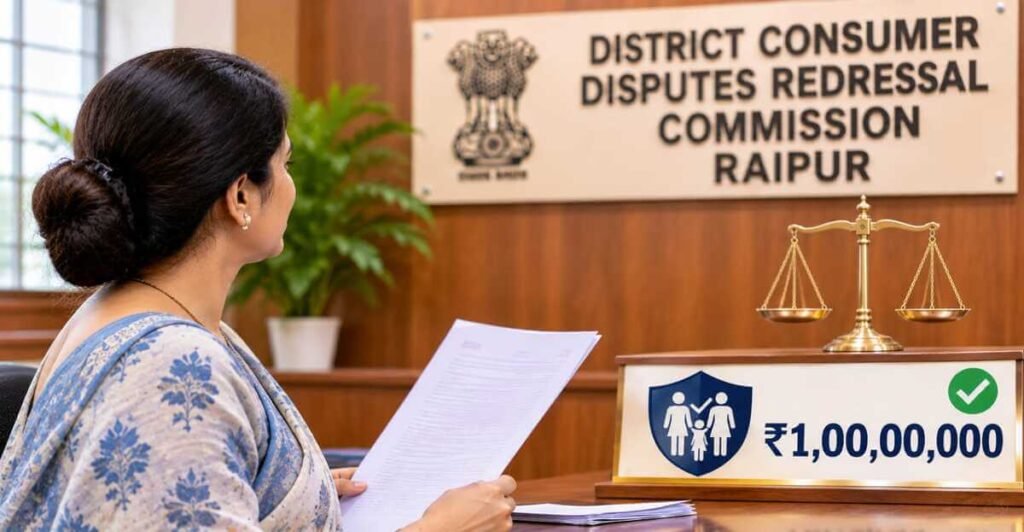
Term Insurance Claim rejected over the policyholder's other insurance policies, but the Raipur Consumer Commission has ordered a Rs 1 crore payout to the nominee.
Term Insurance Claim: District Consumer Disputes Redressal Commission (Additional Bench) in Raipur has ordered a private life insurance company to pay Rs 1 crore to the widow of a policyholder who died of cardiac arrest in December 2019. The commission ruled that the insurer wrongly refused the death claim even though the policy was active when the death occurred.
On top of the sum assured, it awarded Rs 1 lakh for mental and physical harassment and Rs 15,000 for litigation costs. The order was passed on November 3 by a bench of president Prashant Kundu and member Dr Anand Vergese, on a complaint filed by Chanda Pincha.
Term Insurance Claim: How the Rs 1 Crore Claim Was Denied
Pawan Pincha, a director of a private company, bought the life policy on September 10, 2018. It carried a death cover of Rs 1 crore for him, with his wife as secondary insured for Rs 50 lakh. The policy ran for 39 years, until September 2057, and he paid a premium of Rs 36,969.40.
Enjoying this story?
Subscribe to our newsletter for fresh stories and expert insights delivered straight to your inbox.
About fifteen months later, on December 21, 2019, he died of sudden cardiac arrest. Chanda, as nominee, filed a claim for the full Rs 1 crore. The insurer rejected it on March 17, 2020, saying Pawan had not disclosed other life insurance policies he held with different companies when he filled in the proposal form.
Also Read: Star Health Insurance: IRDAI Imposes Rs 2 Crore Penalty Over Claims Denial, Deductions
Term Insurance Claim: Why the Commission Rejected the Insurer’s Defence
The insurer described the case as one of “over-insurance”. It said Pawan already held life policies worth around Rs 4.93 crore, while his declared financial eligibility was only about Rs 1.35 crore, which kept it from assessing the risk correctly and amounted to suppression of material facts. It also argued that a Rs 1 crore claim was beyond the District Commission’s jurisdiction. The commission dismissed this by relying on an earlier National Consumer Disputes Redressal Commission (NCDRC) ruling, which says that pecuniary jurisdiction depends on the premium paid, Rs 36,969.40 in this case, and not on the sum insured.
After going through the complaint, affidavits, policy documents, medical records and the correspondence between both sides, the commission turned down every objection. It observed that the insurer issued the policy only after receiving the proposal form and premium, and that it had the opportunity to check the applicant’s existing insurance before accepting the risk.
The commission found the company had not proven that the widow was responsible for any concealment, nor that the facts justified repudiating the claim. It also took note that other insurers had already paid out claims on policies the deceased held, while this one alone was rejected.
Term Insurance Claim: Payment Deadline and What It Means for Policyholders
The insurer must pay the Rs 1 crore sum assured, the Rs 1 lakh compensation and the Rs 15,000 in costs within 45 days. If it misses the deadline, it will owe interest at 7 per cent a year until the money is paid. The ruling comes more than six years after Pawan Pincha’s death, and it adds to a growing list of Chhattisgarh consumer commission orders against insurers who reject genuine claims on weak grounds.
For families, it is a reminder that a claim can be challenged before the consumer commission when the insurer fails to prove deliberate concealment. For policyholders, the safest course remains to disclose all existing policies accurately in the proposal form.
Follow us on Twitter for latest updates

Priyam Thakur is a Correspondent at The Insurance Reporter, where he covers insurance regulation and policy in India and globally. Trained as an engineer, he has a knack for dissecting dense numbers...