Rahul Gandhi Launches Insurance Scheme For Telangana Gig Workers
Telangana Gig Workers insurance initiative seeks to provide financial protection to delivery partners and other platform-based workers through insurance coverage.
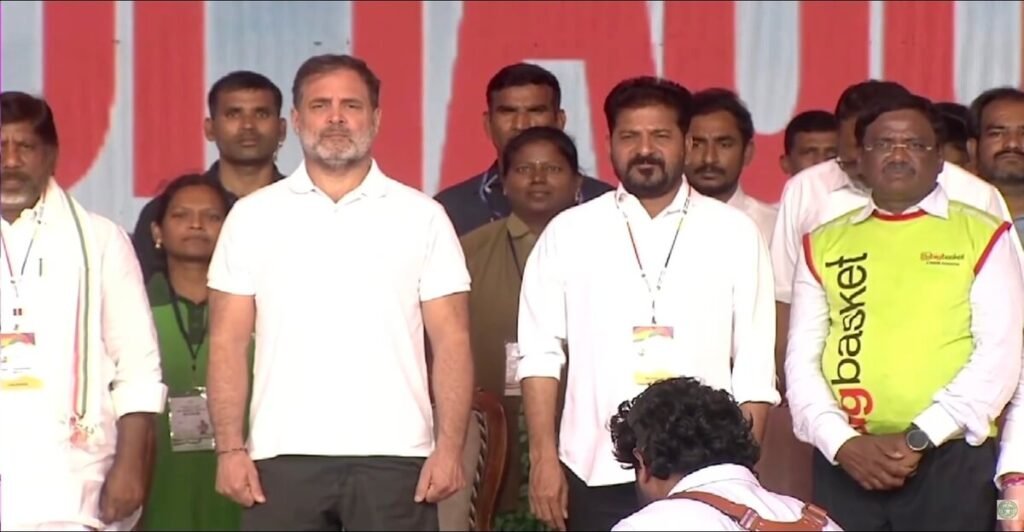
Telangana Gig Workers insurance scheme has been launched by Rahul Gandhi, offering a social security initiative aimed at protecting gig workers across the state.
NEW DELHI, Telangana Gig Workers: Lok Sabha Leader of Opposition Rahul Gandhi launched the Telangana Gig Workers’ Social Security and Welfare Scheme in Hyderabad on Saturday, November 14. He said the state government had kept a promise made to delivery and ride-hailing workers. Platform workers in the state will now get accident insurance of Rs 5 lakh and health insurance of Rs 10 lakh. They will also get a pension contribution linked to their earnings, rights over their own work and earnings data, and Wi-Fi-enabled rest centres in cities across the state.
In a post on X, Gandhi said he had met Telangana’s gig workers at length in 2023 and heard their difficulties, needs and demands. He said they were promised that their demands would be met and that they would have protection. He described the launch as the fulfilment of that assurance, and said the provisions were now legal rights for the workers. He called the initiative a philosophy rather than just a welfare scheme, one in which every hardworking person is entitled to dignity and a secure future.
Telangana Gig Workers: What gig workers will get under the scheme
The scheme is built on the Telangana Platform Based Gig Workers (Registration, Social Security and Welfare) Act, 2026, which the state Assembly passed in late March this year. Telangana was reported to be the fifth state to adopt such a law, after Rajasthan, Karnataka, Jharkhand and Bihar. The state labour department had earlier estimated that the state has about four lakh gig workers, including food delivery staff, cab drivers and couriers. The accident and health covers together make up Rs 15 lakh in protection per worker.
The pension component is funded by one per cent of earnings. Gandhi said a one per cent contribution would apply to every delivery and ride, including those on platforms such as Uber and Blinkit. Under the Act, aggregators must register with a state welfare board and share their worker databases so that workers can be registered automatically. The board is tripartite and meant to include representation of women and persons with disabilities.
Also Read: Permanent Archive from Vahan? Why Car, Bike Owners Are Getting Alerts
Gandhi also stressed data rights, saying the twenty-first century runs on data and that platform companies depend heavily on it. Workers will be able to see information about their rides, deliveries and earnings through their mobile phones. The state also plans rest zones in Hyderabad and other cities where workers can park, sit, relax or sleep during long shifts.
Telangana Gig Workers: How the scheme will be funded and run
The Act creates a Social Security and Welfare Fund. Its money comes from a welfare fee on platforms, contributions from workers towards specific schemes, government grants and corporate social responsibility funds. The earlier draft of the law set the platform fee at 1 to 2 per cent of the payout to workers in each transaction. It also proposed a verification system to track what platforms pay to workers and how the fund is spent. The draft also included notice requirements before a platform changes a worker’s contract.
The law took time to get through. Gig workers’ unions pressed for implementation, and the state government finalised operating guidelines before the launch. The founder-president of a Telangana gig workers’ union said the November 14 event would mark the start of full implementation of the rules and the welfare board. Labour Minister G Vivek Venkatswamy said at the time of the Assembly vote that Gandhi’s conversations with gig workers during his Bharat Jodo Yatra had helped shape the legislation, and that the government had persuaded platforms of the need for social security measures.
Telangana Gig Workers: Political message and what comes next
Gandhi used the launch to attack the BJP and the RSS. He alleged that their ideology seeks to enslave workers, while the Congress approach is to secure their rights, dignity and future. At the event, he reportedly accused them of favouring large corporate groups and of wanting workers to toil for long hours at the cost of injury or their lives. These are his allegations, made in a political speech, and the BJP’s response had not surfaced in the coverage I found.
Questions remain about how smoothly the scheme will run. Policy observers have urged the state to balance welfare obligations against its push to attract investment and growth, and they have pointed out that it is hard to define gig work precisely. Platforms will need to comply with registration and fee rules, and workers will need to enrol and actually receive claims.
The Centre’s Code on Social Security, 2020 also recognises gig workers, but state officials noted that its central rules were yet to be implemented. For now, Telangana’s scheme is among the most concrete state-level packages for platform workers in the country, and its real test will be delivery on the ground.