IRDAI Says Its Commission Experiment Failed. Now It Wants Caps Back
IRDAI has proposed a return to commission caps after finding that its earlier approach to commission payments did not achieve the desired outcome.
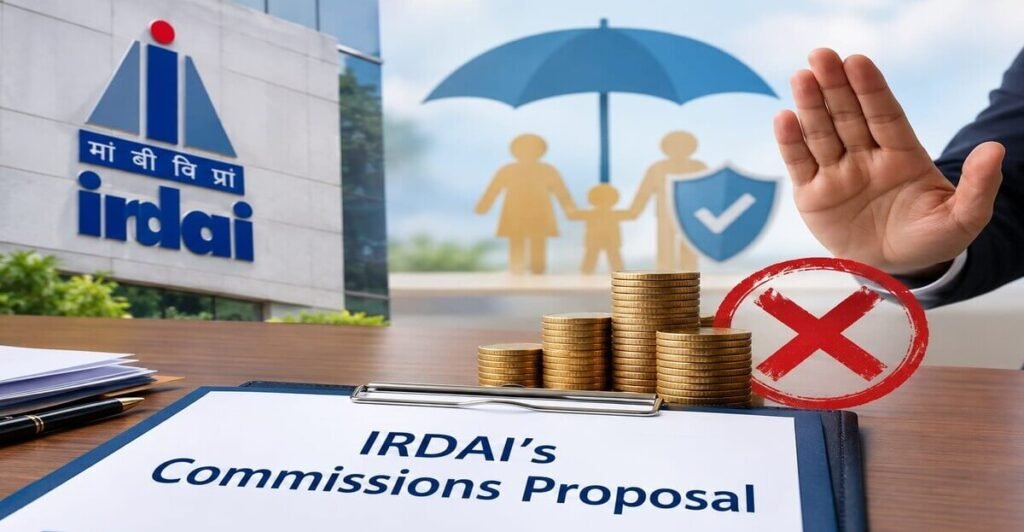
IRDAI says its commission experiment did not deliver the intended results and has proposed bringing back commission caps.
NEW DELHI: India’s insurance regulator has concluded that its 2023 move to let insurers set their own commission rates backfired. In a new consultation paper released on September 23, the Insurance Regulatory and Development Authority of India says distributor payouts rose far faster than the business they brought in, and it proposes to bring back hard caps on commissions and on insurers’ overall expenses.
The paper is unusually direct in judging the regulator’s own reform. It says the discipline the industry built over a decade “has been unwound in the space of a few years and it is policyholders who have funded the reversal”. It also says board approval of commission policies, which was meant to replace product-wise limits, “has often been a formality rather than being substantive”.
The proposals would reset how India’s life and general insurers pay the agents, banks, brokers and corporate agents who sell most of their policies. They would also tighten the ceiling on what insurers can spend to run their businesses.
IRDAI: What changed in 2023
Until 2023, IRDAI set commission limits product by product. That year it removed those limits. Insurers only had to keep total spending within an overall “Expenses of Management” (EoM) ceiling, and each company’s board set its own commission policy. The stated aim was to give insurers flexibility to invest in distribution and reach more customers.
The regulator now says the extra room mostly went to distributors.
Also Read: Life Insurance Commissions: IRDAI Proposes Caps Based on Premium Payment Term
IRDAI: Costs came back
Private life insurers had cut their expense ratio from 21.3% of gross premium in FY15 to 16.5% in FY21. By FY26 it was back at 20.2%.
General insurers saw a bigger reversal. Their expense ratio fell from 30.3% in FY15 to about 25% by FY19, then rose to 32.1% in FY26. That is higher than it was before the 2016 reforms.
IRDAI: Payouts outran premiums
Across both segments, commissions grew roughly twice as fast as the business behind them.

Total payouts to life distributors rose about 125%, from roughly ₹9,580 crore to ₹21,600 crore, while premium grew only about 28%. In general insurance, the average broker commission doubled from about 8.5% to 17% of premium.
The headline commission figure also leaves out much of the money. IRDAI says rewards, incentives and “brand value payments” add 30% to 60% on top of base commission.
IRDAI: What IRDAI proposes
The paper sets out a glide path with FY2027-28 as Year 1:
- Expense ceilings. Life insurers must bring EoM down to 15% of premium within two years and 12.5% within five. General insurers must reach 25% within two years and 20% within five.
- Life commission caps. For regular-premium life policies with a premium payment term of 10 years or more, first-year commission would be capped at 20% for distribution entities and 25% for individual agents. The average first-year commission on pure term plans today is 51%, and the highest is 81% (Part 2, Graph 1).
- One definition of commission. Any payment to a distributor, “by any name whatsoever,” would count as commission. This closes the route through which incentives and brand payments have been paid outside the headline rate.
- Enforcement. Cost audits would be mandatory for all insurers. Companies that miss the glide path could face limits on launching products, paying dividends, or writing new business through the channel that caused the overrun.
IRDAI: The cost to policyholders
The regulator ties high commissions to a pattern of policies being sold, dropped and replaced.
Life insurers paid out ₹6.3 lakh crore in benefits. About 37% of that, or ₹2.33 lakh crore, went to surrenders, where customers exit policies early and often take a loss. Death claims, the core purpose of life cover, made up only 7%. Only 48.4% of policies are still in force by the 61st month.
IRDAI calls this “commission-driven churning.” When the first year pays a distributor far more than later years, the incentive is to sell a new policy rather than keep an old one alive. The customer usually bears the cost through surrender charges and lost value.
IRDAI: Who feels it
Distributors earning the highest first-year payouts would be hit hardest. These include bancassurance partners, corporate agents and brokers selling term and long-tenure savings products. For pure term cover, a cap of 20%–25% against a current average of 51% would cut first-year distributor income by more than half.
Insurers face a different squeeze. Life companies running near 20% expense ratios would need to cut spending by about a quarter within two years to reach 15%. General insurers above 32% have a wider gap to close. Companies that cannot renegotiate distributor contracts in time risk the regulator’s penalties, including curbs on dividends.
For policyholders, the regulator’s argument is that lower acquisition costs should leave more premium invested for them, improve surrender values, and reduce pressure to switch policies.
IRDAI: What happens next
The proposals are open for public comment until 25th October. Insurers, distributor bodies and broker associations are expected to push back on the size of the caps and the speed of the glide path, especially the two-year target. A final framework would need to be in place before FY2027-28 for the Year 1 timelines to apply as written.