BRICS Summit: Putin Proposes Insurance Mechanism, Grain Market Initiative
At the BRICS Summit, Russian President Vladimir Putin proposed a new insurance mechanism alongside an initiative for the grain market, seeking deeper economic cooperation among member countries.
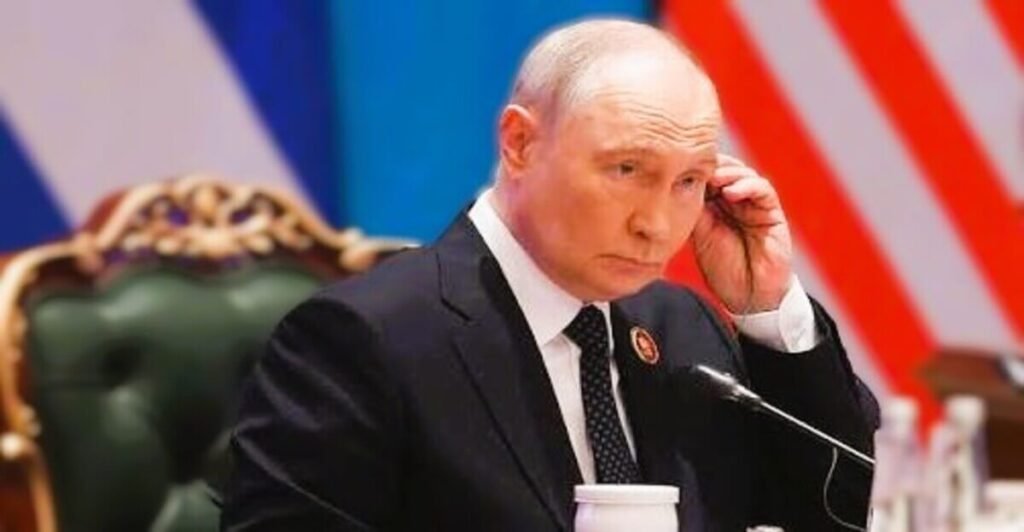
BRICS Summit discussions gained a new focus as Russia proposed an insurance mechanism and a joint initiative for the grain market.
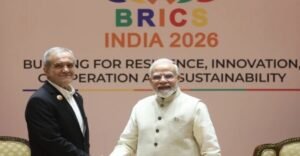
New Delhi, BRICS Summit: Russian President Vladimir Putin called for a dedicated insurance mechanism and a joint grain-trade initiative within BRICS on Sunday, urging member nations to build financial infrastructure that can function independently of Western oversight. He made the proposal while addressing the concluding session of the 18th BRICS Summit, hosted in New Delhi.
BRICS Summit: Insurance Proposal Follows Years Of Sanctions Pressure
Putin’s push for a BRICS-wide insurance framework comes against the backdrop of restrictions that the G7 nations, the European Union and the United Kingdom have placed on marine insurance for vessels carrying Russian crude oil. Under those measures, Western insurers are barred from covering tankers unless the oil aboard was bought at or below an agreed price cap, a restriction that has weighed on Russia’s crude exports by limiting the pool of insurers willing to underwrite its shipments.
Against that backdrop, Putin told fellow leaders that BRICS nations already possess alternative channels for moving capital, labour and technology, and argued the bloc could function without depending on Western systems. He described the proposed insurance mechanism, along with a parallel initiative to organise a joint grain market, as Russian proposals open for adoption by other member states, though he did not lay out operational details such as funding structure, governing institutions or a timeline for launch.
Alsor Read: Good Drivers May Soon Pay Less: Gadkari Signals New Usage-Based Insurance Bill
Putin separately pointed to the New Development Bank, the multilateral lender set up by BRICS members, noting that it is currently financing projects worth USD 140 billion. He framed the bank’s scale as evidence that the bloc’s own financial institutions are capable of supporting large cross-border initiatives without reliance on Western-led multilateral lenders.
BRICS Summit: Putin Calls For Common Growth Platform
Beyond the insurance and grain proposals, Putin urged BRICS to establish a joint platform for trade and investment that would pool the competitive strengths of individual member economies. He said such a platform should remain open not only to full BRICS members but also to partner countries and other nations seeking closer engagement with the grouping, describing openness and accessibility as guiding principles for the initiative.
The Russian leader also addressed the summit’s expanded format, which for the first time brought together full BRICS members alongside partner countries, other states and multilateral organisations in the same session. He said this structure allows for direct engagement between core members and the wider circle of countries aligned with the bloc, and pointed to the scale of participation as a sign that global interest in BRICS continues to rise. He attributed that interest partly to the bloc’s stated commitment to an independent course, collective problem-solving, and adherence to international law and the United Nations Charter.
BRICS originally comprised Brazil, Russia, India, China and South Africa. The bloc expanded in 2024 to add Egypt, Ethiopia, Iran, the United Arab Emirates and Saudi Arabia, followed by Indonesia’s entry in 2025. A separate tier of partner countries — Belarus, Bolivia, Kazakhstan, Cuba, Malaysia, Nigeria, Thailand, Uganda, Uzbekistan and Vietnam — joined the grouping last year. Collectively, BRICS members and partners now account for roughly 49.5 per cent of the world’s population, about 40 per cent of global GDP, and close to 26 per cent of global trade.
Neither Putin nor other officials at the summit specified which body would design or administer the proposed insurance mechanism, or whether it would operate as a standalone facility or be housed within an existing institution such as the New Development Bank. Further details on the initiative’s structure are expected to emerge as member states respond to the proposal in the coming weeks.