IRDAI to Track Health Insurance Claims in Real Time; Forms Two Working Groups
Health Insurance Claims oversight is set to strengthen as IRDAI forms two working groups to enable real-time claims monitoring, faster processing and better coordination among insurers and stakeholders.
Health Insurance Claims will come under closer regulatory scrutiny as IRDAI moves to track claim-related data in real time and improve transparency across the health insurance sector.
NEW DELHI, Health Insurance Claims: The Insurance Regulatory and Development Authority of India (IRDAI) will set up two industry working groups within the next 10 days to improve transparency in health insurance claims, introduce real-time tracking and establish common parameters to assess insurers’ claims and grievance redressal performance.
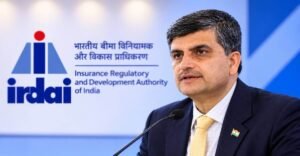
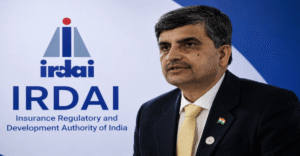
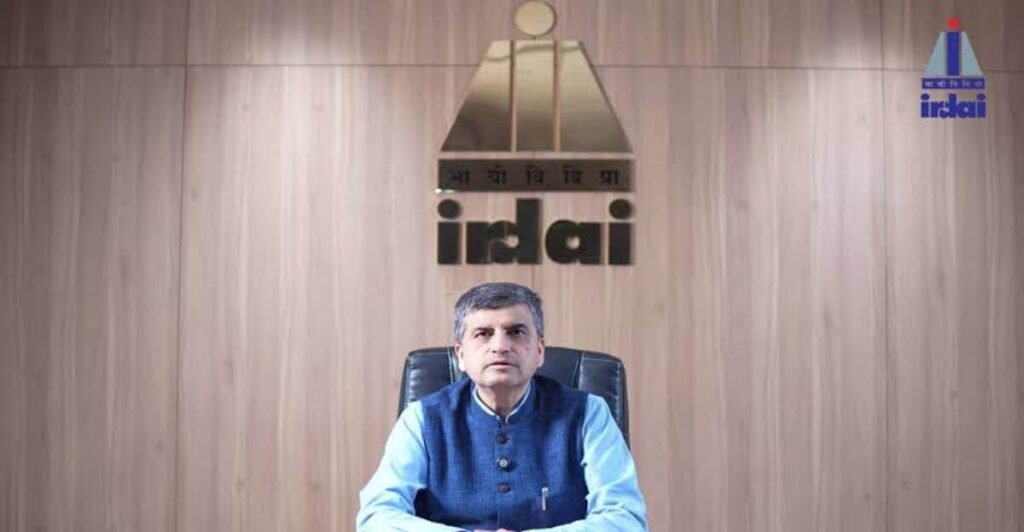
Speaking at the CII-DFS Financing Summit 2026 on Thursday, IRDAI Chairman Ajay Seth said the working groups would be constituted under the Insurance Advisory Committee (IAC), following the formation of a sub-committee.
One group will focus on providing real-time visibility across the entire health insurance claims journey, including pre-authorisation, hospital discharge and final settlement. It will also examine policyholders’ experience and provide feedback on insurers’ market conduct.
Enjoying this story?
Subscribe to our newsletter for fresh stories and expert insights delivered straight to your inbox.
The second group will work on standardising claims and grievance redressal performance metrics, including the reasons for full or partial rejection of insurance claims.
“At the moment, why a claim was rejected fully or partially doesn’t get into any system,” Seth said, pointing to the absence of a common framework to capture and compare claim rejection reasons across insurers.
Standardising these parameters would allow insurers to benchmark their performance and provide greater transparency to policyholders.
Health Insurance Claims: IRDAI questions industry’s reliance on claims settlement ratios
Seth also questioned the industry’s reliance on conventional claims settlement ratios, arguing that the metric does not adequately capture the actual experience of policyholders.
The commonly used ratio is largely based on the number of claims decided, without necessarily distinguishing between claims settled fully, partially, repudiated, rejected or closed.
Also Read: Your Bank or Car Dealer Sells You Insurance? IRDAI Chief Says This Is a Problem
According to Seth, a more meaningful assessment should examine whether the insurer has paid the full amount claimed by the policyholder rather than merely counting the number of claims settled.
He said insurers should compete on product performance, responsiveness in claims processing and grievance redressal, supported by common definitions and disclosures.
Health Insurance Claims: 60% of grievances reconsidered by insurers resolved in policyholders’ favour
Highlighting shortcomings in grievance redressal mechanisms, Seth said around 60% of grievances reconsidered by senior officials within insurance companies are resolved in favour of policyholders.
Similarly, around 60% of the remaining cases taken up by insurance ombudsmen are also decided in favour of policyholders.
The figures underline the need for insurers to examine why grievances arise in the first place and improve their internal resolution mechanisms.
Seth said grievances should be treated as feedback to improve product design, sales practices, claims decisions and customer service, rather than merely as cases to be disposed of.
He also flagged delays caused by repeated requests for documents during claims processing, saying insurers should communicate documentation requirements upfront to minimise subsequent queries and delays.
Health Insurance Claims: Nearly 10 lakh motor accident claims pending before tribunals
On motor insurance, Seth highlighted the substantial backlog of motor accident claims before tribunals.
Nearly 10 lakh cases are pending, against which insurers have created reserves of approximately Rs 87,000 crore. Some cases date back several decades, with the oldest cited by Seth dating to 1989.
IRDAI examines ABHA as common identity framework for health insurance
Seth also discussed the possibility of using the Ayushman Bharat Health Account (ABHA) as a common identity framework for health insurance policyholders.
The proposed approach could help insurers identify individuals covered under group health insurance policies, particularly when they move between group and individual health insurance coverage.
Access to relevant coverage information could help insurers improve underwriting and offer more competitive pricing to individuals.
Health Insurance Claims: Public Insurance Registry to focus on data governance
On the proposed Public Insurance Registry (PIR), Seth said the initiative was less about building an IT platform and more about strengthening data governance.
The registry is envisaged as a mechanism to improve transparency around insurance products, insurers’ market conduct and distributors, while avoiding unnecessary centralisation of data.
He also called for consumers to be able to access insurance product information and prices without having to share personal details upfront.
Seth advocated plain-language product summaries in regional languages, clearly explaining coverage, exclusions and returns, alongside common definitions to help consumers assess product performance and quality.
The measures discussed at the summit reflect IRDAI’s focus on improving policyholder experience and strengthening trust in the insurance industry, particularly at the time of claims settlement.