The Elephants Mysuru Has Insured for Years — But Not This Dasara
Elephants Mysuru: For the first time in years, Mysuru’s Dasara elephants carry no insurance cover of their own, even as handler cover jumped tenfold.
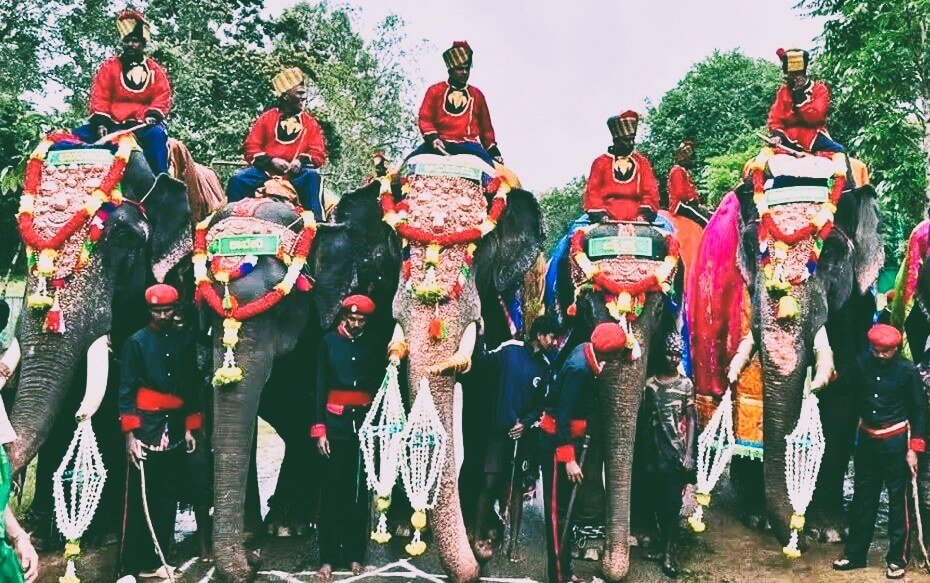
Mysuru's Dasara elephants go uninsured this year for the first time in years — even as cover for their handlers jumps tenfold.
Elephants Mysuru: On August 25th, twelve elephants left forest camps across Karnataka’s Kodagu and Mysuru districts and began the journey to Mysuru — a procession known locally as Gajapayana. By the time they reached the Palace grounds, the Karnataka Forest Department had already finalised this year’s Dasara insurance policy. It covers the Mahouts, Kavadis and forest staff who accompany the elephants. It does not cover the elephants themselves.
this is the first time in years that the Forest Department has left the elephants out of the Dasara insurance policy, even as it has substantially increased cover for the people who work with them.
Elephants Mysuru: Why the Elephants Were Dropped
Media reports citing departmental sources say the change followed a question raised internally: since the elephants are owned by the Forest Department, the department itself would have to file any insurance claim on their behalf in the event of injury or death. Senior officials reportedly concluded it would be inappropriate for the department to seek compensation for its own animals, and elephant-specific cover was dropped as a result.
Dr I.B. Prabhu Gowda, Deputy Conservator of Forests, Mysuru Wildlife Division, confirmed that this year’s policy runs from August 25th to October 22nd — covering the elephants’ journey to Mysuru, their training period, and the Jumbo Savari procession on October 21st — and that it applies to the 39 human staff attached to the squad. His confirmation, as reported, did not extend to any cover for the elephants.
The underlying issue touches on a basic principle of insurance law: a policyholder generally needs an “insurable interest” — a genuine financial stake that would be lost — to make a valid claim. Departmental sources, per media reports, described officials as uncomfortable with the department occupying both sides of that transaction: owner of the insured asset and filer of the claim.
Also Read: IRDAI Health Panel Discusses Stronger Underwriting at Point of Sale, NHCX Incentives
Elephants Mysuru: What the 2026 Policy Covers
The revised policy insures 39 people: 12 Mahouts, 12 Kavadis, 10 special Mahouts, one Deputy Conservator of Forests, two Range Forest Officers, one veterinarian, one assistant, and other support staff.
- Personal accident cover: Rs. 20 lakh per person (up from Rs. 2 lakh last year), for a total of Rs. 7.8 crore. Premium paid: Rs. 22,308.
- Third-party liability cover (for injury, death or property damage caused by an elephant): doubled from Rs. 50 lakh to Rs. 1 crore. Premium paid: Rs. 5,900.
- Total coverage for 2026: Rs. 8.80 crore, against a combined premium of Rs. 28,208.
According to news reports, claim benefits under the personal accident policy include: 100% of the insured sum for accidental death, loss of two limbs, both eyes, or one limb and one eye; 50% for loss of a single limb or eye; 100% for permanent total disability; a specified scale for partial permanent disability; and medical expenses up to 10% of the insured sum or 40% of the death/disability payout, whichever is lower.
Elephants Mysuru: How This Compares to Previous Years
Dasara elephants have historically carried their own insurance cover alongside their handlers:
- 2025: All 14 participating elephants, their Mahouts, Kavadis, support staff and public property were insured under a combined policy of Rs. 2.04 crore. Each staff member had Rs. 2 lakh accident cover; Rs. 50 lakh was set aside for third-party compensation.
- 2023: The 14 elephants carried a combined cover of Rs. 68 lakh — Rs. 5 lakh per male elephant, Rs. 4.5 lakh per female. The full package, including staff and public liability, totalled Rs. 1.98 crore, with a premium of Rs. 56,781.
- 2019: Rs. 40 lakh was set aside as insurance cover for that year’s 14 Dasara elephants.
2026 marks the first year in this record where the elephants carry no insurance cover of their own, even as the personal accident cover for staff has risen tenfold from the Rs. 2 lakh figure that had held for several years running.
Elephants Mysuru: Fewer Elephants, Tighter Selection
This year’s Dasara squad is also smaller than usual. Only 12 elephants have been brought in for the 55-day festival period, down from the customary 14, reportedly due to the high costs of housing and training the animals in Mysuru. Selection this year has also involved a more rigorous, multi-layered health and temperament screening process — including ECG tests, pregnancy checks and musth monitoring — following a fatal incident at the Dubare Elephant Camp in May 2026, in which two elephants fought during a public bathing session and a tourist was killed. One of the two elephants involved was subsequently ruled out of future Dasara participation.
The Dubare camp is a separate, state-run tourism facility not connected to the Dasara procession itself, though it is managed by the same Forest Department. No official statement has linked the Dubare incident to this year’s insurance decision; it is noted here only as context for the department’s heightened caution this year.
Elephants Mysuru: What Remains Unclear
The Forest Department has not publicly stated what mechanism, if any, would apply if a Dasara elephant were injured or died this year, now that elephant-specific insurance has been removed from the policy. Whether a departmental compensation process exists outside the insurance framework has not been addressed in available reporting