IRDAI Forms Two Groups to Overhaul Health Insurance Claims, Push Real-Time Tracking
Health Insurance policyholders could get better visibility into claim status, pending requirements and deductions as IRDAI explores real-time tracking and stronger accountability across insurers and TPAs.
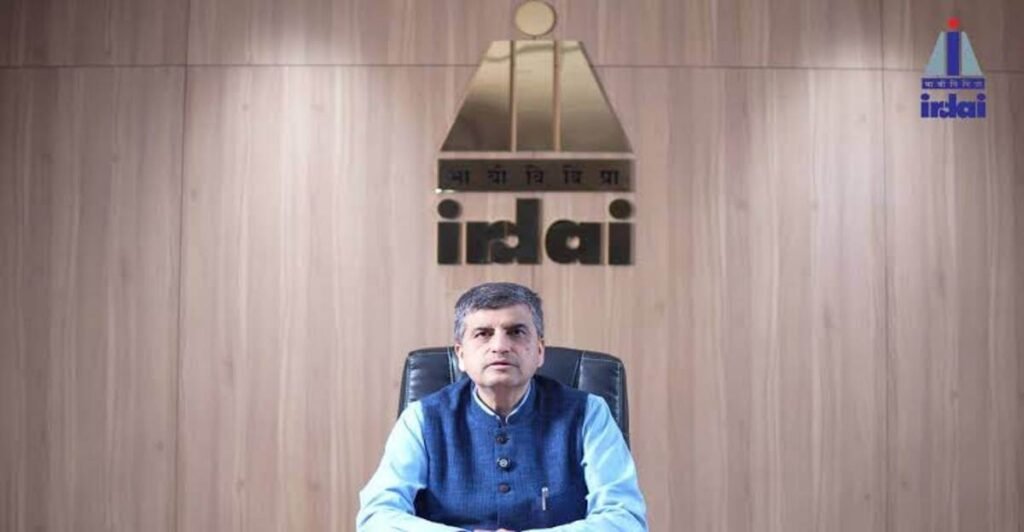
Health Insurance claims are set for greater transparency as IRDAI forms two study groups to standardise claim settlements, rejection codes and reporting practices.
NEW DELHI, Health Insurance Claims: The Insurance Regulatory and Development Authority of India (IRDAI) on November 24 constituted two study groups to improve transparency in health insurance claims, standardise claim settlement and rejection reporting, and introduce real-time visibility into the claims process.
The regulator said the initiative is aimed at strengthening accountability among health insurers and third-party administrators (TPAs), while making it easier for policyholders to understand claim decisions, track pending requests and identify the reasons behind deductions or rejections.
The two groups have been formed under the Insurance Advisory Committee’s (IAC) Sub-Committee on Health Insurance. They will work on developing standardised claims and grievance metrics, a common national framework for claim-related reason codes, and a mechanism to track the entire health insurance claims journey from pre-authorisation to final settlement or payment.
Enjoying this story?
Subscribe to our newsletter for fresh stories and expert insights delivered straight to your inbox.
The development follows IRDAI Chairman Ajay Seth’s announcement last week that the regulator was planning to constitute two industry working groups to address gaps in health insurance claims transparency.
Health Insurance Claims: IRDAI Seeks Common Framework for Claim Rejections, Deductions and Settlement Metrics
The first study group will focus on developing outcome-oriented claims and grievance metrics to improve the assessment and comparison of insurers’ performance.
The proposed indicators will include the Paid-to-Claimed Ratio, claim settlement and rejection rates, partial settlements or disallowances, average deductions, cashless utilisation and claims turnaround times.
Also Read: Insurance Distribution Reforms: IRDAI Sets Up Expert Committee to Review Responses
The group will also recommend standardised definitions and a common reporting taxonomy to ensure that insurers follow uniform practices while reporting their claims and grievance outcomes.
A major part of its mandate will be to develop a common national code framework covering claim rejections, repudiations, deductions and partial settlements.
The framework will also map existing codes used by insurers and third-party administrators, with the objective of bringing different classifications under a common system.
Importantly, the proposed framework will seek to ensure that every claim rejection or deduction is supported by a specified reason and the corresponding amount affected.
This could address a key transparency gap in health insurance, where policyholders may receive a reduced settlement or rejection without sufficiently clear information about the specific reasons and financial implications.
For insurers, standardised reporting could make it easier to compare claims performance across companies and identify patterns in deductions, rejections and grievance outcomes.
It could also provide a more meaningful picture of claims performance beyond conventional settlement figures by examining how much of the amount claimed is actually paid.
Second Study Group to Develop Real-Time Health Insurance Claims Tracking
The second study group will examine a mechanism to provide policyholders and other stakeholders with real-time visibility into the health insurance claims journey.
The proposed mechanism will cover the entire process, starting from pre-authorisation and extending to final settlement or payment.
The group will examine existing communication processes and recommend ways to capture key claim events and milestones through time-stamped records, with minimal manual intervention.
It will also define the information that should be made available at different stages of the claims process.
This will include the current claim status, pending requirements, the action required and the party responsible for taking the next step.
For policyholders, this could mean greater clarity on whether a claim is awaiting approval, additional documentation, hospital-related action or final settlement.
The initiative could also help reduce uncertainty and repeated follow-ups during hospitalisation, particularly in cashless claims where insurers, TPAs and hospitals are involved at different stages of the process.
The group will further recommend an implementation framework, including a pilot involving selected insurers, TPAs and hospitals, followed by phased adoption across the health insurance industry.
Health Insurance Claims: IRDAI Study Groups to Submit Reports by December 26
Both study groups will include representatives from general and health insurance companies, third-party administrators, the Insurance Information Bureau of India (IIB), the Asian Development Bank and the World Bank.
The groups will be chaired by Dr Ayyaj Tamboli, Executive Director at IRDAI. Designated officers from the regulator’s Health Department will convene the groups, while Manoj Kumar, Chief General Manager (Health Insurance), will coordinate their work.
The regulator has asked both groups to submit their reports by December 26, 2026. Their submissions will include findings, recommendations and proposed implementation arrangements, wherever applicable.
The recommendations will help IRDAI assess how common claims reporting standards, standardised reason codes and real-time tracking can be introduced across the industry.
The latest initiative marks an important step towards making health insurance claims more transparent and strengthening accountability in claim-related decisions. While the proposed mechanisms are still at the study and recommendation stage, their eventual implementation could make it easier for policyholders to understand claim settlements, question deductions and follow the progress of their claims.
Follow us on Twitter for latest updates

Priyam Thakur is a Correspondent at The Insurance Reporter, where he covers insurance regulation and policy in India and globally. Trained as an engineer, he has a knack for dissecting dense numbers...